


Physician Lin Yuh-ting has taken time out of her weekend to learn civilian defense tips she can relay to her two young children in case China invades self-ruled Taiwan.
There are no weapons, just vital training on how to react to China’s hybrid warfare.
The classes are part of a growing Taiwanese urgency to be ready for a worst-case scenario after seeing the Ukraine war from afar and enduring two rounds of Chinese drills in the past year, including exercises that ended last week.
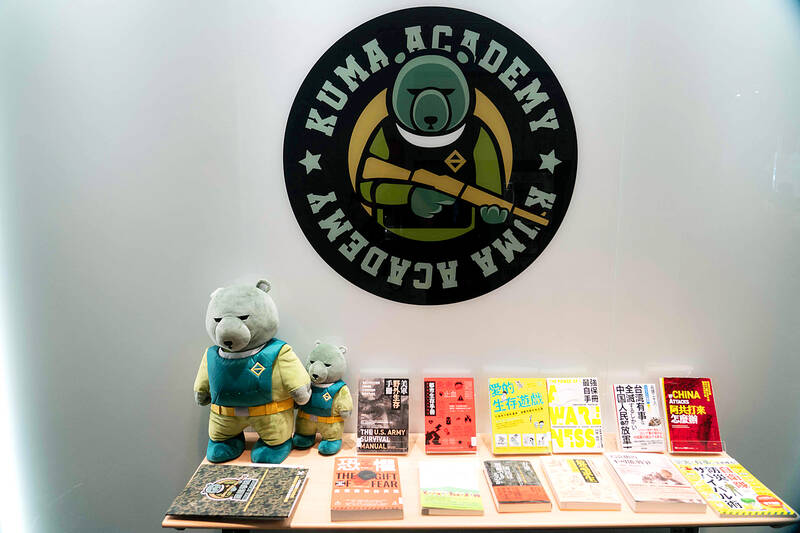
Photo: AFP
“When there’s the possibility of a war, I think we should get prepared,” said 45-year-old Lin, who was attending the Kuma Academy’s classes in Taipei.
“Being on the frontline isn’t the only way to help,” she said, adding her eight and 12-year-old children should know what to do in a crisis.
Kuma’s instructors offer practical tips on evacuation preparations, such as finding the nearest air raid shelter and what to pack in emergency go-bags.
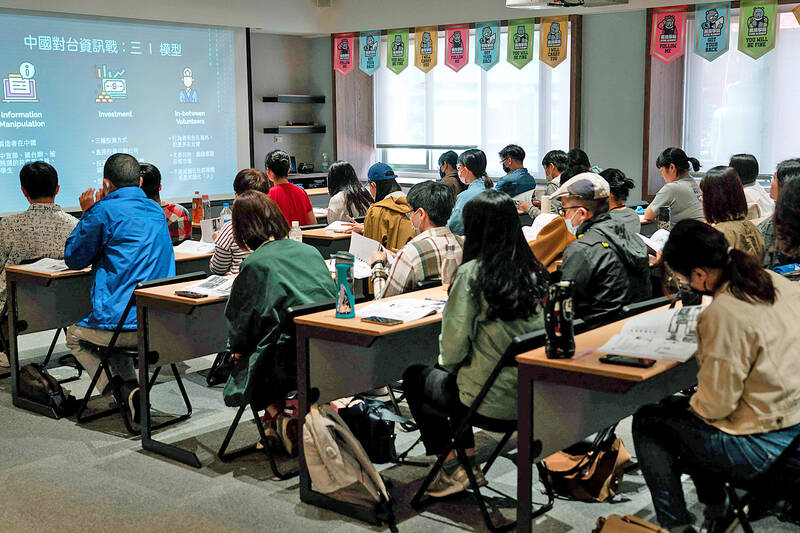
Photo: AFP
But they also focus on disinformation around what Beijing’s invasion would look like, countering claims of 1,000 missiles raining down on the island or 50,000 ships landing on its shores.
The organizers say they are building a “first line of psychic defense” against Chinese narratives trying to sow distrust in Taiwan’s democratic system and its defensive capabilities.
The day-long classes, which cost NT$1,000 Taiwanese dollars (US$33), end with emergency medical training, such as how to apply tourniquets and stuff wounds with bandages.
‘ENDURE. SURVIVE. PREVAIL’
Instructors used images from Saving Private Ryan’s Omaha beach landing scene and missile strikes on residential areas in Ukraine to convey their points in the lessons.
“It was very difficult to secure the spot. I think it’s partially because of the Ukrainian war,” said Lin.
Kuma has trained 10,000 people since January last year, with classes selling out in minutes after their release as Taiwan residents clamor for more knowledge on how to keep themselves safe.
That wider trend among Taiwan’s 23 million people has seen civilians taking part in war drills, and the government holding air raid practice across the island and creating a Chinese invasion handbook.
Kuma has been bankrolled by several wealthy entrepreneurs who are pouring millions into the island’s defense, including Robert Tsao (曹興誠), the founder of Taiwan’s first semiconductor company UMC.
He pledged funds to the island’s defense after Beijing’s large-scale drills last August following the visit of then-US House speaker Nancy Pelosi.
Kuma has ambitious goals to complement Taipei’s expanding military spending by training three million people and wants to expedite the process through online lessons planned for this summer.
In a handbook adorned with a Taiwanese black bear holding a rifle, it told participants: “We can be left without money. Without gas. Without hot water. Without light. But not without freedom.”
“We will overcome everything. Endure. Survive. Prevail!” it says.
‘PACK A KIT’
Kuma has recently launched some women-only classes, saying more women are signing up than men who are already obliged to perform military training or to be called up in the event of a Chinese attack.
Housewife Lai, who declined to give her last name, left her two children with her husband to attend.
“If war happened, I would be at the back. I participated in this class to know what I can do to help others,” the 40-year-old said.
“I need to ensure I know what I need to do and what to prepare, to ensure the safety of my kids.”
Accountant Yu Chiao-ling, 37, was using the civilian lessons to supplement a shooting course next month so she can come to the aid of her elderly parents.
“If war happened, I would use a pistol to defend my home. I take care of my parents, who are in their 60s and 70s. I have the responsibility to protect them,” she said.
“We need to be well-prepared instead of evading reality.”
Taiwan’s overtaking of South Korea in GDP per capita is not a temporary anomaly, but the result of deeper structural problems in the South Korean economy says Chang Young-chul, the former CEO of Korea Asset Management Corp. Chang says that while it reflects Taiwan’s own gains, it also highlights weakening growth momentum in South Korea. As design and foundry capabilities become more important in the AI era, Seoul risks losing competitiveness if it relies too heavily on memory chips. IMF forecasts showing Taiwan widening its lead over South Korea have fueled debate in Seoul over memory chip dependence, industrial policy and
“China wants to unify with Taiwan at the lowest possible cost, and it currently believes that unification will become easier and less costly as time passes,” wrote Amanda Hsiao (蕭嫣然) and Bonnie Glaser in Foreign Affairs (“Why China Waits”) this month, describing how the People’s Republic of China (PRC) is playing the long game in its quest to seize Taiwan. This has been a favorite claim of many writers over the years, easy to argue because it is so trite. Very obviously, if the PRC isn’t attacking Taiwan, it is waiting. But for what? Hsiao and Glaser’s main point is trivial,
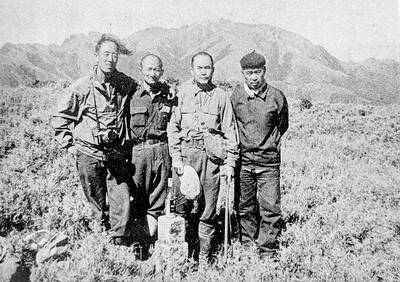
May 18 to May 24 Gathered on Yangtou Mountain (羊頭山) on Dec. 5, 1972, Taiwan’s hiking enthusiasts formally declared the formation of the “100 Peaks Club” (百岳俱樂部) and unveiled the final list of mountains. Famed mountaineer Lin Wen-an (林文安) led this effort for the Chinese Alpine Association (中華山岳協會). Working with other experienced climbers, he chose 100 peaks above 10,000 feet (3,048m) that featured triangulation points and varied in difficulty and character. The list sparked an alpine hiking craze, inspiring many to take up mountaineering and competing to “conquer” the summits. A common misconception is that the 100 Peaks represent Taiwan’s 100 tallest
The Chinese Nationalist Party (KMT), alongside their smaller allies the Taiwan People’s Party (TPP), are often accused of acting on behalf of the Chinese Communist Party (CCP). Some go so far as to call them “traitors.” It is not hard to see why. They regularly pass legislation to stymie the normal functioning of the ruling Democratic Progressive Party’s (DPP) administration, and they have yet to pass this year’s annual budget. They slashed key elements of the government’s proposed NT$1.25 trillion (US$40 billion) special military budget, and in the smaller NT$780 billion package they did pass, it is riddled with provisions that


 RSS
RSS