


The way depression manifested itself in mice in the laboratory of the psychiatrist and neuroscientist Eric Nestler was hauntingly relatable. When put in an enclosure with an unknown mouse, they sat in the corner and showed little interest. When presented with the treat of a sugary drink, they hardly seemed to notice. And when put into water, they did not swim — they just lay there, drifting about.
These mice had been exposed to “social defeat stress,” meaning that older, bigger mice had repeatedly asserted their dominance over them. It is a protocol designed to induce depression in mice, but in Nestler’s lab, it affected some more than others: those with a history of early trauma.
“What one sees clearly in these mouse and rat models is some that are exposed to early life stress do show greater susceptibility to stress later in life,” says Nestler, who is based at the Icahn School of Medicine at Mount Sinai in New York.
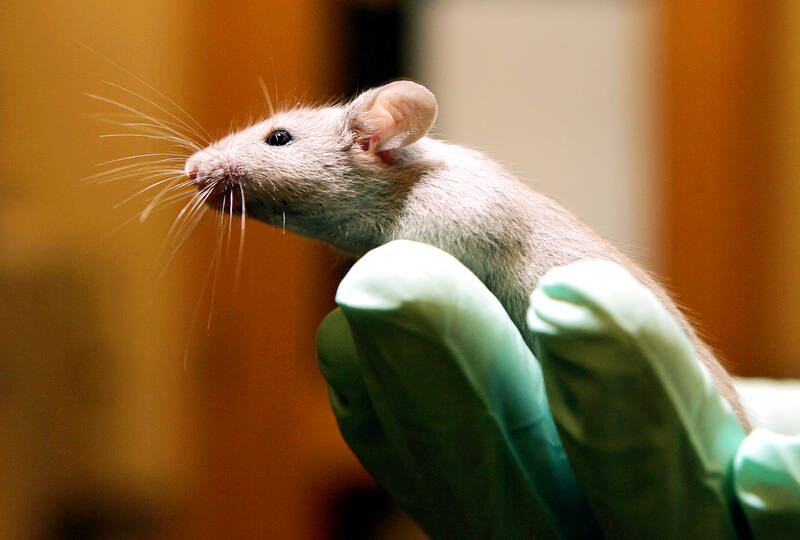
Photo: AP
Tinkering with the epigenome could essentially give us a way to physically edit out the scars of the past
This appears to be true for humans, too. The reasons are still unclear, but there is growing evidence that part of the answer lies in epigenetics — processes that modify the function of our genes without changing the genetic code. Many researchers now think that childhood trauma biologically embeds itself in our bodies, alters how our genes work and puts our mental health at risk.
If that thinking holds up, it opens the door to radical new treatments. Just as gene editing is promising new therapies for everything, from heart disease to cancer, there are those who believe tinkering with the epigenome could help us reverse the damage done by trauma — essentially giving us a way to physically edit out the scars of the past.
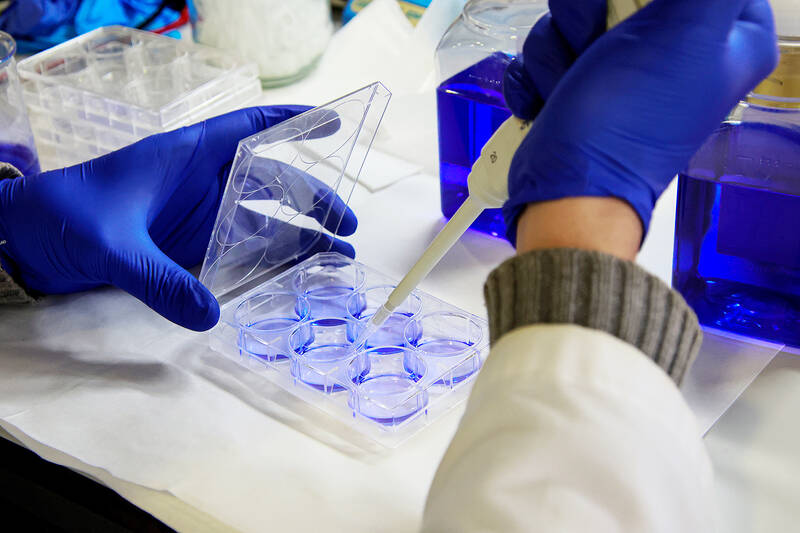
Photo: EPA-EFE
Although sometimes a difficult childhood can make people more resilient, “early life trauma is the strongest risk factor for a range of psychiatric conditions, most particularly depression and anxiety,” says Nestler. One of the biggest studies to assert this was a 2010 paper that included data on more than 50,000 adults from across 21 countries.
It found that almost all kinds of childhood trauma — from a parent dying to substance abuse in the family — were significantly associated with mental illness in adulthood. Remarkably, the analysis suggested that if we somehow got rid of all childhood adversity, we would see a reduction in mental health diagnoses by almost a third.
CONTROLLED EXPERIMENTS

Photo: Reuters
But to understand the biological components of such a link, we need controlled animal experiments. It is in these that researchers have seen how early life adversity leads to epigenetic modifications.
Such modifications are most easily thought of as “tags” directly on or surrounding our DNA. In different ways, they regulate how easily specific genes are read and whether or not the proteins that the genes code for are produced, a process called gene expression.
“The metaphor that sometimes people use is [a piece of] music,” says social and psychiatric epidemiologist Erin Dunn of Harvard University. “A composer… might add certain annotations in order to bring out certain things.”
In experiments, researchers can play composers and change gene expression by exposing animals to stress early in life. In one study, for example, Nestler and his colleagues separated mouse pups from their mothers for hours every day and found that, as a result, several hundred genes had altered expression in a brain area associated with depression. It was mice such as these that went on to develop depression at higher rates when put through the social defeat stress protocol.
The problem is that there is no way to replicate this in humans. It would be immoral to expose children to trauma and researchers need to remove brain tissue to analyze what epigenetic changes have taken place there. But, says neuroscientist Elisabeth Binder of the Max Planck Institute of Psychiatry in Munich: “There is evidence from postmortem brain data that we may see similar things [in humans].”
She is referring to a study examining the brains of people who killed themselves. The authors found epigenetic differences on stress-related genes between those who had experienced childhood abuse and individuals who had not. It is good evidence, but in order to find out people’s abuse history, the authors had to ask the bereaved relatives, which may not always be reliable, says Binder.
Instead, researchers want to test living people. That means looking for epigenetic marks outside the brain, such as in saliva or blood. While it is still unclear how well they reflect changes in the brain, it is the best scientists have and it does tell a compelling story — not just of epigenetic scars, but of extreme evolutionary survival strategies.
EPIGENETIC CLOCKS
An increasingly popular way to study epigenetic changes in people is through epigenetic clocks. As we grow older, we pick up certain tags that correlate strongly with age and so scientists can quantify our “biological age” by looking at how many we have. This way, they can determine whether we are biologically aging quicker or slower.
Recently, Binder used the first ever epigenetic clock for children on three to five-year-olds who had a known history of maltreatment. She found a clear pattern: maltreated children who showed signs of depression and anxiety were biologically nearly three months older than their peers — a lot for their age. The worse their maltreatment, the older they were.
On the back of such research, it is tempting to think that accelerated aging is exclusively damaging. But the reality is probably more complicated, says psychologist Jennifer Sumner of the University of California, Los Angeles.
She differentiates two kinds of trauma: threat and deprivation.
“Experiences of threat — so that’s potential for violence, for physical harm — those experiences seem to be especially linked to these indicators of accelerated biological ageing,” she says.
According to her work, it also coincides with earlier puberty. But in the case of deprivation, such as neglect, teens reach puberty later and their biological age is unaffected.
Viewed through a rather grim evolutionary lens, this makes sense. In a threatening environment, growing up faster means that you can reproduce more quickly in case your life is short. But in deprived environments with limited resources, Sumner says: “It may not be as beneficial to try to develop and reproduce at that time.”
So some of the trauma-induced changes may be part of an evolutionary strategy that puts reproductive timing before wellbeing.
“The accelerated aging can actually increase that reproductive fitness, but it may mean, in the long term, more adverse consequences for physical and mental health,” she says.
This seems a rough deal for people looking to live and not just propagate and raises the question: if epigenetic changes can just appear, can we not just reverse them?
ANXIETY AND DEPRESSION
The short answer is, well, possibly. Scientists can edit the epigenome by using a version of Crispr-Cas9, the innovative gene-editing tool, where the Cas9 enzyme is deactivated so it cannot snip the DNA.
“It’s not like cutting the gene and inserting something,” says Subhash Pandey, a neuroscientist at the University of Illinois Chicago.
Instead, it simply finds the right point in the genome and can then remove or add a tag.
In a study last year, Pandey used this epigenetic version called Crispr-dCas9 to undo an epigenetic change induced by teenage binge drinking in rats. His previous work connected that particular modification in the amygdala, the brain’s fear center, to increased anxiety and alcohol use in adults.
Rats that had been injected with alcohol in adolescence were significantly more anxious than teetotal fellow rodents. But when Pandey reversed the alcohol-induced change, their anxiety dropped to normal levels. It also worked the other way around; when Pandey introduced the change to rats that did not drink in adolescence, they became anxious in turn.
There is a long way to go before epigenetic editing could be used in humans, but Pandey believes “epigenomic editing has high potential for future therapy.”
Kinks such as long-term efficacy and safety have to be worked out for any new therapy, he says.
However, when it comes to depression and anxiety disorders, which are shaped by a host of different genes, Nestler is more hesitant.
“What’s causing depression in one person is probably very different from what’s causing depression in another person,” he says.
That could make it tricky to find the right tags to reverse.
Pandey’s rats also had tubes surgically installed in order for the Crispr (short for “clustered regularly interspaced short palindromic repeats”) system to reach their amygdala. For most disorders, says Nestler: “We’re going to need something that is much easier for people.”
Instead of Crispr, one option could be a type of tag-removing epigenetic drug. The US Food and Drug Administration has already approved some drugs against certain cancers. Although concerns about side effects remain, Nestler says: “We’re very interested in their potential in depression as well.”
Others think drugs and editing should not overshadow what is most remarkable about epigenetics: its responsiveness to the environment.
“These are marks that are dynamic in response to our life experiences,” says Dunn, whose goal is to prevent depression, not just treat it. “There are things that can [shift] people’s risk for having health outcomes.”
BIOMARKER
In other words, we should try to mend children’s trauma before they get diagnosed as adults — not with mental health Crispr, but with social support and therapy. Instead, epigenetics could play a role as a biomarker to flag children at particular risk, she says.
Arguably, we do not need epigenetics to tell us that kids with a history of trauma need help. Yet Dunn says: “You and I could have the exact same experience in terms of adversity, but biologically it impacts us differently.”
With limited public budgets, there could be value in separating the truly traumatized from the resilient.
She is right that not everyone who goes through trauma is equally affected; that shows up even in Nestler’s mice. The most depression-prone experienced trauma late in childhood, whereas those who were traumatised early — and perhaps had more time to recover — showed more resilience.
But if we embrace epigenetic drugs and editing, there may be shortcuts to that, too. Nestler recently found a resilience-regulating gene network that can be boosted epigenetically and could offer new drug targets in adults.
“Most efforts in the field over decades have been to undo the bad effects of stress,” he says. “One could also try to institute mechanisms of natural resilience.”
Evidently, there will be no shortage of tags to fiddle with. The question remains whether we are willing to lend our brains to it.

For many people, Bilingual Nation 2030 begins and ends in the classroom. Since the policy was launched in 2018, the debate has centered on students, teachers and the pressure placed on schools. Yet the policy was never solely about English education. The government’s official plan also calls for bilingualization in Taiwan’s government services, laws and regulations, and living environment. The goal is to make Taiwan more inclusive and accessible to international enterprises and talent and better prepared for global economic and trade conditions. After eight years, that grand vision is due for a pulse check. RULES THAT CAN BE READ For Harper Chen (陳虹宇), an adviser

Traditionally, indigenous people in Taiwan’s mountains practice swidden cultivation, or “slash and burn” agriculture, a practice common in human history. According to a 2016 research article in the International Journal of Environmental Sustainability, among the Atayal people, this began with a search for suitable forested slopeland. The trees are burnt for fertilizer and the land cleared of stones. The stones and wood are then piled up to make fences, while both dead and standing trees are retained on the plot. The fences are used to grow climbing crops like squash and beans. The plot itself supports farming for three years.

The breakwater stretches out to sea from the sprawling Kaohsiung port in southern Taiwan. Normally, it’s crowded with massive tankers ferrying liquefied natural gas from Qatar to be stored in the bulbous white tanks that dot the shoreline. These are not normal times, though, and not a single shipment from Qatar has docked at the Yongan terminal since early March after the Strait of Hormuz was shuttered. The suspension has provided a realistic preview of a potential Chinese blockade, a move that would throttle an economy anchored by the world’s most advanced and power-hungry semiconductor industry. It is a stark reminder of

May 4 to May 10 It was once said that if you hadn’t performed at the Sapphire Grand Cabaret (藍寶石大歌廳), you couldn’t truly be considered a star. Taking the stage at the legendary Kaohsiung club was more than just a concert. Performers were expected to entertain in every sense, wearing outlandish or revealing costumes and staying quick on their feet as sharp-tongued, over-the-top hosts asked questions and delivered jokes that would be seen as vulgar, even offensive, by today’s standards. Opening in May 1967 during a period of strict political and social control, Sapphire offered a rare outlet for audiences in


 RSS
RSS