


Recently, my boyfriend and I had a check-in. He told me that he felt as if I’d grown complacent when it came to physical affection. I bristled at the accusation, but clamped my mouth shut, mostly because he was right. Truthfully, it’s not the first time I’ve been given this relationship feedback.
When it comes to physical touch, my factory setting is “awkward.” But I am truly excellent at small, thoughtful gestures. Just two weeks ago I curated a care package for my partner, so that after a 10-hour flight for work he’d find a bag of liquorice, a pack of incense and a boujie bottled lemonade — all things he loves — waiting for him on the kitchen table. This tiny token of love wasn’t ballad-worthy, but it’s how I naturally show care.
Thanks to Gary Chapman, author of The Five Love Languages, it’s easy to communicate the dynamic at play: my partner and I have different love languages. Love language has become a ubiquitous trend across social media to describe the different ways in which people express and receive love. Nowadays, it’s treated with as much respect as a clinical diagnosis, but should it be? Is mine and my partner’s difference a dealbreaker? And why do we continue to use love language as a sign of compatibility and a good relationship?

Photo: EPA-EFE
LOVE, A MANY-SPLENDORED THING
Chapman’s bestselling book, which turned 30 last year, says we all give and receive love in five different ways: words of affirmation, acts of service, receiving gifts, quality time and physical touch. The book, first published in 1992, argues that many relationship conflicts can be explained by his theory of romantic miscommunication and he argues that two people might express love to one another using different “languages,” and this would result in them struggling to understand one another. Through understanding your own love language, you can ask for what you need and vice versa, he says. According to his theory, my love language is acts of service, while my partner’s is physical touch.
Now, “love language” is more mainstream than ever and only growing in relevance. TikTok and social media are a huge driver of this, and the phrase has two billion views, with viral videos claiming to offer you analysis, such as “What your love language says about you” and jokes that coffee or Timothee Chalamet are a love language.
How did love language receive such respect when it has no research behind it beyond Chapman’s own observations as a church counselor and the couples who came to him for help? Chapman’s educational background isn’t in psychology, but anthropology and adult education, yet the book has gone on to sell 20 million copies (including print, ebook and audio versions), according to its nonprofit Christian publishing company, Moody Publishers.
The Five Love Languages’ initial success came from its largely Christian bookstore sales, but a relaunch more than a decade later marketed the title to a mainstream audience.
Relate counselor Simone Bose tells me she uses the theory “quite often” with her clients, alongside psychodynamic approaches.
“The theme for a lot of couples is that they feel disconnected, or not heard or misunderstood,” she says.
It’s particularly helpful for couples who’ve been together slightly longer, as they can start to disconnect and stop “showing love and appreciation to each other in the way the other person needs.”
But Bose says love languages change over time, especially during big life events, like having a child, when acts of service become more important.
UNSOUND SCIENCE?
William Chopik is an associate professor of social personality psychology at Michigan State University, and studies how people in relationships evolve over time. The science around love languages is not good, he says.
“There just hasn’t been a lot of really serious investigations into love languages,” he says, and it worries him when people base their love lives on the theory.
“It’s a little scary how popular it is.”
What then is scientifically approved when it comes to healthy romantic relationships? Professor Chopik refers to the investment model, based on three key factors.
“One is if you are satisfied: do you like your relationship? The next is investment: have you put a lot into the relationship; have you been dating for 10 years; do you have kids together; do you have joint bank accounts? And finally there is quality of alternatives: do you have other options or think you could jump ship to someone better?”
The investment method isn’t “super romantic,” Chopik jokes. But another scientific theory called “perceived partner responsiveness” has been described as the “bedrock” of intimacy by experts. The concept “boils down to the fact that you feel listened to or understood, and that someone is looking out for you.”
Rather than someone buying you gifts, but being a rubbish listener, it states that being receptive to what your partner needs at any given moment is the key to relationship health.
I now feel that my partner and I are more in sync than ever.
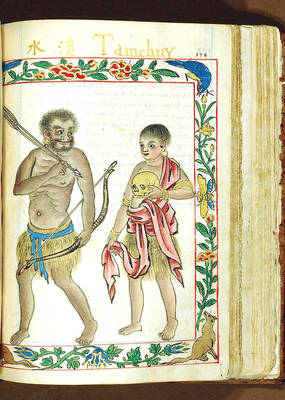
The Portuguese never established a presence on Taiwan, but they must have traded with the indigenous people because later traders reported that the locals referred to parts of deer using Portuguese words. What goods might the Portuguese have offered their indigenous trade partners? Among them must have been slaves, for the Portuguese dealt slaves across Asia. Though we often speak of “Portuguese” ships, imagining them as picturesque vessels manned by pointy-bearded Iberians, in Asia Portuguese shipping between local destinations was crewed by Asian seamen, with a handful of white or Eurasian officers. “Even the great carracks of 1,000-2,000 tons which plied

It’s only half the size of its more famous counterpart in Taipei, but the Botanical Garden of the National Museum of Nature Science (NMNS, 國立自然科學博物館植物園) is surely one of urban Taiwan’s most inviting green spaces. Covering 4.5 hectares immediately northeast of the government-run museum in Taichung’s North District (北區), the garden features more than 700 plant species, many of which are labeled in Chinese but not in English. Since its establishment in 1999, the site’s managers have done their best to replicate a number of native ecosystems, dividing the site into eight areas. The name of the Coral Atoll Zone might
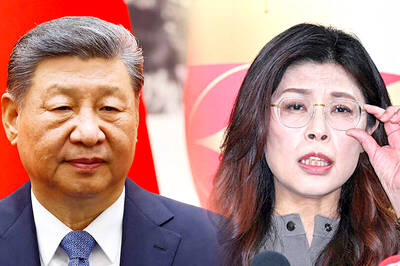
On Monday morning, in quick succession, the Chinese Communist Party (CCP) and the Chinese Nationalist Party (KMT) released statements announcing “that the Central Committee of the Communist Party of China and General Secretary Xi Jinping (習近平) have invited KMT Chairwoman Cheng Li-wun (鄭麗文) to lead a delegation on a visit to the mainland” as the KMT’s press release worded it. The KMT’s press release added “Chairwoman Cheng expressed her gratitude for the invitation and has gladly accepted it.” Beijing’s official Xinhua news release described Song Tao (宋濤), head of the Taiwan Work Office of the CCP Central Committee, as

Nuclear power is getting a second look in Southeast Asia as countries prepare to meet surging energy demand as they vie for artificial intelligence-focused data centers. Several Southeast Asian nations are reviving mothballed nuclear plans and setting ambitious targets and nearly half of the region could, if they pursue those goals, have nuclear energy in the 2030s. Even countries without current plans have signaled their interest. Southeast Asia has never produced a single watt of nuclear energy, despite long-held atomic ambitions. But that may soon change as pressure mounts to reduce emissions that contribute to climate change, while meeting growing power needs. The


 RSS
RSS