


Down in the southernmost reaches of Taiwan, the Neiwen River (內文溪) forms from headwaters just three kilometers from the Pacific coast. But due to the lopsided terrain of the Hengchun Peninsula, the river winds westward from here toward the Taiwan Strait, over 20km away on the opposite side of the island.
Along the way, it takes a sudden drop at Shuangliu Waterfall and several smaller drops at check dams lower down. Eager tourists snap photos, egrets fish in its waters and children splash around to cool off. Finally, the river meets the Daren River (達仁溪) to form the Fenggang River (楓港溪) at Shuangliu (雙流, literally “double flow”), so-named because of the two rivers that meet here. The area around this lowest stretch of the Neiwen River was replanted by the Forestry Bureau years ago, mainly with ash and acacia trees, and then developed into Pingtung County’s Shuangliu Forest Recreation Area, a great place to spend a few hours in any season.
FACILITIES
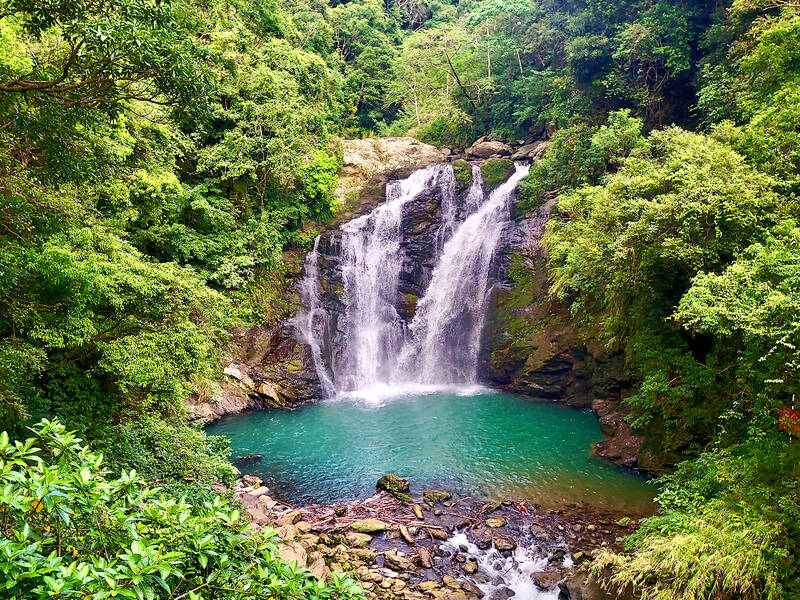
Photo: Tyler Cottenie
The park features a number of trails, with something for all ages and abilities. Following the river all the way up the middle of the park is a wide road where walking five or six abreast is not a problem. Wheelchairs, walkers and strollers can even make it partway along this path, at least as far as the large picnic areas. These are wide expanses of groomed terrain next to the river, with plenty of picnic tables and seating. There is even a water machine under one of the trees for added convenience.
On either side of the river, there are other trails of varying difficulty for those wanting a little more variety, challenge or solitude. Take a look at the interesting shapes created by the aerial roots of the trees on the Banyan Trail, or get some exercise on the Mountainside Trail, a 2km walk through the forest on a fairly traditional hiking trail with many ups and downs. This trail also features a bridge across a small gorge, where visitors get a bird’s-eye view of the forest canopy.
For those with good fitness, Maozih Peak presents more of a challenge. This 3km trail is a steep uphill climb to the top of a mountain, where a pavilion provides some shade and a view of the lush hills all around Shuangliu and the highway below. This is a half-day commitment at least so plan to arrive early in the day if you want to combine Maozih Peak with anything else at Shuangliu.
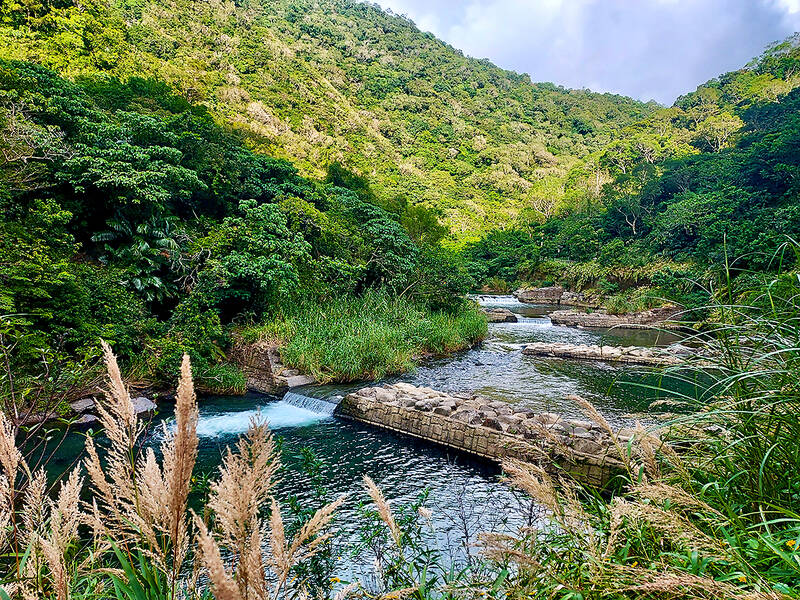
Photo: Tyler Cottenie
Finally, simply continuing straight along the river eventually leads visitors to the showpiece of the park, the Shuangliu Waterfall. Along the way, the wide road narrows to a traditional hiking path that, after crossing the attractive Rainbow Bridge — so named for its shape rather than its color — comes to an end at a high observation platform with a perfect view of the falls. It’s nowhere near the highest, largest or loudest waterfall Taiwan has to offer and visitors are not able to get very close to the water, but for those looking for a safe, well-marked trail on which to take the family, this one is worth the walk.
WATER AND WILDLIFE
That’s not to say there is nowhere in the park where visitors can get their feet wet.
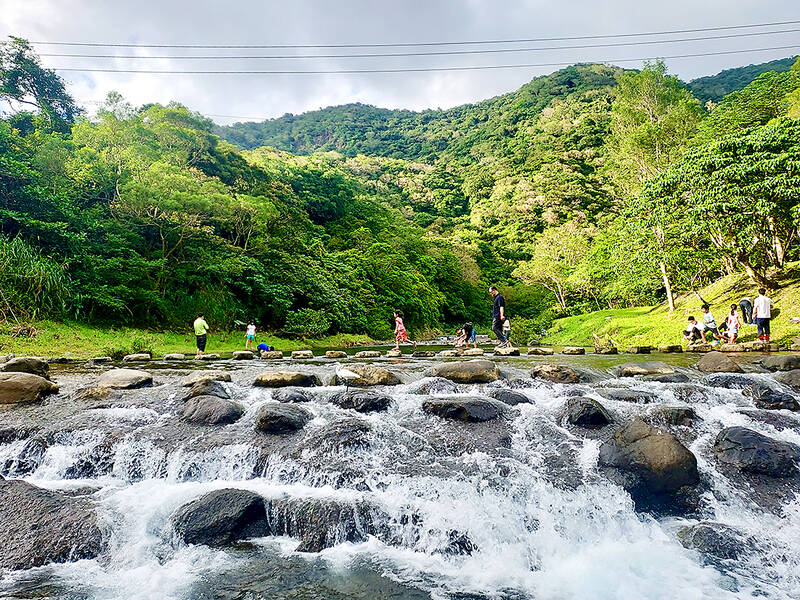
Photo: Tyler Cottenie
There is a rough trail down to the river near the first picnic area where kids can play in the shallow water. But the best spot is undoubtedly the stepping-stone river crossing along the trail to the waterfall. It’s easy to keep your shoes dry crossing on the large, flat stones placed in the river here just above a small set of rapids.
Just upstream of the crossing or just downstream of the rapids, however, there is plenty of room to get in the water and splash around. If you stand still, you may soon notice a strange tickling sensation on any exposed skin. The river is full of tiny fish that like to nibble away at the outermost layer of dead skin on human legs and feet, similar to the fish pools at some spas and hot spring resorts.
These fish are not the only animals worth noticing at Shuangliu. Little egrets are frequently seen looking for food in the rapids at the river crossing or in the water pouring over any of the numerous check dams along the river. These large graceful birds with pure white plumage, black legs and yellow feet are easily spotted and a delight to photograph.
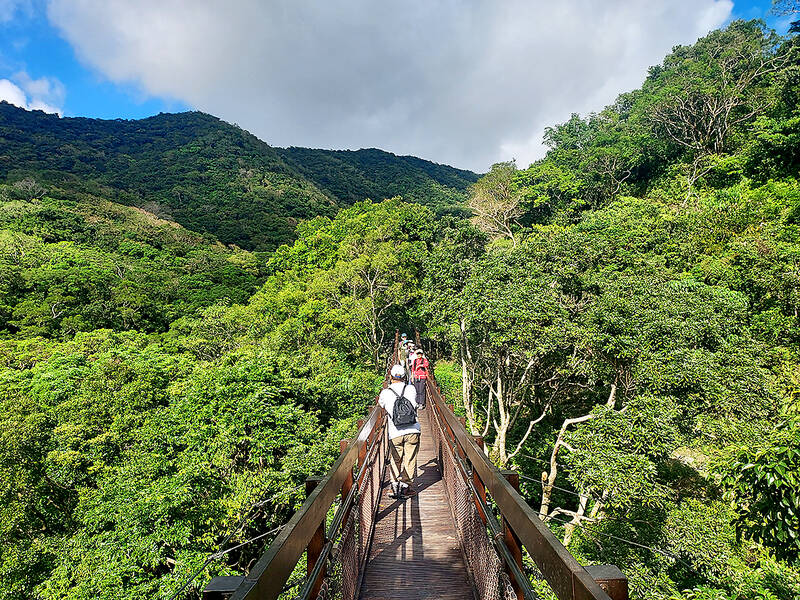
Photo: Tyler Cottenie
Mammals that live in the park but shy away from crowds of people include the masked palm civet, the pangolin and the crab-eating mongoose. In the trees all around, Formosan macaques can also be seen monkeying around. Finally, the park is home to a staggering 196 species of butterflies, including purple crow butterflies, which winter here.
Whether you like observing wildlife, hiking, soaking your feet or just breathing in fresh mountain air from a comfortable seat by the river, Shuangliu is worth a visit. It’s a great way to break up the drive over to Taitung from southern Taiwan, and makes a great addition to a vacation in Kenting.
Take Bus 1778 fom Fangliao in Pingtung or Dawu in Taitung to the Shuangliu stop, or access the park with your own transportation on Provincial Highway 9. Regular entrance tickets cost NT$100.
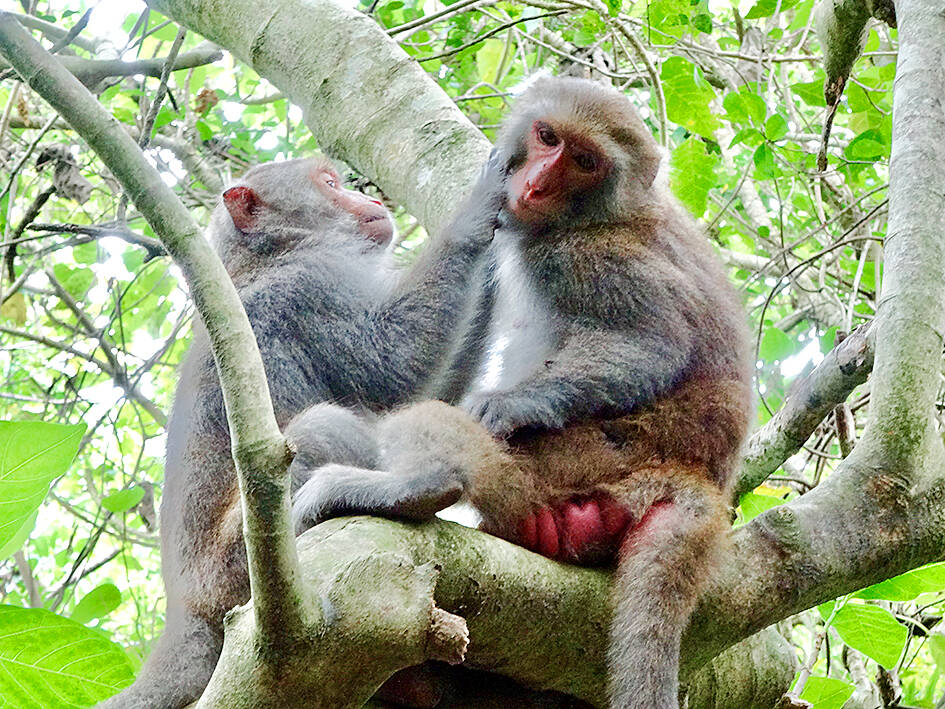
Photo: Tyler Cottenie
For more information in English, Chinese, Japanese and Korean, visit: recreation.forest.gov.tw.
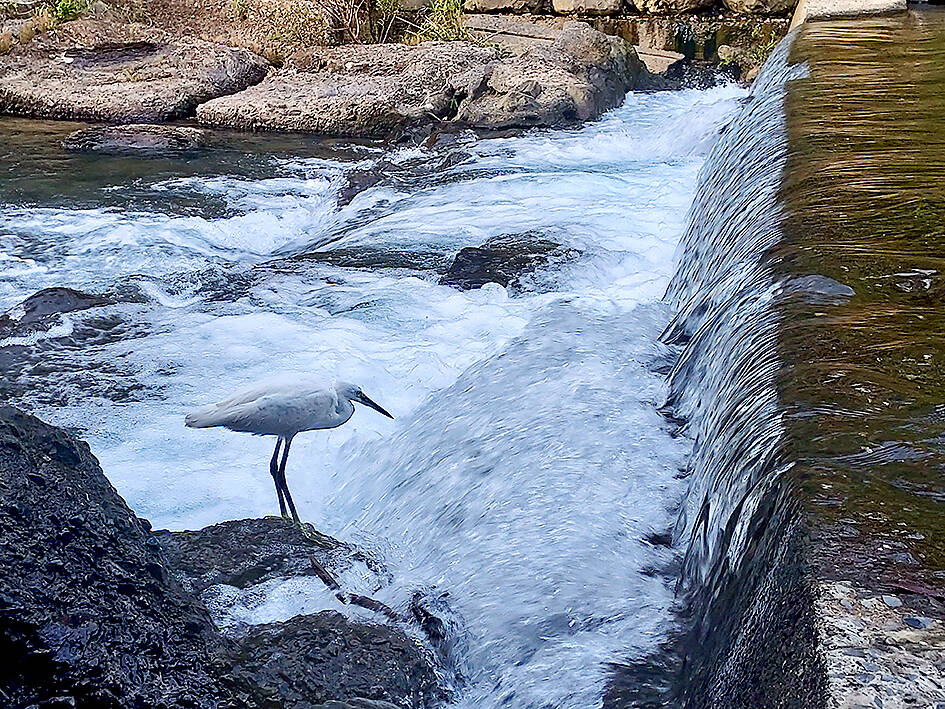
Photo: Tyler Cottenie
If one asks Taiwanese why house prices are so high or why the nation is so built up or why certain policies cannot be carried out, one common answer is that “Taiwan is too small.” This is actually true, though not in the way people think. The National Property Administration (NPA), responsible for tracking and managing the government’s real estate assets, maintains statistics on how much land the government owns. As of the end of last year, land for official use constituted 293,655 hectares, for public use 1,732,513 hectares, for non-public use 216,972 hectares and for state enterprises 34 hectares, yielding
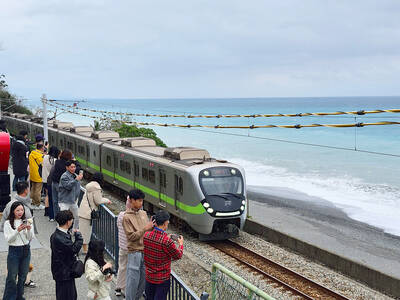
The small platform at Duoliang Train Station in Taitung County’s Taimali Township (太麻里) served villagers from 1992 to 2006, but was eventually shut down due to lack of use. Just 10 years later, the abandoned train station had become widely known as the most beautiful station in Taiwan, and visitors were so frequent that the village had to start restricting traffic. Nowadays, Duoliang Village (多良) is known as a bit of a tourist trap, with a mandatory, albeit modest, admission fee of NT$10 giving access to a crowded lane of vendors with a mediocre view of the ocean and the trains

Traditionally, indigenous people in Taiwan’s mountains practice swidden cultivation, or “slash and burn” agriculture, a practice common in human history. According to a 2016 research article in the International Journal of Environmental Sustainability, among the Atayal people, this began with a search for suitable forested slopeland. The trees are burnt for fertilizer and the land cleared of stones. The stones and wood are then piled up to make fences, while both dead and standing trees are retained on the plot. The fences are used to grow climbing crops like squash and beans. The plot itself supports farming for three years.

For many people, Bilingual Nation 2030 begins and ends in the classroom. Since the policy was launched in 2018, the debate has centered on students, teachers and the pressure placed on schools. Yet the policy was never solely about English education. The government’s official plan also calls for bilingualization in Taiwan’s government services, laws and regulations, and living environment. The goal is to make Taiwan more inclusive and accessible to international enterprises and talent and better prepared for global economic and trade conditions. After eight years, that grand vision is due for a pulse check. RULES THAT CAN BE READ For Harper Chen (陳虹宇), an adviser


 RSS
RSS