


Orphaned elephants manage to overcome the loss of their mother by living in a herd, highlighting the importance of a social life for the species, according to a study.
Scientists investigated the consequences of a mother elephant’s death on her child by examining the level of stress hormones in the excrement of 37 young elephants in Kenya between 2015 and 2016.
Among the young elephants, 25 had lost their mother between one and 19 years before from poaching or drought.
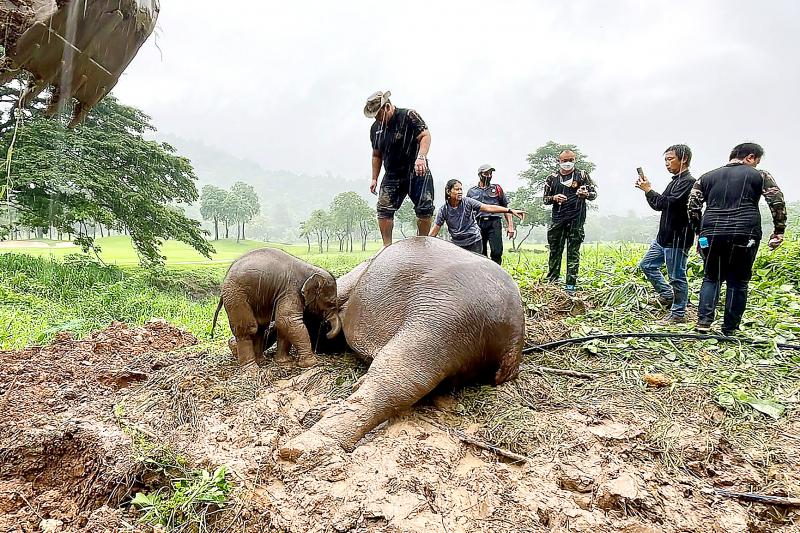
Photo: AFP
Of the 25 orphans, 20 stayed within the same family unit after the mother’s death, while five joined an unrelated group.
The researchers found that stress hormones were at similar levels in the long term among orphans and the other elephants, even though the former were expected to show more stress symptoms in the absence of maternal care.
Any stress among the orphans did not last long, showing their “resilience” and the effect of social support from the other elephants, said Jenna Parker, the main author of the study published this week in the journal Communications Biology.
The importance of family links was obvious when observing elephant herds, Parker said.
The young rarely stray more than 10 meters away from their mother and “incredible” reunions involving the entire group were seen after a few hours of separation, said the researcher at Colorado State University in the US.
When poachers or hunters kill an elephant, that social cohesion disintegrates and threatens the group’s wellbeing, particularly the young ones left orphaned, she said.
The bond between a baby elephant and its mother is believed to be strong even after weaning.
‘PLAYMATES’
Parker and her colleagues investigated how orphaned elephants felt by measuring the quantity of hormones they release when faced with stress.
The hormones can be found in blood, saliva, urine and faeces. The last option was chosen as the most reliable and widespread way to measure stress in wild animals because it is non-invasive, Parker said.
Only the excrement of young females aged between two and 20 in the Samburu and Buffalo Springs reserves in northern Kenya was used, with males less easy to track because they are less attached to their original herd.
Scientists also found lower stress levels among young elephants growing up in groups with more animals of a similar age, suggesting that “playmates” are essential for them.
The results could guide orphanages to provide companions of the same age to help orphaned elephants.
The study also concluded that releasing groups of orphaned elephants together after they were linked during captivity could facilitate their transition to living in the wild.

What was the population of Taiwan when the first Negritos arrived? In 500BC? The 1st century? The 18th? These questions are important, because they can contextualize the number of babies born last month, 6,523, to all the people on Taiwan, indigenous and colonial alike. That figure represents a year on year drop of 3,884 babies, prefiguring total births under 90,000 for the year. It also represents the 26th straight month of deaths exceeding births. Why isn’t this a bigger crisis? Because we don’t experience it. Instead, what we experience is a growing and more diverse population. POPULATION What is Taiwan’s actual population?

After Jurassic Park premiered in 1993, people began to ask if scientists could really bring long-lost species back from extinction, just like in the hit movie. The idea has triggered “de-extinction” debates in several countries, including Taiwan, where the focus has been on the Formosan clouded leopard (designated after 1917 as Neofelis nebulosa brachyura). National Taiwan Museum’s (NTM) Web site describes the Formosan clouded leopard as “a subspecies endemic to Taiwan…it reaches a body length of 0.6m to 1.2m and tail length of 0.7m to 0.9m and weighs between 15kg and 30kg. It is entirely covered with beautiful cloud-like spots

For the past five years, Sammy Jou (周祥敏) has climbed Kinmen’s highest peak, Taiwu Mountain (太武山) at 6am before heading to work. In the winter, it’s dark when he sets out but even at this hour, other climbers are already coming down the mountain. All of this is a big change from Jou’s childhood during the Martial Law period, when the military requisitioned the mountain for strategic purposes and most of it was off-limits. Back then, only two mountain trails were open, and they were open only during special occasions, such as for prayers to one’s ancestors during Lunar New Year.
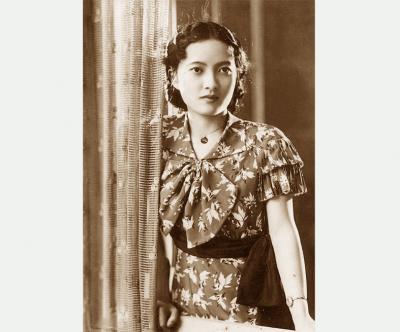
March 23 to March 29 Kao Chang (高長) set strict rules for his descendants: women were to learn music or cooking, and the men medicine or theology. No matter what life path they chose, they were to use their skills in service of the Presbyterian Church and society. As a result, musical ability — particularly in Western instruments — was almost expected among the Kao women, and even those who married into the family often had musical training. Although the men did not typically play instruments, they played a supporting role, helping to organize music programs such as children’s orchestras, writes


 RSS
RSS