


With Israel closed to tourists and its citizens restricted from travelling abroad, the mainly Arab city of Nazareth, normally a magnet for Christian pilgrims, has been thronged with Jewish visitors.
“It’s not the Christmas that we hoped for, but still, the atmosphere is great, many Jewish Israelis are coming, many locals are coming,” said Nazareth tour guide Aziz Banna, 41.
As the highly transmissible Omicron coronavirus variant spreads globally, Israel has banned travel to more than 50 countries.
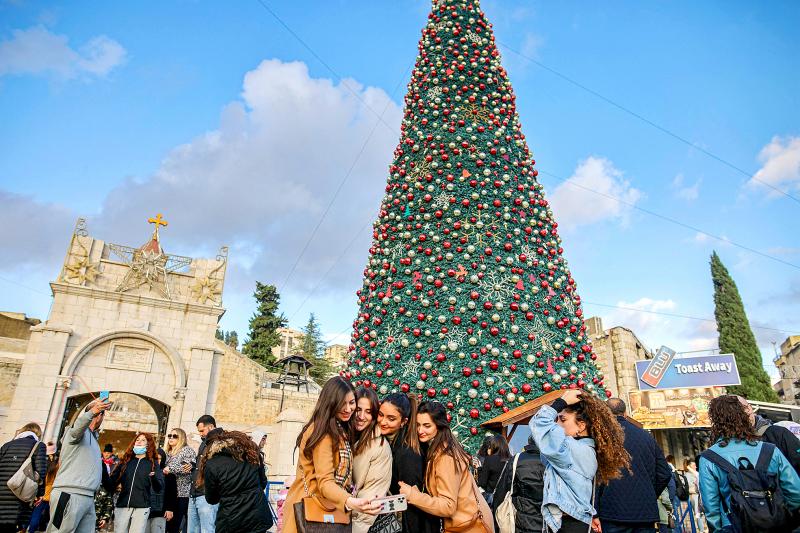
Photo: AFP
Major foreign destinations — including the US, UK and France — are on the no-fly list, which has led Israelis in the run-up to Christmas to turn to Nazareth, a city central to Christian belief also undergoing a cultural renaissance.
“We’re not going overseas so fast at this point in the coronavirus,” psychologist Roni Harari, 49, of Haifa said as her children ate Belgian waffles outside a Nazareth Christmas market. “Here it feels like a little bit of abroad.”
WEEKENDS ONLY
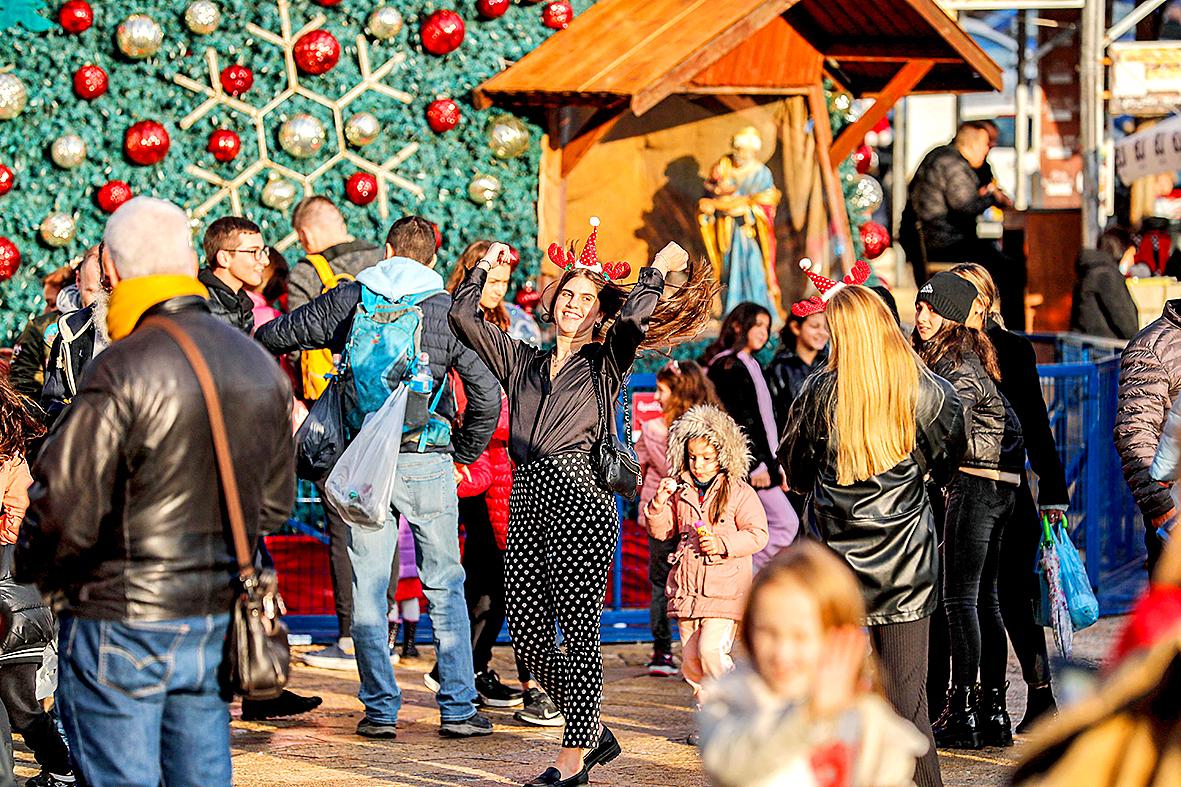
Photo: AFP
For Palestinian citizens of Israel, who make up roughly 20 percent of the Jewish state’s population, Nazareth is an important cultural and political hub, and the country’s largest majority Arab city with a population of 78,000.
For Christians, Nazareth is revered as the city where Jesus was raised by Mary and Joseph. About a quarter of residents are Christian.
In years before the pandemic, Nazareth welcomed Christian pilgrims who stopped at sacred sites like the Basilica of the Annunciation, where the Archangel Gabriel is said to have announced to Mary that she would conceive a son through a virgin birth and that he would be the Messiah.
Jewish Israelis have always been interested in Christmas tourism, but this year it has been more pronounced, said hotelier Bassam Hakim, 36.
Last Saturday, six of the 10 rooms at his boutique hotel were booked, he said, mostly with Israeli tourists — a blessing, but one with limits.
“The domestic tourism comes only two days a week, on the weekend. We have five days a week in which we are unemployed,” he said.
Hakim opened his hotel in 2015 in a stone building his family has owned for three generations.
He is among the local entrepreneurs opening modern guesthouses, cafes and galleries in Nazareth’s old city, alongside stalwarts selling spices and knafeh cheese pastry.
“The rebirth in Nazareth is much more powerful than the coronavirus,” he said. “Youngsters with great power who want to make a change and want to fulfil themselves are opening shops even during COVID.”
Efrat Damari, 53, from a Tel Aviv suburb, visited Nazareth with seven friends to celebrate a birthday.
“We visited all the places, the churches, the market, we saw the nice things, we ate,” she said. “They hosted us really nicely, there were wonderful people here.”
Sharon Ben Ari, director of Nazareth’s tourism department, said the city and the national government had invested in this year’s Christmas season, publishing a 100-page Hebrew guide and launching a Web site aimed at Jewish Israelis.
He said this year’s Christmas was “especially successful” and estimated 10,000 people visited a day, bringing in about US$15.9 million.
“There’s no chance this covers nearly two years of corona,” he said. “We are standing before the wave of Omicron and we’re worried.”
SPIRIT OF CELEBRATION
At the Greek Orthodox Church of the Annunciation, caretaker Bishara Hakim — Bassam’s uncle — estimated that 90 percent of visitors this season were Jewish Israelis, lamenting that they don’t appear to have the same spiritual connection to the site as Christian visitors.
“The majority of Jewish tourists don’t feel connected to the church. They come, they see it, and they leave,” he said.
Painter Fatima Abu Roomi of nearby Tamra village opened the Balqees gallery last year, she said, “to advance, and help Arab artists.”
Before the holiday, even as a towering Christmas tree in a nearby plaza drew masses of visitors, foot traffic was light inside her gallery.
“Hopefully it will get better,” she said, suggesting snarling traffic had kept some art-lovers away.
Still, a spirit of celebration sounded through the city, with church bells ringing, families shopping for red and white hats, and speakers blaring Christmas songs in Arabic.
Nazareth’s mini-boom contrasts with the Christmas season in Bethlehem, where tradition holds Jesus was born.
Israel has occupied the West Bank since 1967 and controls all entrances to the territory. As a result, tourists barred from Israel are also blocked from the Palestinian side, leaving shops and hotels in Bethlehem deserted.
With Israelis banned from visiting the Palestinian Authority-controlled city, Bethlehem is not enjoying the same domestic boost.
Banna, the tour guide, said though some Palestinian citizens of Israel visit, “it’s not enough for Bethlehem.”
“It’s part of the politics here in this land,” he said, even though the Christmas story “begins in Nazareth and then continues to Bethlehem.”
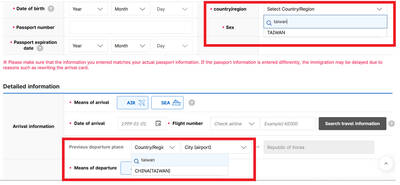
Jason Han says that the e-arrival card spat between South Korea and Taiwan shows that Seoul is signaling adherence to its “one-China” policy, while Taiwan’s response reflects a reciprocal approach. “Attempts to alter the diplomatic status quo often lead to tit-for-tat responses,” the analyst on international affairs tells the Taipei Times, adding that Taiwan may become more cautious in its dealings with South Korea going forward. Taipei has called on Seoul to correct its electronic entry system, which currently lists Taiwan as “China (Taiwan),” warning that reciprocal measures may follow if the wording is not changed before March 31. As of yesterday,
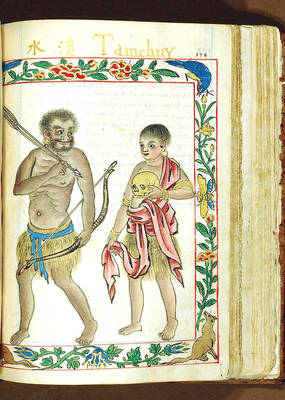
The Portuguese never established a presence on Taiwan, but they must have traded with the indigenous people because later traders reported that the locals referred to parts of deer using Portuguese words. What goods might the Portuguese have offered their indigenous trade partners? Among them must have been slaves, for the Portuguese dealt slaves across Asia. Though we often speak of “Portuguese” ships, imagining them as picturesque vessels manned by pointy-bearded Iberians, in Asia Portuguese shipping between local destinations was crewed by Asian seamen, with a handful of white or Eurasian officers. “Even the great carracks of 1,000-2,000 tons which plied

On Thursday, former Taipei mayor and founder of the Taiwan People’s Party (TPP) Ko Wen-je (柯文哲) was sentenced to 17 years in prison and had his civil rights suspended for six years over corruption, embezzlement and other charges. Seven others related to the case were also handed prison sentences, while two were found not guilty. It has been a bad week for the TPP. On Tuesday, prosecutors charged Chinese immigrant Xu Chunying (徐春鶯) with suspicion of taking part in Beijing-directed election interference. Xu has strong links to the TPP, which once offered her a party list legislator nomination. Tuesday also
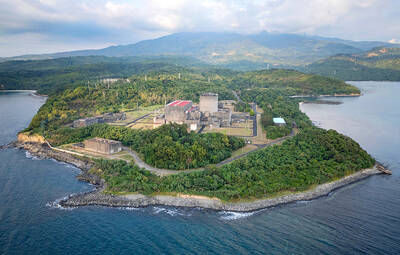
Nuclear power is getting a second look in Southeast Asia as countries prepare to meet surging energy demand as they vie for artificial intelligence-focused data centers. Several Southeast Asian nations are reviving mothballed nuclear plans and setting ambitious targets and nearly half of the region could, if they pursue those goals, have nuclear energy in the 2030s. Even countries without current plans have signaled their interest. Southeast Asia has never produced a single watt of nuclear energy, despite long-held atomic ambitions. But that may soon change as pressure mounts to reduce emissions that contribute to climate change, while meeting growing power needs. The


 RSS
RSS