


When Virginia Tech professor Sweta Gyanu Baniya saw an ornate 17th-century Nepali necklace in the Art Institute of Chicago, she burst into tears, bowed down and began to pray.
Now a video she posted on social media has made the artifact one of the latest targets for heritage activists sleuthing online to try to bring home some of the thousands of items whisked out over decades from the Himalayan country.
The return journey has been made by only a handful of relics, but they have come from some of the world’s top cultural institutions and pressure for more is mounting.
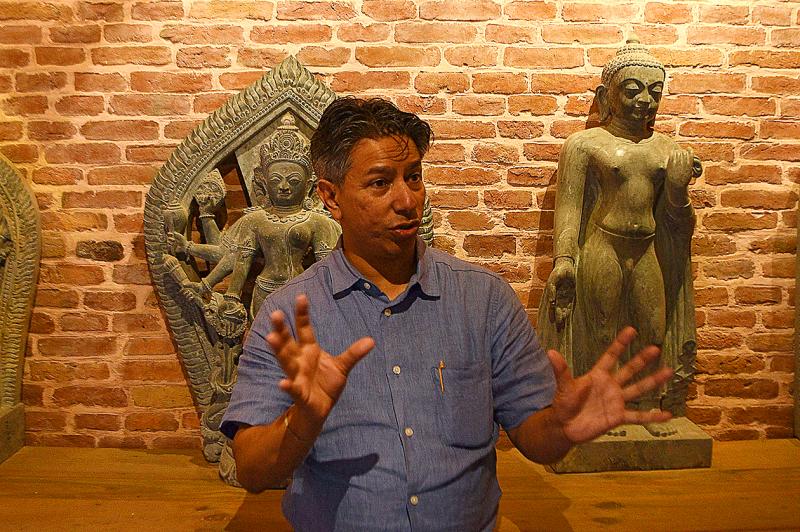
Photo: AFP
Nepal’s then king offered the gilt copper necklace, adorned with semi-precious stones, to Taleju Bhawani, his Malla dynasty’s patron goddess, in around 1650.
Her Kathmandu temple is only open to the public one day a year, but officials removed the work for safekeeping in the 1970s — after which it disappeared.
Baniya said her reaction when she visited the Chicago museum in June was “just overpowering.”
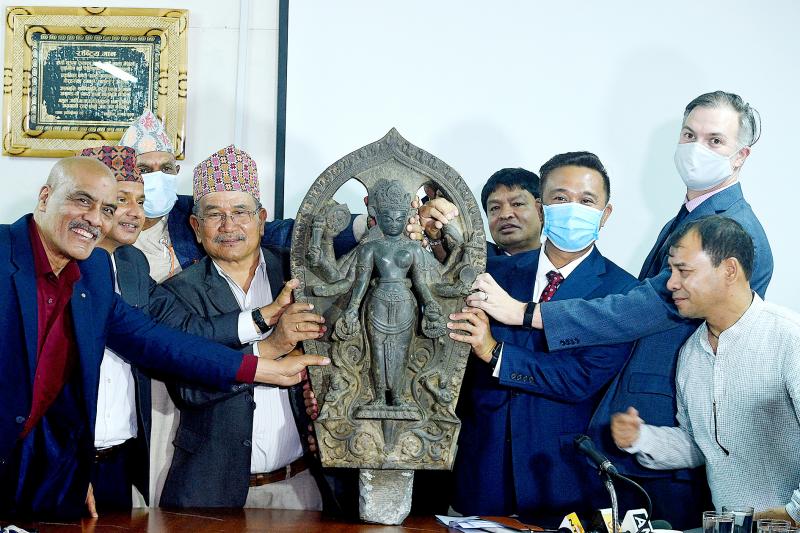
Photo: AFP
“I started to weep in front of it,” she said. “I started to just pray normally like I would do in temple. I had so many questions. Like why it is here, how did it come here?”
Traces of vermilion pigment used in Hindu worship rituals are still visible on its surface, and Baniya’s Twitter video prompted Nepali authorities to contact the museum to seek its return.
The Art Institute of Chicago did not respond to multiple requests for comment but its Web site states the necklace was donated by the private Alsdorf Foundation, which bought it from a California dealer in 1976.
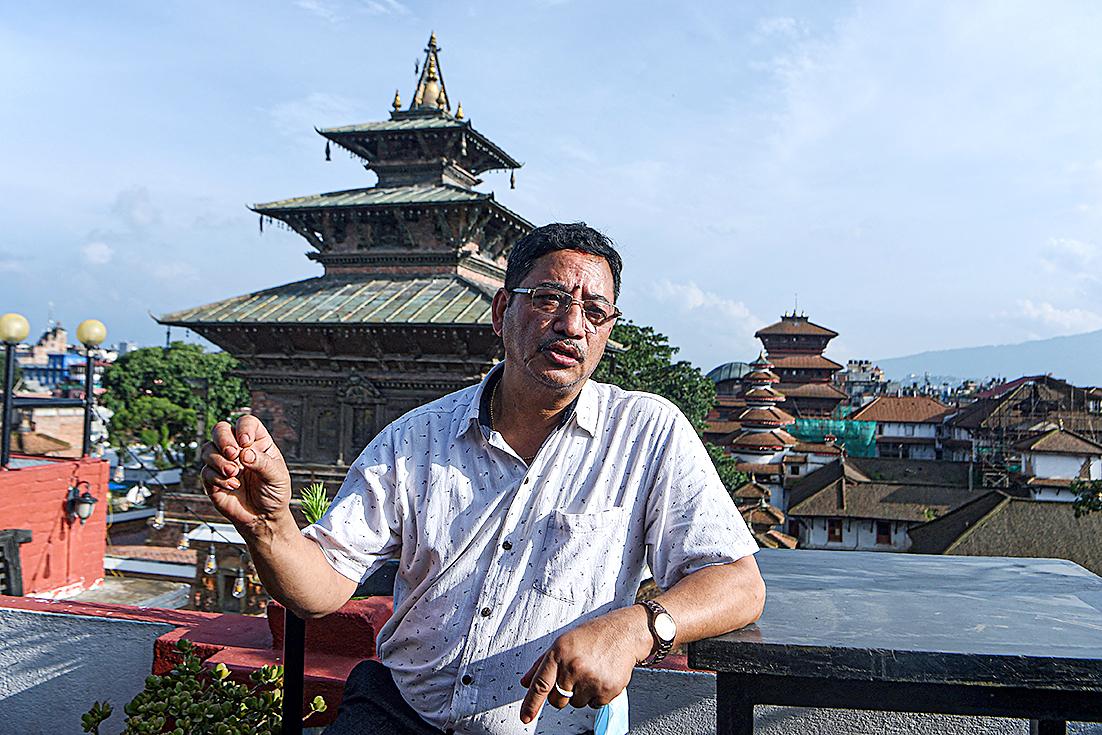
Photo: AFP
Priest Udhav Kamacharya has served at the temple for 26 years but Baniya’s footage was the first time he had seen the relic.
As he watched, he said: “I felt that the goddess still resides here. We sometimes say the gods are not here anymore, but they are. That is why it was found despite being in a foreign land.”
OPENING UP
Nepal is deeply religious and its Hindu and Buddhist temples and heritage sites remain an integral part of people’s everyday lives.
Many, though, are bereft of their centuries-old sculptures, paintings, ornamental windows and even doors, stolen — sometimes with the assistance of corrupt officials — after the country opened up to the outside world in the 1950s to feed art markets in the US, Europe and elsewhere.
“Our art for us is not just art, they are gods to us,” said heritage expert Rabindra Puri, who campaigns to repatriate stolen Nepali heritage and has assembled a collection of replicas for a planned museum on the issue.
In June, the Paris branch of auction house Bonhams was forced to cancel the sale of five gilded copper-bronze idols, wrenched out from the gateway of a temple in the 1970s, after pressure from Nepali officials and activists.
The auction was first spotted by Lost Art of Nepal, an anonymously-run Facebook page that has posted about hundreds of historical and religious objects, flagging their new locations from auction houses to European or American museums.
“We have seen empty temples, empty shrines, empty pedestals and torn toranas everywhere” in the Kathmandu valley, the page’s administrator said in an email.
“In search for answers, I have collected old photographs from... (all) possible sources,” they added. “The extent of loss of our heritage is much more than what is known or published.”
ANDROGYNOUS IDOLS
Campaigners want to make stolen art — thefts continue to this day, primarily from remote monasteries — as sensitive an issue among buyers and collectors as conflict diamonds or elephant ivory.
With heritage repatriation a growing issue for museums around the world — the ancient Greek Elgin Marbles and the Benin Bronzes from Nigeria are probably the best-known controversies — the occasional Nepali recovery is building into a trickle.
Six pieces have been returned this year and authorities are seeking more from France, the US and Britain.
In March, the Dallas Art Museum and the FBI returned to Nepal a stolen 12th to 15th-century androgynous stone sculpture of Hindu deities Laxmi-Narayan.
This month it will be reinstalled in its original temple location, from where it disappeared in 1984.
The museum had held the statue for 30 years but a tweet by arts crime professor Erin Thompson questioning its provenance prompted an investigation.
“These are objects people were worshiping until it was ripped away from them,” she said.
New York’s Metropolitan Museum of Art handed over a 10th-century stone sculpture of the Hindu god Shiva in September, the third item it has repatriated to Nepal since 2018.
In Bhaktapur, devotees worship another androgynous Laxmi-Narayan idol, protected behind a locked iron gate.
Expecting mothers continue the ancient tradition of offering it oil to predict the gender of their baby.
But it is a replica. The 15th-century original went missing in the early 1980s. Badri Tuwal, 70, remembers how residents cried in mourning the day the idol disappeared.
“We don’t know where it is,” he said, “but I hope someday we can celebrate its return.”
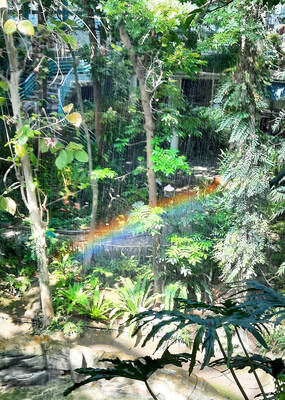
It’s only half the size of its more famous counterpart in Taipei, but the Botanical Garden of the National Museum of Nature Science (NMNS, 國立自然科學博物館植物園) is surely one of urban Taiwan’s most inviting green spaces. Covering 4.5 hectares immediately northeast of the government-run museum in Taichung’s North District (北區), the garden features more than 700 plant species, many of which are labeled in Chinese but not in English. Since its establishment in 1999, the site’s managers have done their best to replicate a number of native ecosystems, dividing the site into eight areas. The name of the Coral Atoll Zone might
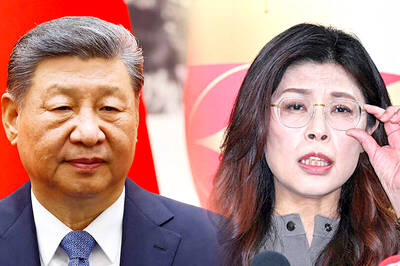
On Monday morning, in quick succession, the Chinese Communist Party (CCP) and the Chinese Nationalist Party (KMT) released statements announcing “that the Central Committee of the Communist Party of China and General Secretary Xi Jinping (習近平) have invited KMT Chairwoman Cheng Li-wun (鄭麗文) to lead a delegation on a visit to the mainland” as the KMT’s press release worded it. The KMT’s press release added “Chairwoman Cheng expressed her gratitude for the invitation and has gladly accepted it.” Beijing’s official Xinhua news release described Song Tao (宋濤), head of the Taiwan Work Office of the CCP Central Committee, as
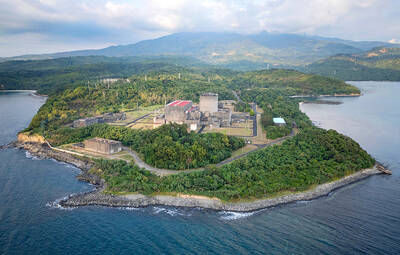
Nuclear power is getting a second look in Southeast Asia as countries prepare to meet surging energy demand as they vie for artificial intelligence-focused data centers. Several Southeast Asian nations are reviving mothballed nuclear plans and setting ambitious targets and nearly half of the region could, if they pursue those goals, have nuclear energy in the 2030s. Even countries without current plans have signaled their interest. Southeast Asia has never produced a single watt of nuclear energy, despite long-held atomic ambitions. But that may soon change as pressure mounts to reduce emissions that contribute to climate change, while meeting growing power needs. The

Last week saw Ko Wen-je (柯文哲), former Taipei mayor and founder of the Taiwan People’s Party (TPP), receive a 17-year sentence for crimes involving political corruption. This was only the opening round: the case is likely to drag on for several more years in appeals. Both the TPP and the Chinese Nationalist Party (KMT) are claiming that the prosecutors are engaging in a political witch hunt, green terror, fascism and so forth. It is easy to see this as a kind of compensation. After all, otherwise they would have to admit that the rather impressive collection of evidence against Ko actually


 RSS
RSS