


My goals were straightforward. I’d ride my motorcycle from my home in Tainan along back-country roads into Kaohsiung’s Tianliao (田寮) and Cishan (旗山) districts, then loop back through Yanchao (燕巢). I had a short list of places I wanted to visit along the way, and I was confident I’d stumble across a few more points of interest.
Turning off Provincial Highway 19A (19甲), I veered northeast on Tainan Local Road 163 (南163) until I saw a sign for Daping (大坪). Like 163, this second (and apparently unnumbered) road turned out to be a gently undulating rural delight. I passed a few pineapple plantations, and some farmers who were cutting bamboo, but few other signs of agriculture, let alone industry.
Soon enough I’d crossed from one municipality into another, and the route’s designation was now Kaohsiung Local Road 39-1 (高39-1). Before reaching Provincial Highway 28, I got to enjoy some views of the moon-like badlands for which Tianliao is famous. One of the best places to take photos is around the km3 marker on 39-1.
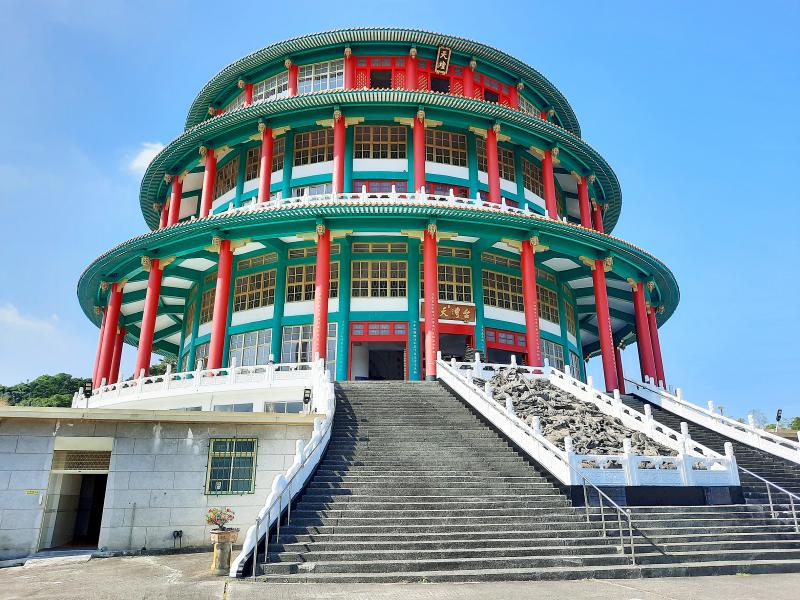
Photo: Steven Crook
I’ve driven or ridden along Highway 28 a few times, but never before noticed the entrance to Flora Lakes Campground (麗湖探索教育園區). It’s on the southside of the road, a bit west of the km26 marker.
From the sorry state of the campground’s sign, I assumed the place had gone out of business long ago. However, after making inquiries, I’m still not sure if it’s closed down or not.
The main building is falling apart and fenced off to deter urbex-types. At the time of my visit, the only guests were anglers trying their luck in the sizable lake.
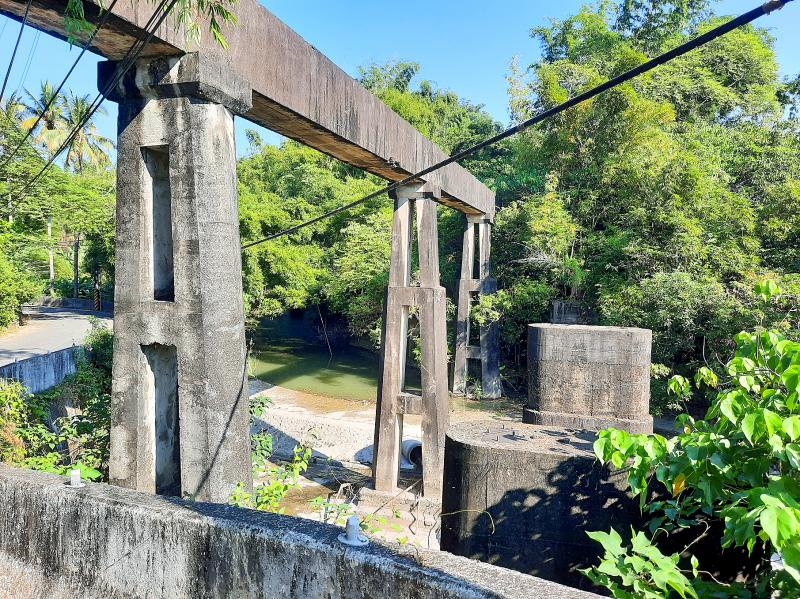
Photo: Steven Crook
From the outskirts of Cishan I rode south on Provincial Highway 29. I was searching for a sight that barely counts as a tourist attraction, but which some people think is worth stopping at. A stone’s throw from the km69 marker, I found it — even though there’s no sign in Chinese or English.
The Elevated Aqueduct (高空水橋), built to carry drinking water into the center of Cishan, is not in any sense visually impressive. Unlike some other pre-World War II water-supply infrastructure in Taiwan, it’s neither imposing nor ornate.
That said, the mere fact that it’s survived every earthquake and typhoon to hit the region since 1925 is reason enough to take an interest in this highly functional concrete artifact.
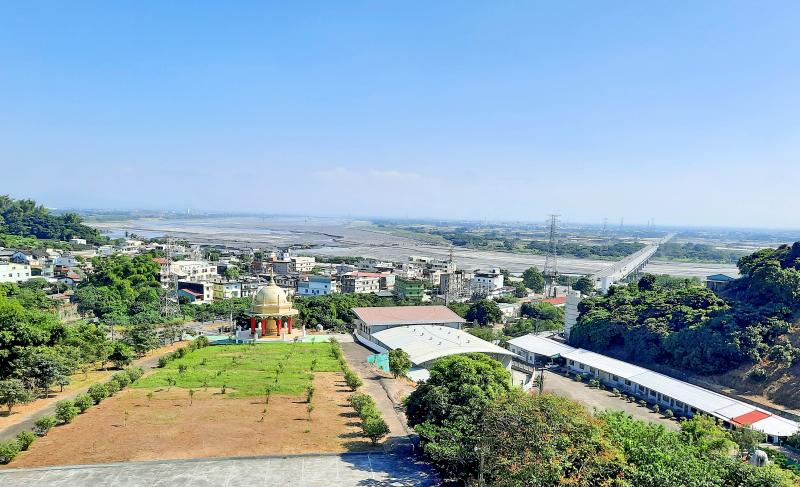
Photo: Steven Crook
Some visitors are more excited by the two bridge piers that stand in the waterway, a few meters east of the aqueduct. These are remnants of a narrow-gauge sugar-industry railroad that once transported both passengers and unprocessed sugarcane.
A little further along Highway 29, on a whim I turned west onto a minor road and headed uphill, where a sign pointed the way to Cinan Cooperative Farm (旗南合作農場).
The “cooperative” part of the name intrigued me. I wondered if it belonged to a utopian sect, or maybe one of those institutions where families deposit mentally-ill or otherwise troublesome relatives.
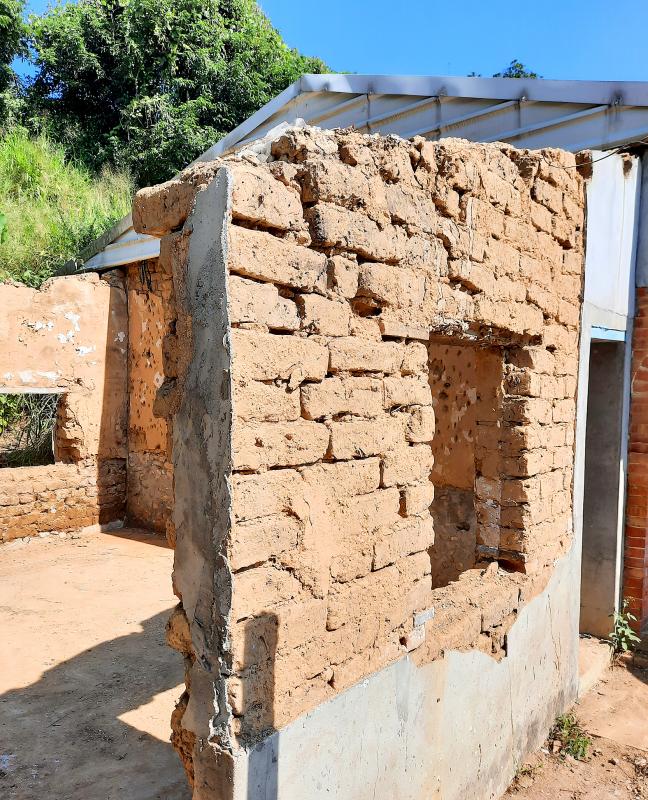
Photo: Steven Crook
The further along the road I went, the surer I was of one thing: No agriculture was being done.
Searching online once I’d got home, I found a Feb. 8 report about the farm in the Chinese-language China Times. It said that barrels containing hazardous industrial waste had been dumped on the farm by persons unknown.
By way of background, the report noted that the farm had been established over 70 years ago, and that it covered more than 70 jia (甲, a traditional unit of measurement equal to 0.97 hectares, said to have been introduced by the Dutch during their 17th-century occupation of the Tainan area).
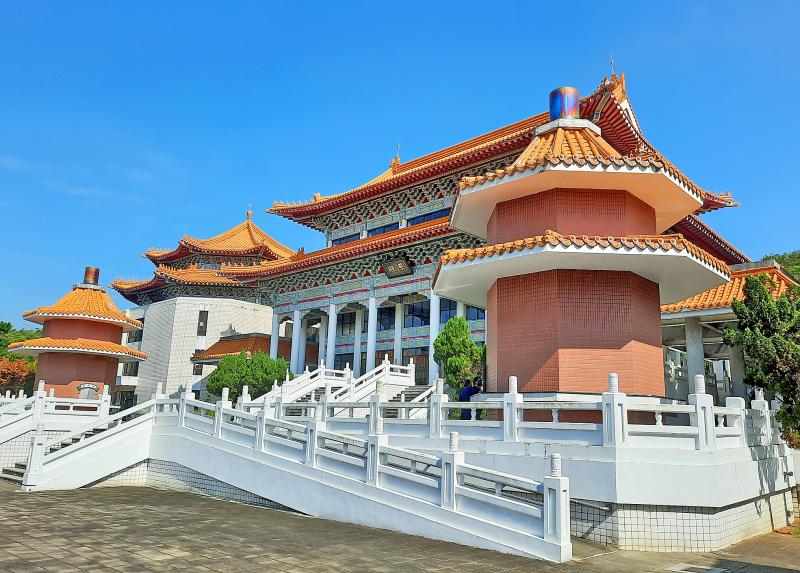
Photo: Steven Crook
Nearby residents had pooled their resources to obtain the land. They found success growing low-pesticide lychees for export to the US. However, when demand eventually dwindled, most of the land was abandoned.
I rode until a fallen utility pole blocked the road, about 1.5km from Highway 29. As I explored on foot, I realized that the view to the northeast, over the Kaoping River (高屏溪) and toward Meinong (美濃), makes this little detour very worthwhile. If you come at first light, it’s undoubtedly even better.
Next on my list was Taiwan Temple of Heaven (台灣天壇). Completed in 1982, it’s similar to, but by no means an exact replica of, the original Temple of Heaven in Beijing.
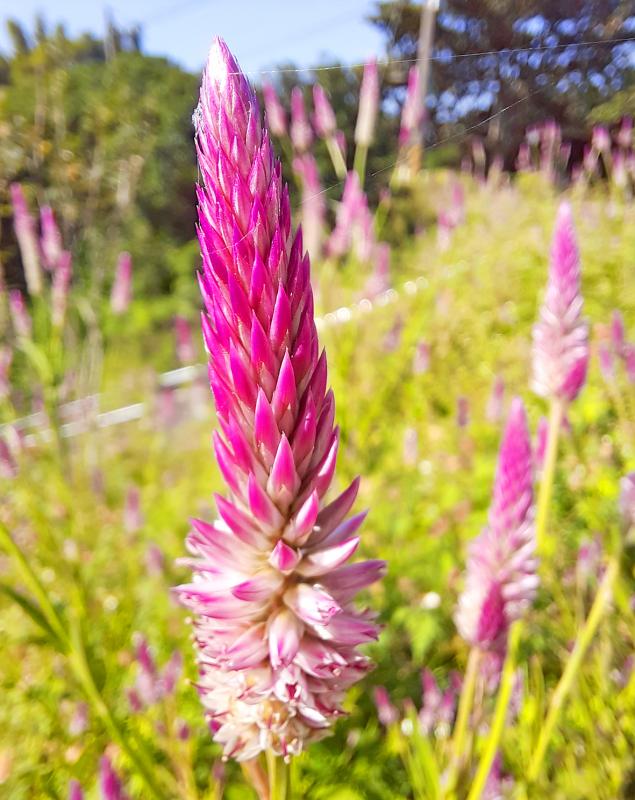
Photo: Steven Crook
Despite its convenient location (on the southside of Provincial Highway 22, a few hundred meters west of the intersection with Highway 29), this colorful landmark doesn’t attract many visitors. It’s overshadowed by the internationally-known Buddhist edifice at Fo Guang Shan (佛光山), a mere 2km to the south.
I climbed the stairs to the third floor of the Taiwan Temple of Heaven for another look across the river. Several heavy digging machines were lifting gravel from the riverbed, and tipping it into trucks for removal. They’ve been doing this here for as long as I can remember.
At Kaohsiung City Veterans Shrine Yanchao Park (高雄市軍人忠烈祠燕巢園區) — the turnoff for which is just west of a hospital, between the km11 and km12 markers on Highway 22 — I hoped to find some Chinese Nationalist Party (KMT) history.
This cemetery is possibly the biggest I’ve come across in Taiwan. Beyond the spick-and-span complex that includes a shrine to deceased military personnel, a tomb of an unknown soldier, and a columbarium, individual graves are jam-packed on hillside after hillside. Most show the provincial origins of the deceased, and it appears the majority of these ex-soldiers were born in China.
Nowhere did I see a map, or signs that might help a person unfamiliar with the cemetery’s layout find a particular grave. Visiting the burial site of a loved one isn’t really a custom here, it seems.
I’d just about given up on finding anything noteworthy when a cluster of smaller-than-average tombs caught my attention. The font on each gravestone was identical. On a few dozen, the inscription included the characters wumingshi nan (無名氏男, “anonymous male”) or wumingshi nu (無名氏女, “anonymous female”).
These interments all dated from the early or mid 1990s, and most were sponsored by a Buddhist NGO. Several grave markers noted where the deceased was discovered, and the date they were found.
Some were pulled from the ocean, Kaohsiung’s harbor, or Love River (愛河). At least one died in (or was left at) a hospital.
Examining each in turn, deciphering what I could, I came to one gravestone that carried no date. In fact, there were just six characters on the marker: wutou nushi zhi fen (無頭女屍之墳;, “grave of a headless female”).
The macaques in the forest behind the cemetery likely heard my gulp of shock.
I decided to get out of there. And ride home very carefully.
Steven Crook has been writing about travel, culture and business in Taiwan since 1996. He is the author of Taiwan: The Bradt Travel Guide and co-author of A Culinary History of Taipei: Beyond Pork and Ponlai.
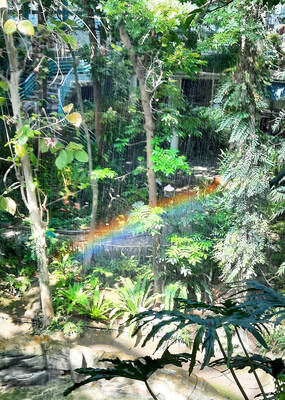
It’s only half the size of its more famous counterpart in Taipei, but the Botanical Garden of the National Museum of Nature Science (NMNS, 國立自然科學博物館植物園) is surely one of urban Taiwan’s most inviting green spaces. Covering 4.5 hectares immediately northeast of the government-run museum in Taichung’s North District (北區), the garden features more than 700 plant species, many of which are labeled in Chinese but not in English. Since its establishment in 1999, the site’s managers have done their best to replicate a number of native ecosystems, dividing the site into eight areas. The name of the Coral Atoll Zone might

On Monday morning, in quick succession, the Chinese Communist Party (CCP) and the Chinese Nationalist Party (KMT) released statements announcing “that the Central Committee of the Communist Party of China and General Secretary Xi Jinping (習近平) have invited KMT Chairwoman Cheng Li-wun (鄭麗文) to lead a delegation on a visit to the mainland” as the KMT’s press release worded it. The KMT’s press release added “Chairwoman Cheng expressed her gratitude for the invitation and has gladly accepted it.” Beijing’s official Xinhua news release described Song Tao (宋濤), head of the Taiwan Work Office of the CCP Central Committee, as
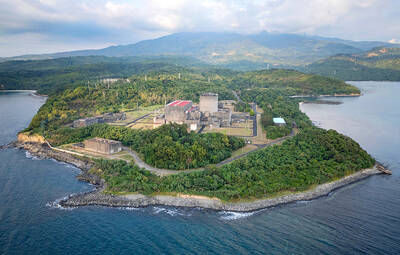
Nuclear power is getting a second look in Southeast Asia as countries prepare to meet surging energy demand as they vie for artificial intelligence-focused data centers. Several Southeast Asian nations are reviving mothballed nuclear plans and setting ambitious targets and nearly half of the region could, if they pursue those goals, have nuclear energy in the 2030s. Even countries without current plans have signaled their interest. Southeast Asia has never produced a single watt of nuclear energy, despite long-held atomic ambitions. But that may soon change as pressure mounts to reduce emissions that contribute to climate change, while meeting growing power needs. The

Last week saw Ko Wen-je (柯文哲), former Taipei mayor and founder of the Taiwan People’s Party (TPP), receive a 17-year sentence for crimes involving political corruption. This was only the opening round: the case is likely to drag on for several more years in appeals. Both the TPP and the Chinese Nationalist Party (KMT) are claiming that the prosecutors are engaging in a political witch hunt, green terror, fascism and so forth. It is easy to see this as a kind of compensation. After all, otherwise they would have to admit that the rather impressive collection of evidence against Ko actually


 RSS
RSS