


A large huntsman spider races toward me, scrambles up my leg and disappears into my shorts. “Yikes!” I instinctively drop my shorts, as my fellow hikers gasp — and then chuckle with amusement.
Elsewhere, a red-banded snake crosses the trail in front of us, a japaluras lizard lies sleeping in the trees and bats dart here and there: a nocturnal excursion isn’t for the faint of heart. We were off to a good start along section two of the 92km Taipei Grand Trail (台北大縱走), which combines numerous existing trails into a hike divided into seven sections around the Taipei Basin, but little did we know we were walking into a storm.
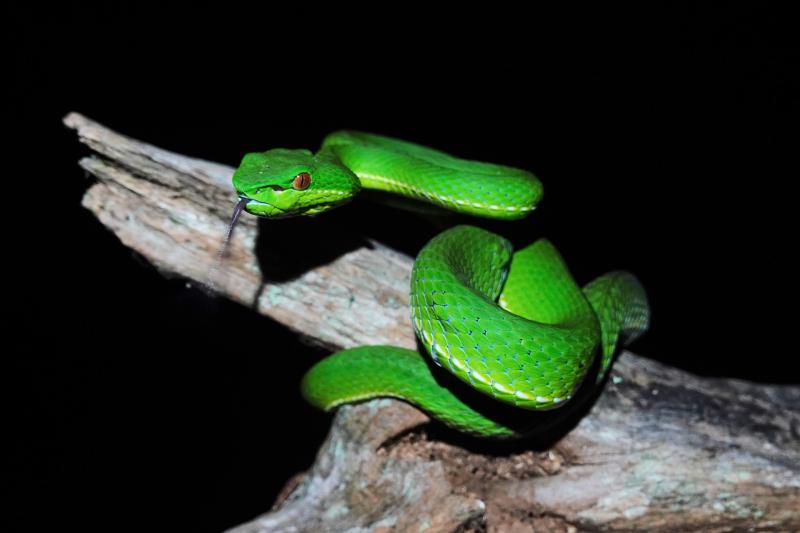
Photo: James Osborne
STAGE TWO
The 9km trek begins at Erziping Visitors Center (二子坪遊客服務站) in Yangmingshan National Park (陽明山國家公園), where stage one ends. From there on to Miantianping (面天坪) where it climbs up to Datun Mountain West Peak (大屯山西峰). Then on to Datun Mountain Main Peak (大屯山) and back down the north side of the mountain. The final 1.6km brings the hike to an end at Xiaoyoukeng Parking area (小油坑停車場). As we gather back at Erziping Visitors Center in Yangmingshan National Park, Typhoon Chanthu prepares to make landfall.
The second stage was delayed for several months due to the level three COVID-19 restrictions. Together with new faces and some who joined the first stage hike back in May, we immediately encounter a new issue. We haven’t even begun the hike and there are flashing lights, police cars and an emergency crew carrying a stretcher.
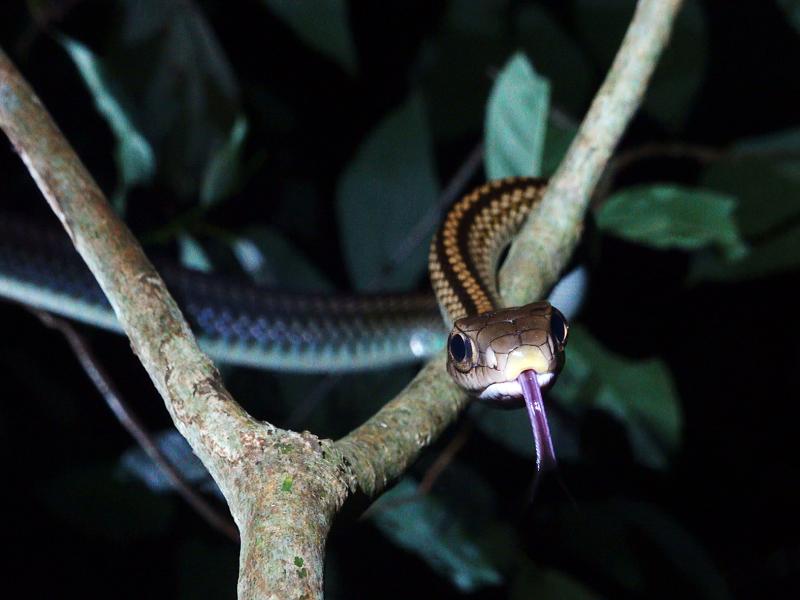
Photo: James Osborne
A hiker had lost their way and was caught out by nightfall. The rescuers inform us that they had successfully completed the rescue, and we assure them that we will be careful as we enter the forest.
Before long we encounter an enormous Chinese moon moth and our group gathers around. Each of its scarlet-fringed azure-blue wings are easily the size of my palm. These moths are roughly the shape of a stingray with two long tails. We snap a few shots as it clings to a branch flapping about in the wind.
SPIDER SENSE
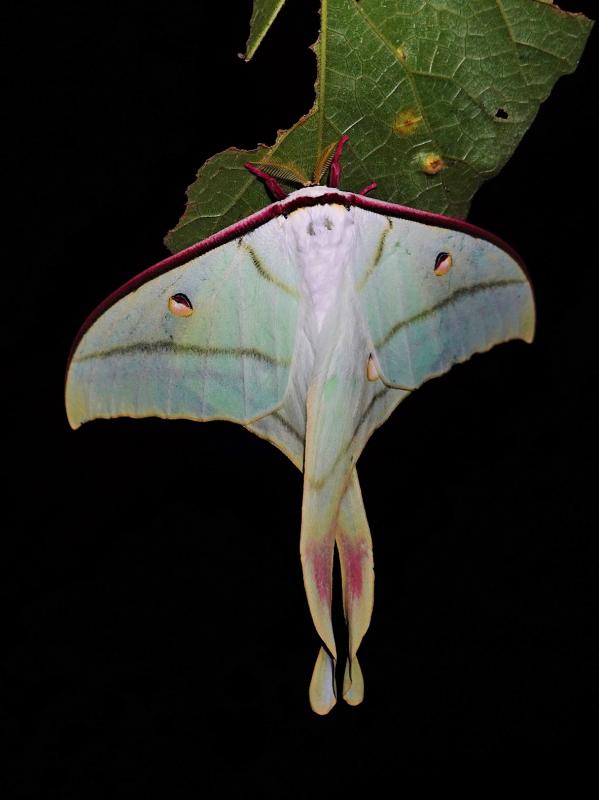
Photo: James Osborne
As we approach the Miantianping section of the trail someone spots the aforementioned huntsman spider. Amazed by its size, cameras start flashing as one of our party asks if it is poisonous.
An instant later it’s up my leg and into my shorts. In an effort to get it out, and as a mere instinctual reaction, my pants had to come off. Not usually bothered by spiders, I couldn’t cope with it in my shorts.
The next moment I feel it crawl up my back to my neck and then it jumps off of my shoulder to gasps from onlookers. I find myself feeling like a fool, standing there in my underpants.
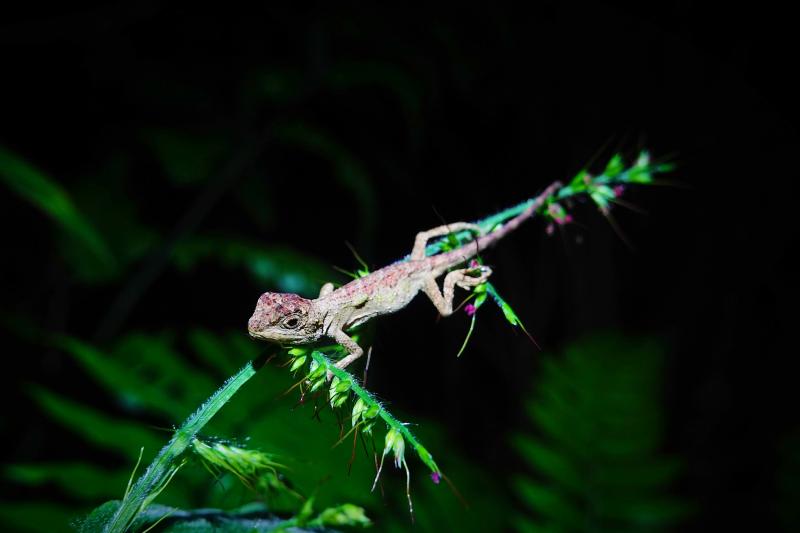
Photo: James Osborne
Not long after that, one of our party shrieks as we cross paths with a venomous green tree viper making its way to find a place to settle for the night. And soon another is spotted sitting in ambush position atop a fallen log, its bright green contrasting with the dark forest background.
These are ambush predators, so they will sit motionless for hours, even days, waiting for a passing frog or lizard. This makes them very photogenic, so fears quickly give way to admiration.
At this point the trail becomes steep as it begins to ascend Datunshan West Peak. There are no steps, just ropes and a rocky path. We tread carefully as we begin to feel the burn of the climb.
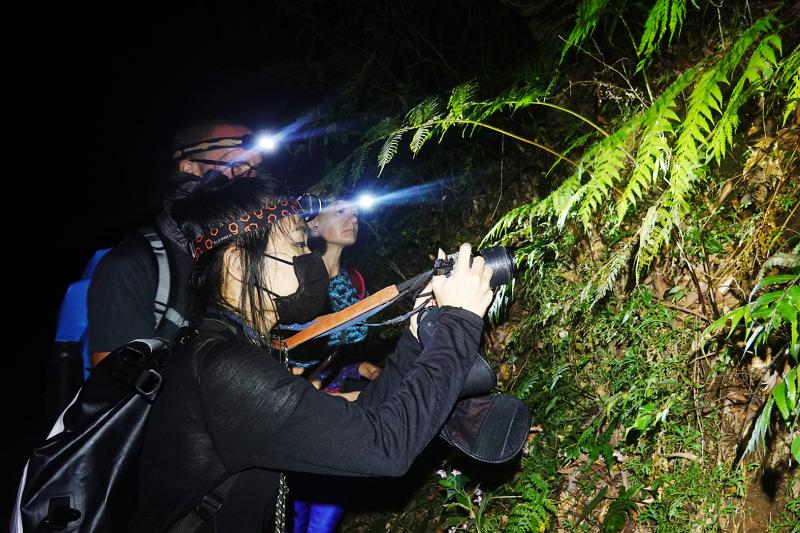
Photo: James Osborne
Taking a moment to catch our breath, we notice the white belly of a big-eyed rat snake sleeping in a tree. As we approach for a closer look, it wakes up and slithers out to the end of a branch.
These are not a common species, so we are fortunate to get a look at it as it comes face-to-face with us. “Woah,” exclaims one of our party as he steps away from the snake, which slithers along a branch toward us. He then moves back in when he realizes there is no danger.
TAIPEI VIEWS
We summit Datunshan West Peak as the strengthening winds bring in waves of mist. We are lucky to be able to get some views of Taipei’s lights far below before the clouds block everything from sight.
We make a short descent into some forest as we begin to approach Datunshan main peak, encountering bright green japaluras and a Plestiodon elegans, more commonly known as the Shanghai elegant skink, with a cobalt-blue tail.
Barely visible through the mist, the lights of our last two members emerge as they join us at the summit of Datun Mountain’s main Peak. Wet but in high spirits, we shudder as strong winds begin to bring rain.
Fortunately the remaining 4km or so run parallel with the road so as the rain turned into a downpour, we chose to take the road. Greeted by a couple of toads and a green tree viper brave enough to be out in the storm, we race down the hill as Typhoon Chanthu begins to close her fingers on the mountain.
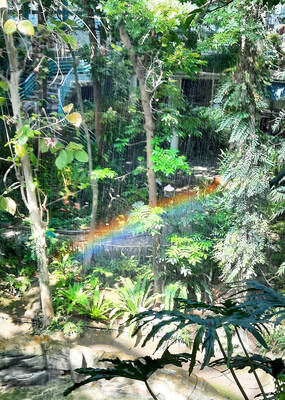
It’s only half the size of its more famous counterpart in Taipei, but the Botanical Garden of the National Museum of Nature Science (NMNS, 國立自然科學博物館植物園) is surely one of urban Taiwan’s most inviting green spaces. Covering 4.5 hectares immediately northeast of the government-run museum in Taichung’s North District (北區), the garden features more than 700 plant species, many of which are labeled in Chinese but not in English. Since its establishment in 1999, the site’s managers have done their best to replicate a number of native ecosystems, dividing the site into eight areas. The name of the Coral Atoll Zone might

On Monday morning, in quick succession, the Chinese Communist Party (CCP) and the Chinese Nationalist Party (KMT) released statements announcing “that the Central Committee of the Communist Party of China and General Secretary Xi Jinping (習近平) have invited KMT Chairwoman Cheng Li-wun (鄭麗文) to lead a delegation on a visit to the mainland” as the KMT’s press release worded it. The KMT’s press release added “Chairwoman Cheng expressed her gratitude for the invitation and has gladly accepted it.” Beijing’s official Xinhua news release described Song Tao (宋濤), head of the Taiwan Work Office of the CCP Central Committee, as
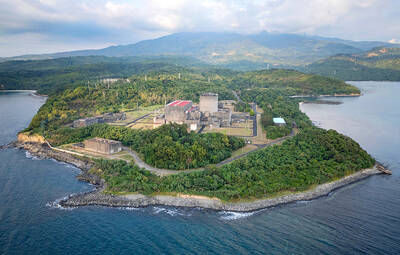
Nuclear power is getting a second look in Southeast Asia as countries prepare to meet surging energy demand as they vie for artificial intelligence-focused data centers. Several Southeast Asian nations are reviving mothballed nuclear plans and setting ambitious targets and nearly half of the region could, if they pursue those goals, have nuclear energy in the 2030s. Even countries without current plans have signaled their interest. Southeast Asia has never produced a single watt of nuclear energy, despite long-held atomic ambitions. But that may soon change as pressure mounts to reduce emissions that contribute to climate change, while meeting growing power needs. The

Last week saw Ko Wen-je (柯文哲), former Taipei mayor and founder of the Taiwan People’s Party (TPP), receive a 17-year sentence for crimes involving political corruption. This was only the opening round: the case is likely to drag on for several more years in appeals. Both the TPP and the Chinese Nationalist Party (KMT) are claiming that the prosecutors are engaging in a political witch hunt, green terror, fascism and so forth. It is easy to see this as a kind of compensation. After all, otherwise they would have to admit that the rather impressive collection of evidence against Ko actually


 RSS
RSS