


Beijing marks 100 days until the Winter Olympics tomorrow but preparations for the Games have been overshadowed by boycott calls and a fresh coronavirus outbreak in China.
The Chinese capital in February will become the first host of a Summer and Winter Games and last week welcomed the Olympic flame with a low-key ceremony as the main event swings into view.
There was no sign of dissent in strictly controlled China, but the flame-lighting ceremony in Greece was disrupted by a small number of activists who brandished a Tibetan flag and a banner saying “no genocide.”
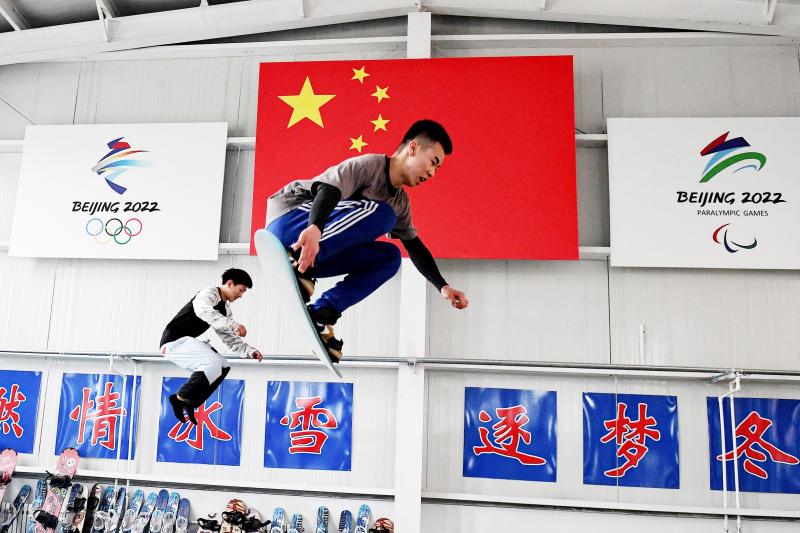
Photo: AFP
Organizers have given no details about how they plan to mark the 100 days and any festivities look set to be small, with Chinese authorities rushing to stamp out a virus outbreak in their pursuit of a zero-cases policy.
This weekend’s Beijing Marathon has been postponed and China yesterday reported 39 new domestic infections, while urging people to avoid unnecessary travel outside the capital.
China, where the coronavirus emerged towards the end of 2019, has wrestled infections down with mass testing, aggressive lockdowns and by largely sealing its borders.
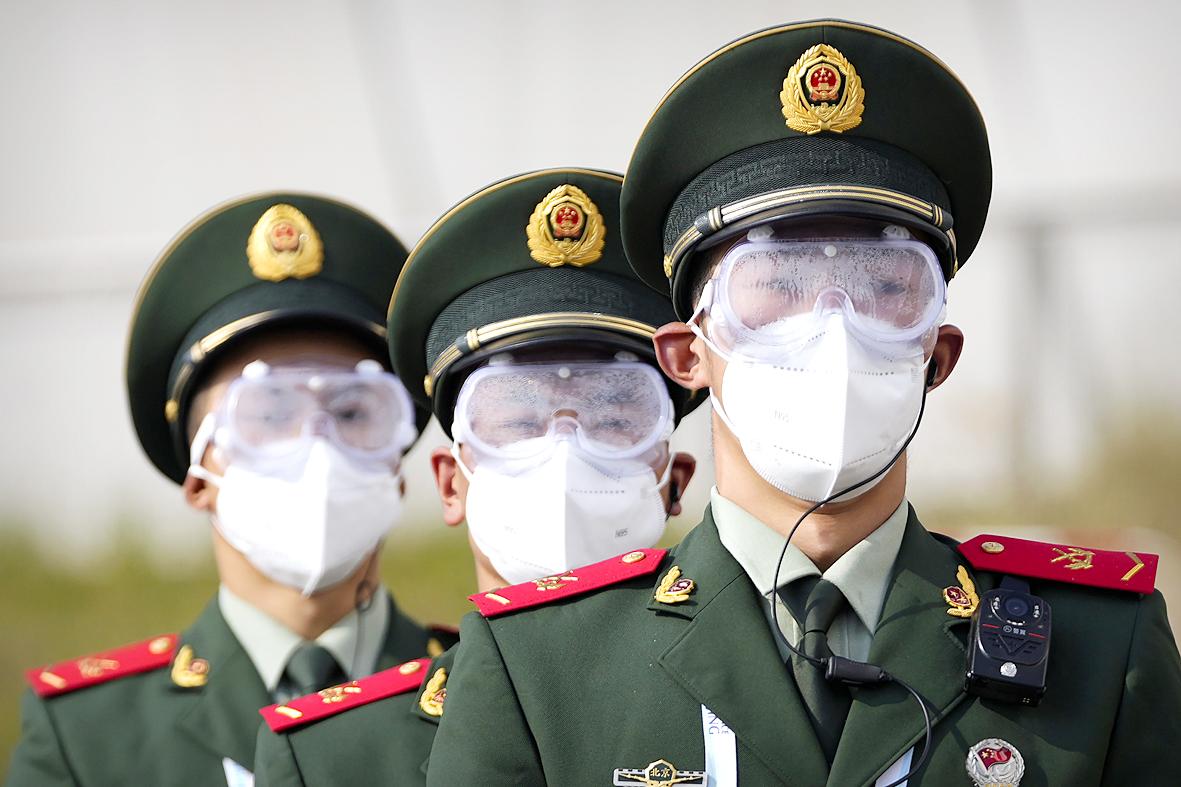
Photo: AP
The 2022 Games, which take place just six months after the pandemic-delayed Tokyo Summer Olympics, will be held in a strict “closed loop” bubble to thwart infections.
The estimated 2,900 athletes must be fully vaccinated or face 21 days’ quarantine upon arrival in the Chinese capital.
Unlike the Tokyo Games, there will be spectators, but ticket sales are limited to people living in China.
‘WRONG CHOICE’
Days after activists targeted the flame-lighting ceremony in Greece, NBA player Enes Kanter branded President Xi Jinping (習近平) a “brutal dictator” and condemned China’s policies in Tibet, underlining how sports stars increasingly use their clout to speak out on sensitive issues.
China’s communist rulers have consistently railed against what they call the “politicization” of sport, and the International Olympic Committee says that it is not within its remit “to go into a country and tell them what to do.”
But the International Campaign for Tibet said that China’s response to Kanter’s intervention — with games played by his Boston Celtics team yanked from live-streaming broadcasts — was more proof that “the country is the wrong choice” to host the Olympics.
The Washington-headquartered group called for world leaders to stage a diplomatic boycott — in line with demands by other activists — but stopped short of demanding fully blacklisting the nation.
China’s clampdown in the former British colony of Hong Kong and its treatment of mostly Muslim Uighurs in the region of Xinjiang are also under scrutiny.
Rights groups say more than one million Uighurs and other minorities in Xinjiang have been held in camps in recent years — with Washington describing their treatment as “genocide.”
After initially denying the existence of the Xinjiang camps, China defended them as vocational training centers aimed at reducing Islamic extremism.
‘VIBRANT SPORTS CULTURE’
If the 2008 Beijing Games were seen as China’s coming-out party, the 2022 Olympics are part of a drive by authorities to get 300 million people — about a quarter of the country’s population — into winter sports.
“Through the unique formats and methods with Chinese characteristics, we hope that people all over the world can experience China’s vibrant sports culture and appreciate the enthusiasm of every Chinese person to participate in and support the Olympic Games,” Wang Xiangyu, a senior 2022 official, said last week.
The Games — running Feb. 4 to Feb. 20 — will make use of some of 2008’s venues, including the “Bird’s Nest” national stadium for the opening and closing ceremonies.
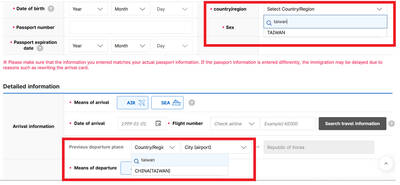
Jason Han says that the e-arrival card spat between South Korea and Taiwan shows that Seoul is signaling adherence to its “one-China” policy, while Taiwan’s response reflects a reciprocal approach. “Attempts to alter the diplomatic status quo often lead to tit-for-tat responses,” the analyst on international affairs tells the Taipei Times, adding that Taiwan may become more cautious in its dealings with South Korea going forward. Taipei has called on Seoul to correct its electronic entry system, which currently lists Taiwan as “China (Taiwan),” warning that reciprocal measures may follow if the wording is not changed before March 31. As of yesterday,

The Portuguese never established a presence on Taiwan, but they must have traded with the indigenous people because later traders reported that the locals referred to parts of deer using Portuguese words. What goods might the Portuguese have offered their indigenous trade partners? Among them must have been slaves, for the Portuguese dealt slaves across Asia. Though we often speak of “Portuguese” ships, imagining them as picturesque vessels manned by pointy-bearded Iberians, in Asia Portuguese shipping between local destinations was crewed by Asian seamen, with a handful of white or Eurasian officers. “Even the great carracks of 1,000-2,000 tons which plied

It’s only half the size of its more famous counterpart in Taipei, but the Botanical Garden of the National Museum of Nature Science (NMNS, 國立自然科學博物館植物園) is surely one of urban Taiwan’s most inviting green spaces. Covering 4.5 hectares immediately northeast of the government-run museum in Taichung’s North District (北區), the garden features more than 700 plant species, many of which are labeled in Chinese but not in English. Since its establishment in 1999, the site’s managers have done their best to replicate a number of native ecosystems, dividing the site into eight areas. The name of the Coral Atoll Zone might
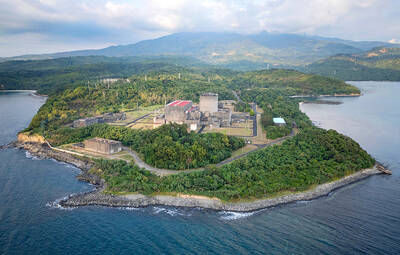
Nuclear power is getting a second look in Southeast Asia as countries prepare to meet surging energy demand as they vie for artificial intelligence-focused data centers. Several Southeast Asian nations are reviving mothballed nuclear plans and setting ambitious targets and nearly half of the region could, if they pursue those goals, have nuclear energy in the 2030s. Even countries without current plans have signaled their interest. Southeast Asia has never produced a single watt of nuclear energy, despite long-held atomic ambitions. But that may soon change as pressure mounts to reduce emissions that contribute to climate change, while meeting growing power needs. The


 RSS
RSS