


If there is anything that long-term foreigners here agree on, it is the ineptitude of Taiwan’s tourism bodies in presenting Taiwan to the international community. The latest offering, reported on by Focus Taiwan last week, is the Time for Taiwan (線上台灣館) Virtual Exhibition Web site (www.tva.org.tw), created by the Taiwan Visitors Association for the nation’s Tourism Bureau.
The new site is aimed at tourists who might think about visiting Taiwan after it re-opens next year. Let us hope they don’t find it.
SAME OLD, SAME OLD
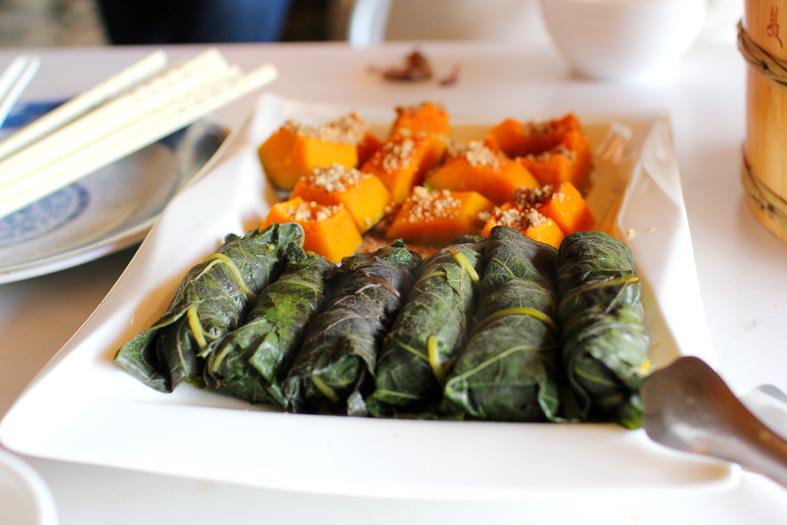
Photo: Michael Turton
When opened, the site declaims the weird, clumsy slogan “Taiwan is waiting for you!” which practically invites parody. All the usual problems are present. Done as a virtual exhibition, it takes forever to load and is crammed with a riot of color and sound. It routes viewers to apparent third-party sites that often contain no English, or whose English presents information unrelated to the site you just clicked on.
For example, the Web site for Hualien County’s Ceroh community (Chunrih Township, 春日) in the East Rift Valley gives entirely different information about the Hakka village in Fenglin Township (鳳林) if switched to English. Clicking on the list of bike rentals (theme.erv-nsa.gov.tw/bike/zh-tw/info/rental-station) gives an informative site, but entirely in Chinese, with no English alternative. Of course, when there is English, it is often lacking a professional editor’s attention.
Some presentations directly on the site, such as the video on the Siraya National Scenic Area, load in directly from YouTube and are entirely in Chinese with Chinese subtitles. The e-Guides, presented under the cringe-worthy banner of “Taiwan is Really Good Fun!” cover a wide variety of topics, but again, are desperately in need of a professional editor. The site invites you to “watch” them online (view a PDF). Wince!

Photo: Michael Turton
It is probably a good thing the site is set to expire at the end of August next year.
Long-time readers may recall the well-known and insightful blogger Tricky Taipei’s brutal expose of the Tourism Bureau from April of 2018: “Something Very Wrong is Happening at Taiwan’s Tourism Bureau,” which identified major problems with a promotional campaign. The bureau did the usual “apology shuffle” dance routine, but of course nothing changed.
That lack of change is the sad part. I have had numerous interactions with tourism officials over three decades and been called in to sit in on meetings and give advice, just like many other long-term foreigners. These problems are old and institutional. Again and again, individuals lower down in the bureaucracy have told me that promotions are aimed, not at potential tourists, but at the people at the top of the bureaucracy.
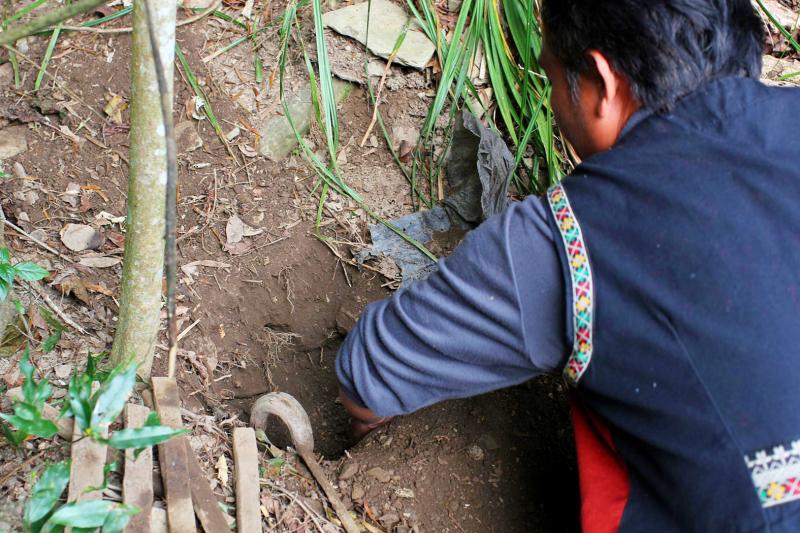
Photo: Michael Turton
TOURISM CLICHES
Meanwhile, the island’s amazing potential for experience and adventure tourism is ignored by the bureau’s Web sites (which are paragons of marketing brilliance, compared to the Taiwan Visitors Association Web site, tva.org.tw). Instead, the bureau offers endless presentations of familiar Taiwan tourism cliches (Dancing aborigines! Old women picking tea! Pretty girl taking pictures! Chopsticks picking up food!).
Taiwan is slowly becoming aware of itself as a cycling destination, and the first video I saw when I opened the “main hall” showed a woman cycling through some lovely scenery, professionally shot and narrated. Yet, cycling has hardly been touched, even though Taiwan hosts one of the most awesome annual cycling challenges in the world, the King of the Mountain. The government seems dimly conscious that the east coast is nice to cycle, but the central mountains remain largely a mystery to it.
There are many foreign cyclists with years of experience on the island who have blogged and published on it, but to my knowledge (as one of them) the tourism bureau has never called them in to ask how and what they should be promoting. Alas, my dream of one day being passed by a group of foreign tourists on bikes on the 159A in Chiayi County, the prettiest road on the island, remains unfulfilled.
ADVENTURES AND EXPERIENCES
Meanwhile Taiwan offers fantastic mountain hiking, paragliding, scuba diving and other adventure sports, almost all of which are neglected by the bureau. Taiwanese tourism organizations conceive of Taiwan as a place where tourists should be shopping and eating, and perhaps engaging in relatively passive experiences such as watching sunrises or photographing flowers.
But hiking Taiwan’s more than 60 peaks over 10,000 feet or scuba diving on its islands? That’s for scruffy backpackers, the kind of tourist Taiwan’s tourism organizations don’t like, because they are not seen as big spenders. Never mind that they would be buying services like guides and insurance, and made-in-Taiwan equipment.
I have often wondered if the lack of support for adventure and experience travel here is because the island would have to upgrade to international safety and performance standards if it tried to offer such tourism. Many local firms would not be able to meet stricter standards. Better just to send all the tourists to an upscale dim sum restaurant.
Taiwan is peppered with communities like the Amis Aboriginal Kiwit Village (奇美) or Tukuvulu Village (also known as Dewen Village, 德文) in the mountains above Sandimen (三地門) in Pingtung County that are attempting to develop experience tourism in local indigenous communities. They should be given some prime time in tourism exhibitions like this, and in Taiwan’s tourism efforts.
ARCHEOLOGY AND HISTORY
Entire fields of travel, such as archeology and history, remain utterly unexplored. I doubt many readers know that eastern and southern Taiwan host over 60 known megalithic sites. We don’t have anything like Stonehenge or Carnac, but there are people who would pay to see them, especially in conjunction with an experience tour involving indigenous communities. As far as I know there is no attempt to promote Japanese-era history, though I expect there is a stable of Japanese language bloggers who write knowledgeably about it outside the purview of the tourism bureau.
The result of all this neglect is a variegated collection of foreigners putting videos and blogs on the Internet describing all that Taiwan has to offer, of uneven quality, but full of passion and knowledge. In spite of the tourism bureau, Taiwan is promoted.
GETTING IT RIGHT
It’s obvious what the bureau needs to do. It needs to establish a permanent English department staffed by paid professionals to ensure that everything under the TTB banner looks sharp. It needs to hire professional foreign tourism marketing firms to create slogans and design campaigns aimed at foreigners. It needs to call in knowledgeable foreigners and locals like Snow Ram (雪羊, facebook.com/snowram), who work in or play in adventure tourism, and really listen to their advice on what experiences the island offers and how they can be packaged for foreigners.
It is entirely possible for the tourism bureau to turn around. From 1992 to late in 2003, Taiwan paid for professional nation-branding campaigns, beginning with the famous “It’s Very Well Made In Taiwan,” which successfully addressed the old perception of Taiwan as the “island of greed” full of shoddy, poorly made rip-off products. These campaigns were highly successful in rebranding Taiwan.
If the government wants to re-open Taiwan as a tourism destination next year, it needs to rebrand it. Starting yesterday.
Notes from Central Taiwan is a column written by long-term resident Michael Turton, who provides incisive commentary informed by three decades of living in and writing about his adoptive country. The views expressed here are his own.
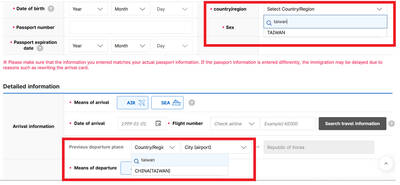
Jason Han says that the e-arrival card spat between South Korea and Taiwan shows that Seoul is signaling adherence to its “one-China” policy, while Taiwan’s response reflects a reciprocal approach. “Attempts to alter the diplomatic status quo often lead to tit-for-tat responses,” the analyst on international affairs tells the Taipei Times, adding that Taiwan may become more cautious in its dealings with South Korea going forward. Taipei has called on Seoul to correct its electronic entry system, which currently lists Taiwan as “China (Taiwan),” warning that reciprocal measures may follow if the wording is not changed before March 31. As of yesterday,

The Portuguese never established a presence on Taiwan, but they must have traded with the indigenous people because later traders reported that the locals referred to parts of deer using Portuguese words. What goods might the Portuguese have offered their indigenous trade partners? Among them must have been slaves, for the Portuguese dealt slaves across Asia. Though we often speak of “Portuguese” ships, imagining them as picturesque vessels manned by pointy-bearded Iberians, in Asia Portuguese shipping between local destinations was crewed by Asian seamen, with a handful of white or Eurasian officers. “Even the great carracks of 1,000-2,000 tons which plied
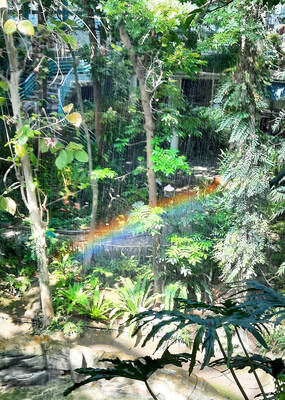
It’s only half the size of its more famous counterpart in Taipei, but the Botanical Garden of the National Museum of Nature Science (NMNS, 國立自然科學博物館植物園) is surely one of urban Taiwan’s most inviting green spaces. Covering 4.5 hectares immediately northeast of the government-run museum in Taichung’s North District (北區), the garden features more than 700 plant species, many of which are labeled in Chinese but not in English. Since its establishment in 1999, the site’s managers have done their best to replicate a number of native ecosystems, dividing the site into eight areas. The name of the Coral Atoll Zone might
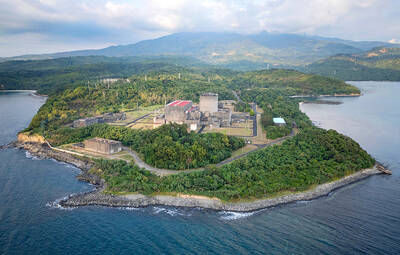
Nuclear power is getting a second look in Southeast Asia as countries prepare to meet surging energy demand as they vie for artificial intelligence-focused data centers. Several Southeast Asian nations are reviving mothballed nuclear plans and setting ambitious targets and nearly half of the region could, if they pursue those goals, have nuclear energy in the 2030s. Even countries without current plans have signaled their interest. Southeast Asia has never produced a single watt of nuclear energy, despite long-held atomic ambitions. But that may soon change as pressure mounts to reduce emissions that contribute to climate change, while meeting growing power needs. The


 RSS
RSS