


The importance of biodiversity is well understood. A diverse biosphere is better able to provide ecosystem services, those tangible and intangible benefits that humans obtain from ecosystems. These include: foods that can be grown, gathered, hunted or trapped; plant pollination; useful materials such as timber and bamboo; clean air and water; the regulation of flooding and soil erosion; and non-material benefits such as recreation and cultural enrichment.
The greatest biodiversity is found in certain places untouched by agriculture or industry. Urbanization is usually harmful for native animals, which suffer as their original habitats shrink and are fragmented. For this reason, nature-lovers in Taiwan — just like their counterparts elsewhere — often fetishize wildernesses, while ignoring the cities in which more than 80 percent of the country’s population lives.
Such thinking shows an incomplete understanding of cities’ ecological functions, argue the authors of a paper published in the February issue of BioScience.
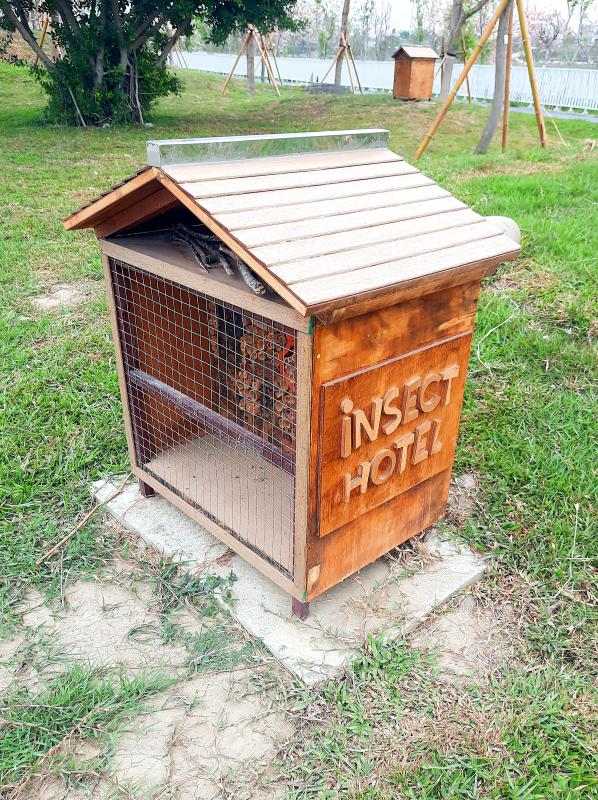
Photo: Steven Crook
CONSERVATION
In “The Biological Deserts Fallacy: Cities in Their Landscapes Contribute More than We Think to Regional Biodiversity,” scientists affiliated with the San Francisco Estuary Institute assert that not only do many urban areas harbor greater biodiversity than even many specialists suspect, cities also have the potential to make important contributions to global biodiversity conservation as the impact of climate change on nature grows.
Researchers in Australia have identified 39 species, among them plants, a type of tortoise and a kind of snail, that now cling to existence only in urban habitats.
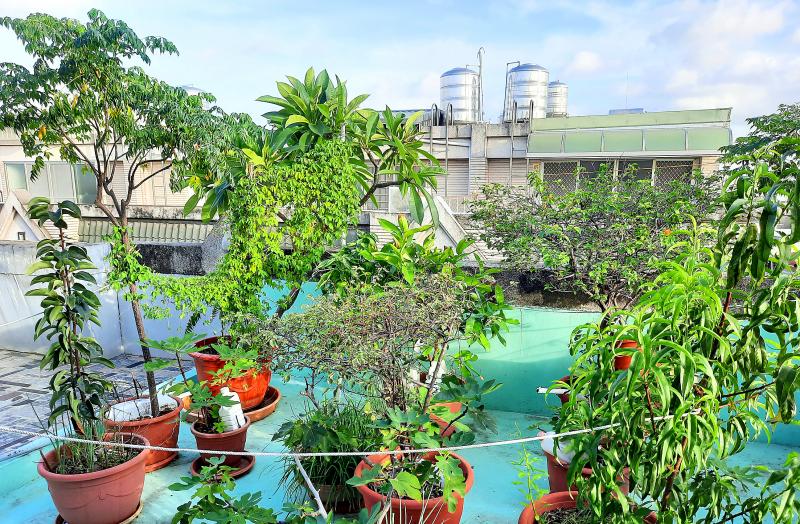
Photo: Steven Crook
In an article posted by the Environmental Information Center (環境資訊中心, e-info.org.tw) late last year, Lee Yu-chin (李育琴) explains how tidiness can be an enemy of biodiversity.
Lee writes that citizens expect neatly trimmed trees and the removal of dead leaves from parks, not knowing that “fallen leaves nourish microorganisms in the soil [and] seemingly useless deadwood is also home to insects and some birds.”
The Taiwan barbet is one such bird. This endemic species, colloquially known as the “five-color bird” (wuseniao, 五色鳥), prefers to nest in cavities in dead tree trunks.
Photo: Steven Crook
Because Taiwan barbets were struggling to find suitable nesting sites in Taipei, since 2015 the city government has been working with the Taiwan Forestry Research Institute to install squirrel-proof nesting boxes in various parks.
Lee says that even mundane encounters between city dwellers and wild creatures can inspire people to think about environmental issues. The authors of the BioScience paper make the same point this way: “The close proximity of people to nature in cities creates opportunities for public engagement through education, citizen science and stewardship programs.”
They add that this is just one of five ways in which bolstering biodiversity in urban areas can benefit entire countries.
Photo: Steven Crook
Of the others, the first is that cities provide plant and animal populations with alternative or additional water and food resources during periods of stress and scarcity in the surrounding landscape.
The appearance of Crested goshawks — which can be found up to 1,800m above sea level — in the centers of Taipei and Taichung isn’t merely a consequence of those places offering abundant food in the form of rodents, doves and sparrows.
These raptors enjoy greater breeding success in built-up neighborhoods than in rural areas. The risk of human disturbance is greater in the former than in the latter, but the absence of snakes (which prey on eggs and nestlings) and macaques (which harass the birds) seems to more than make up for this.
The second, that cities “can increase regional habitat heterogeneity” isn’t so relevant to Taiwan. Tremendous variations in topography, soil types and human land-use practices across the island mean there isn’t so much a lack of habitat variation, as a shortage of space where wild creatures can thrive.
Thirdly, cities serve as stopover sites for species as they migrate. Taipei’s Guandu Nature Park (關渡自然公園) and Huajiang Waterfowl Park (華江雁鴨自然公園) are migrant-waterbird magnets.
Fourthly, the manner in which cities can contribute to species’ genetic diversity could prepare them for a hotter, dirtier planet.
Temperatures in cities are typically 2 or 3 degrees Celsius higher than those in surrounding locations at the same elevation. However, due to human activities that generate heat (such as driving), an absence of shade and the way in which concrete and tarmac retain the sun’s warmth, the difference is sometimes as great as 9 degrees Celsius.
The BioScience paper highlights adaptations to higher temperatures “have the potential to create populations that may be better able to tolerate future conditions caused by climate change.” It points out that studies have identified urban populations of certain plant, ant and flea species that already display greater heat tolerance than their rural cousins.
WHAT CAN WE DO?
Individuals and communities can do a great deal to preserve and increase biodiversity in urban neighborhoods. In some situations, simply not doing what’s usually done would be a change for the better.
The use of pesticides and artificial fertilizers should be minimized.
Because they maim grasshoppers and crickets, leafblowers are thought to be a factor in the huge decline in insect numbers that’s been recorded. On top of the air and noise pollution they generate, these devices erode and compact topsoil. Removing leaves should be done with a rake, if at all.
In cities, there can never be too much greenery. In addition to being a haven for insects, any patch of foliage reduces temperatures by evapotranspiration. Leaves also slow down raindrops (desirable in a flood-prone country like Taiwan), trap particulate pollution and muffle noise.
Anyone with a balcony or unused roof space can do their bit. Since 2015, Taipei’s Community Agriculture Promotion Center (田園城市社區園圃推廣中心) has been encouraging the creation of vegetable gardens on campuses and rooftops. Earlier this summer, the center worked with Hsi Liu Environmental Greening Foundation (錫?環境綠化基金會) to hold online classes that showed how a small balcony can be turned into a garden.
Some green buildings incorporate low-maintenance “biodiversity ledges” — external shelves, far narrower and shallower than any balcony, typically planted with drought-resistant but insect-friendly plant species.
Adding low-cost features to major construction projects can make them far more biodiversity-friendly.
At Rende Detention Basin (仁德滯洪池), just west of Freeway 1 in the suburbs of Tainan, the authorities have installed “raptor rest stops” and “insect hotels,” as well as information boards that explain the functions of these structures to the public.
The “rest stops” are small platforms on which birds of prey can pause between hunts or while digesting food. The “hotels” contain deadwood, straw and other natural materials in which insects like to shelter from the elements.
Compared to an issue like microplastics pollution, the protection and possible expansion of urban biodiversity looks straightforward and inexpensive. We shouldn’t let bad habits and a lack of imagination hold us back.
Steven Crook, the author or co-author of four books about Taiwan, has been following environmental issues since he arrived in the country in 1991. He drives a hybrid and carries his own chopsticks. The views expressed here are his own.


Taiwan’s English education system is being pulled apart by three opposing forces. Bilingual Nation 2030 pulls students toward English and global communication. Artificial Intelligence (AI) readiness pulls them toward digital judgment, verification and AI-mediated work. But Taiwan’s old exam culture pulls them back toward memorization, grammar drills, timed reading and correct answers. If the education system keeps using old exams to define success, it risks producing graduates who are neither genuinely bilingual nor genuinely AI-ready, but trained for tasks machines can already perform. The first force is Bilingual Nation 2030. Launched in 2018, the policy aimed to “help Taiwan’s workforce connect

“Taiwan’s Opposition Leader Comes to US With a Message Straight Out of Beijing” read a May 31 headline in the Wall Street Journal. Top US administration officials and members of Congress almost certainly read the WSJ, and if there was a bullet point takeaway that people in Washington should absorb ahead of Chinese Nationalist Party (KMT) Chair Cheng Li-wun’s (鄭麗文) arrival in DC on June 9, that headline is it. The last few columns have discussed this very topic, and the timing is not coincidental. While those top officials likely do not read the Taipei Times, judging by the number

With weighty, anxiety-inducing geopolitical topics dominating the headlines, checking in on the wild and weird state of local politics can take some of the edge off. This November’s elections will determine who will be in charge of fixing potholes in your neighborhood, not the potholes in Taiwan’s complicated geopolitical space. Recently, after an online interview with a Taipei-based journalist, I commented that Taipei journalists never go further than the MRT can take them. He laughed and agreed. Naturally, the Taipei mayoral race is eating up much of the press attention. TAIPEI CITY Democratic Progressive Party (DPP) candidate Puma Shen (沈伯洋) has
As someone who normally steers clear of books with “transcendence” or “metaphysics” in their subtitles, this reviewer — a casual observer of local belief systems since the 1990s — found Fabian Graham’s Money God Temples in Taiwan a challenging read. Those who’ve only dipped their toes into temple culture will likely need to parse several sections with special care if they’re to keep up with the author, a British ethnographic researcher whose previous books have investigated religious practices among ethnic Chinese in Southeast Asia. This scholarly volume examines a facet of Taiwan’s religious landscape that didn’t exist a century ago, and


 RSS
RSS