


A pioneering French surgeon who undertook the world’s first successful hand and face transplants has died at the age of 80, a friend said on Sunday.
Jean-Michel Dubernard, who became one of France’s most famous medics during his career working in southeastern Lyon, collapsed at Istanbul airport on Saturday night while traveling with his family, the friend said, asking not to be named.
Dubernard led the world’s first hand transplant in September 1998 on a man from New Zealand, creating a sensation in the medical world that brought him global recognition.
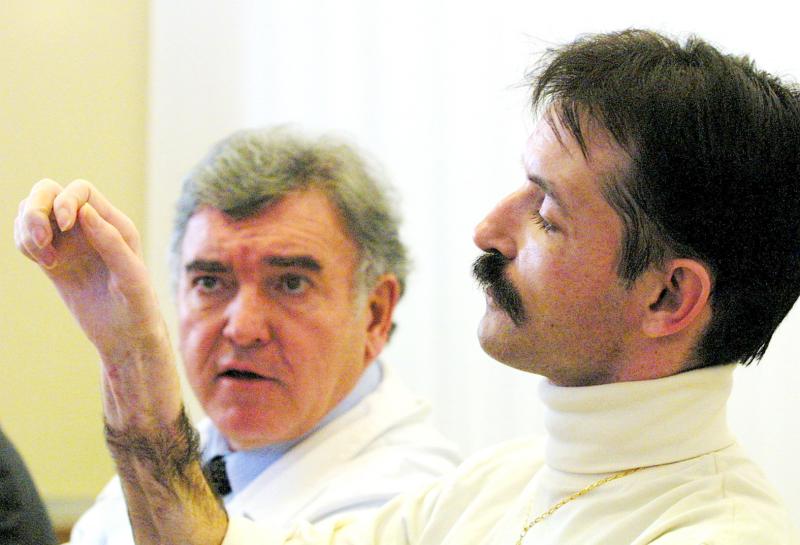
Photo: AFP
Heading an international team of specialists, Dubernard and his fellow surgeons joined the patient’s arteries, veins, nerves, tendons, muscles and skin after pinning together the two bones of the forearm during a 13-hour operation.
He followed up this feat with the first double hand and forearm transplant two years later on a Frenchman who had been holding a home-made rocket when it exploded.
In November 2005, Dubernard reached the height of his fame with the first partial face transplant, which saw him graft on the nose, lips and chin from a brain-dead donor onto French divorcee Isabelle Dinoire, who had been mauled by her dog.
Dinoire appeared at a remarkable news conference three months later in the full glare of the global media, wearing thick makeup to disguise the scars but with an otherwise restored face.
“We want to launch these new techniques to give hope to other people all over the world,” Dubernard, then aged 64, said.
The first full face transplant was performed by a Spanish team in March 2010.
COMPLICATIONS
Dubernard, a rugby fan and father of three, was known for his remarkable work ethic and passion for his profession.
He credited his decision to become a doctor to a bout of appendicitis as a child and his interest in transplants on hearing about the first successful organ graft — of a kidney — in the US in 1954.
“My only motivation is to advance our understanding of medicine. I do it for my patients,” he told Le Monde in 2005.
He also wrote widely in medical journals about his expertise, as well as the challenges of transplants for recipients, both physical and psychological.
“Psychological consequences of hand and face allografts (transplants) show that it is not so easy to use and see permanently a dead person’s hands nor is it easy to look in a mirror and see a dead person’s face,” he wrote in an article for European Urology in 2006.
His high profile and methods also meant that his patients and his work were subjected to intense scrutiny and occasionally criticism.
The National Order of Doctors condemned the release of images of Dinoire after her face transplant and it accused the medical team led by Dubernard and fellow surgeon Bernard Devauchelle of attention-seeking.
“Premature and uncontrolled communication put all the focus on the technical feat, at the expense of the proper respect owed to the patient and to the donor — for her generosity and that of her family,” it said in a statement.
‘A DREAM’
His first hand transplant also attracted unwelcome publicity when it emerged that the recipient, Clint Hallam, had stopped taking the powerful immuno-suppressants needed to stop his body rejecting the new hand. Hallam, who had had an accident with a saw while in prison, begged to have the new hand amputated in 2000, saying he felt “mentally detached” from it, but Dubernard refused on the grounds that it was still functional.
The convicted fraudster left his doctors furious for what they saw as wasting his opportunity but he succeeded in having the hand removed in London in 2001.
Dinoire died in 2016, 11 years after her face transplant, having battled illnesses, mood swings and several bouts of cancer linked to the powerful drugs she needed to take daily to stop her body rejecting the tissue, according to reports.
Le Figaro newspaper said that Dinoire’s body had begun rejecting the transplant the year before her death and that “she had lost part of the use of her lips.”
Dubernard’s influence lives on in Lyon where younger generations of surgeons continue to push the boundaries of science. In January this year, an Icelandic man received the world’s first double shoulder and arm transplant in the city, two decades after an accident that had cost him both limbs.
The operation was “his biggest dream,” the man’s wife told a news conference.
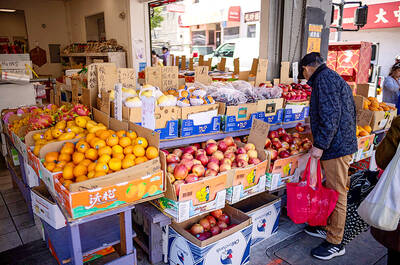
Ajay Verma, a consultant gastroenterologist at Kettering general hospital in Northamptonshire, says our gut is a “complex machine.” “It is constantly providing us with the nutrition we need, initially to grow and develop, and then for us to survive, thrive and repair from injury and illness.” How can we keep it functioning well? Put simply: “Make sure what you put into it is balanced, and that you clear out its waste products adequately,” Verma says. “In a general gastroenterology clinic, the most common conditions we see are irritable bowel syndrome (IBS), gastroesophageal reflux disease, inflammatory bowel disease and constipation,” says Nisha
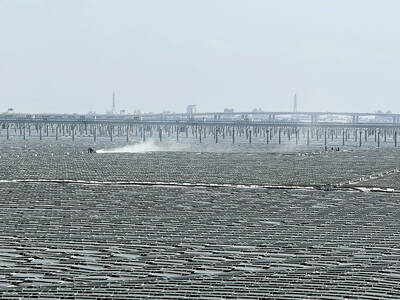
The arithmetic is straightforward and uncomfortable. By the end of 2025, Taiwan had committed itself to a 50-30-20 electricity mix — half natural gas, 30 per cent coal, 20 per cent renewables. The Ministry of Economic Affairs’s (MOEA) own monthly energy reports tell a different story. Natural gas reached 47.8 per cent of generation last year. Coal stood at 35.4 per cent, comfortably above its target ceiling. Renewables came in at 13.1 per cent, well short of the 20 per cent Taipei had pledged a decade earlier. Installed renewable capacity reached roughly half of the 12 gigawatts (GW) the government
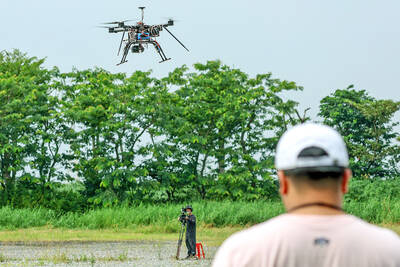
Taiwan’s drone exports are taking off, fuelled by the war in Ukraine, as Taiwanese companies seek a stake in the fast-growing global market for unmanned aerial vehicles (UAV). Low-cost drones used for reconnaissance and strikes are in high demand as governments around the world boost defense spending in the face of intensifying conflicts. A relative new player in the increasingly competitive industry, Taiwan’s pitch is to be an “Asian hub” for the production of UAVs and components free of Chinese materials, or “non-red.” That means its UAVs can be up to three times more expensive than their Chinese competitors, like the world’s biggest
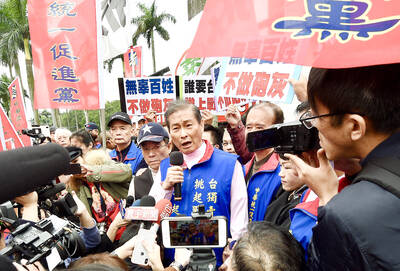
There are shadowy cabals plotting to sell out Taiwan to be annexed by China, by invasion if necessary. Fortunately, they are buffoons. In 2019, former Bamboo Union gangster and founder of the China Unification Promotion Party (CUPP), Chang An-le (張安樂, colorfully known as “White Wolf”), led a protest at the Legislative Yuan against comments made by then-premier Su Tseng-chang (蘇貞昌) that in the event of an attack by China, he would never surrender, but would protect the nation by fighting to the end, even if he only had a broom. Chang had party members bring a wooden casket that they


 RSS
RSS