


July 12 to July 18
Despite being 10 cars longer than usual, the Tamsui-bound train was packed to the brim on the morning of July 16, 1988. Passengers leaned out the window to soak in the scenery, and the train arrived at the final destination to a cheering crowd setting off firecrackers.
This journey was the Taipei-Tamsui line’s final passenger run after 87 years of operation. The official final run actually took place the previous night, but the event was so popular that the Taiwan Railway Administration allowed one more trip for those who missed it.
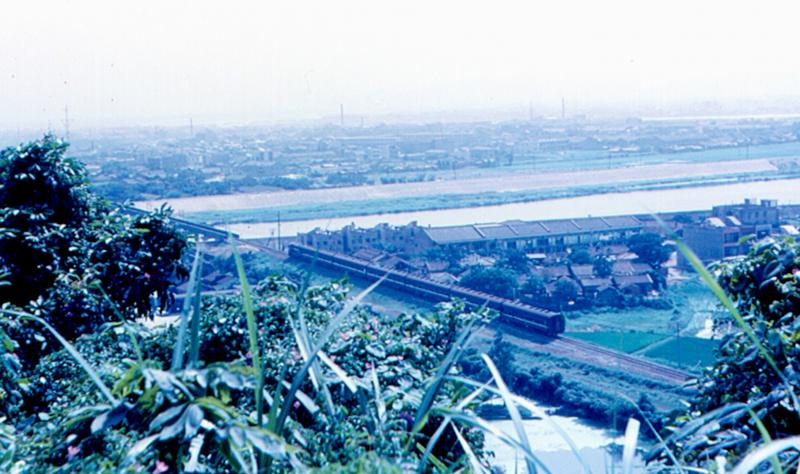
Photo courtesy of Wikimedia Commons
Freight service would carry on for another two months before the tracks were removed. The estimated 22,000 daily commuters who relied on the train had to seek other means of public transportation until the Tamsui MRT line opened in March 1997. This MRT route closely followed the old rail tracks.
Inaugurated by the Japanese on Aug. 25, 1901, the Taipei-Tamsui railway was built using tracks from the Qing-era Keelung-Taipei line. That day was a significant one in Taiwan’s railway history, as it saw the opening of both the second-generation Taipei Station and Taipei-Taoyuan line.
The Taipei-Tamsui railway diminished in importance over the decades as automobile travel became more common and convenient. Its fate was sealed in 1986 when the Council for Economic Planning And Development formally approved the MRT project, which even it its early stages involved tearing down the railroad.
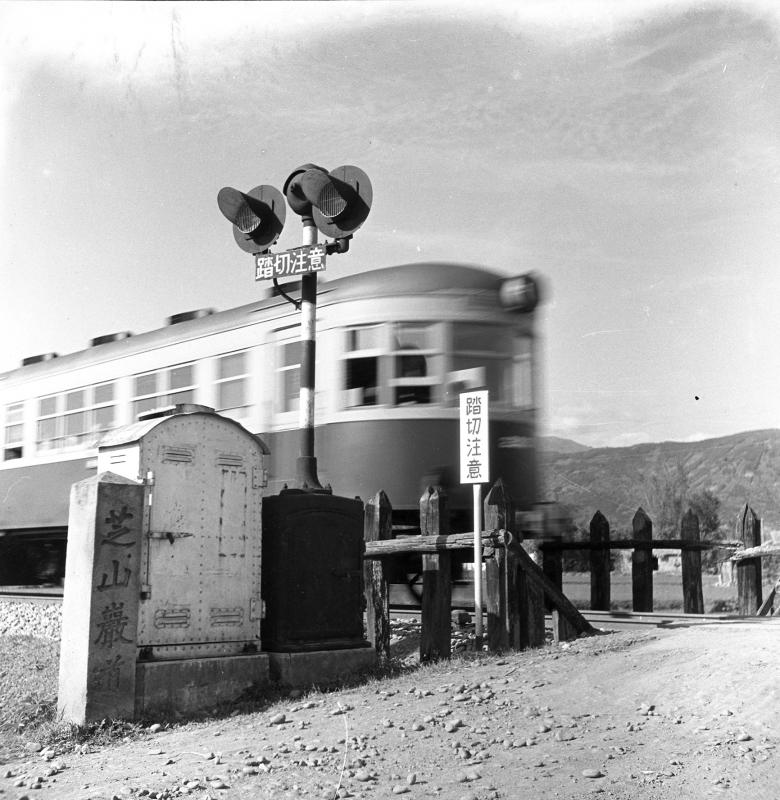
Photo courtesy of Wikimedia Commons
A NEW BRANCH
The Qing had started building a north-south railroad during the final years of its rule; by the time the Japanese arrived in 1895, it stretched from Keelung to Hsinchu.
However, due to years of mismanagement and sabotage by retreating Qing troops, the railroad was in pretty bad shape. The new rulers spent the first few years rebuilding and rerouting the Keelung-Taipei section, and by 1899 they were ready to continue pushing south.
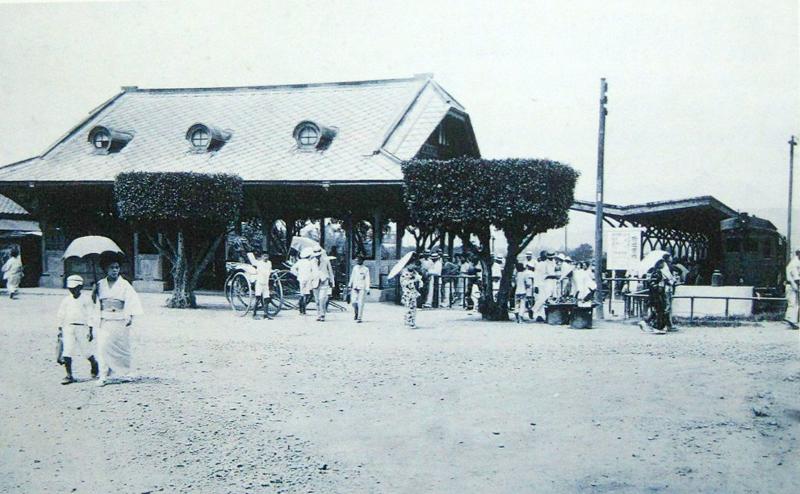
Photo courtesy of Wikimedia Commons
The Tamsui branch line was conceived in response to sediment buildup in the Tamsui river, and to better transport supplies from the port to support the main line’s southward expansion. A significant portion of the tracks were repurposed from uprooted sections of the Qing-era route due to lack of resources.
The first iteration of the line had only five stops: Taihoku (today’s Taipei), Shirin (Shilin), Maruyama (Yuanshan), Hokuto (Beitou) and Tansui (Tamsui). Kanto (Guandu) was added shortly afterward.
The southern terminus was moved several times — in 1903 to Daitotei (Dadaocheng), in 1915 to Hokumon (Beimen) and in 1924 to Taipei Rear Station, a wooden structure that mysteriously burnt down in 1989.
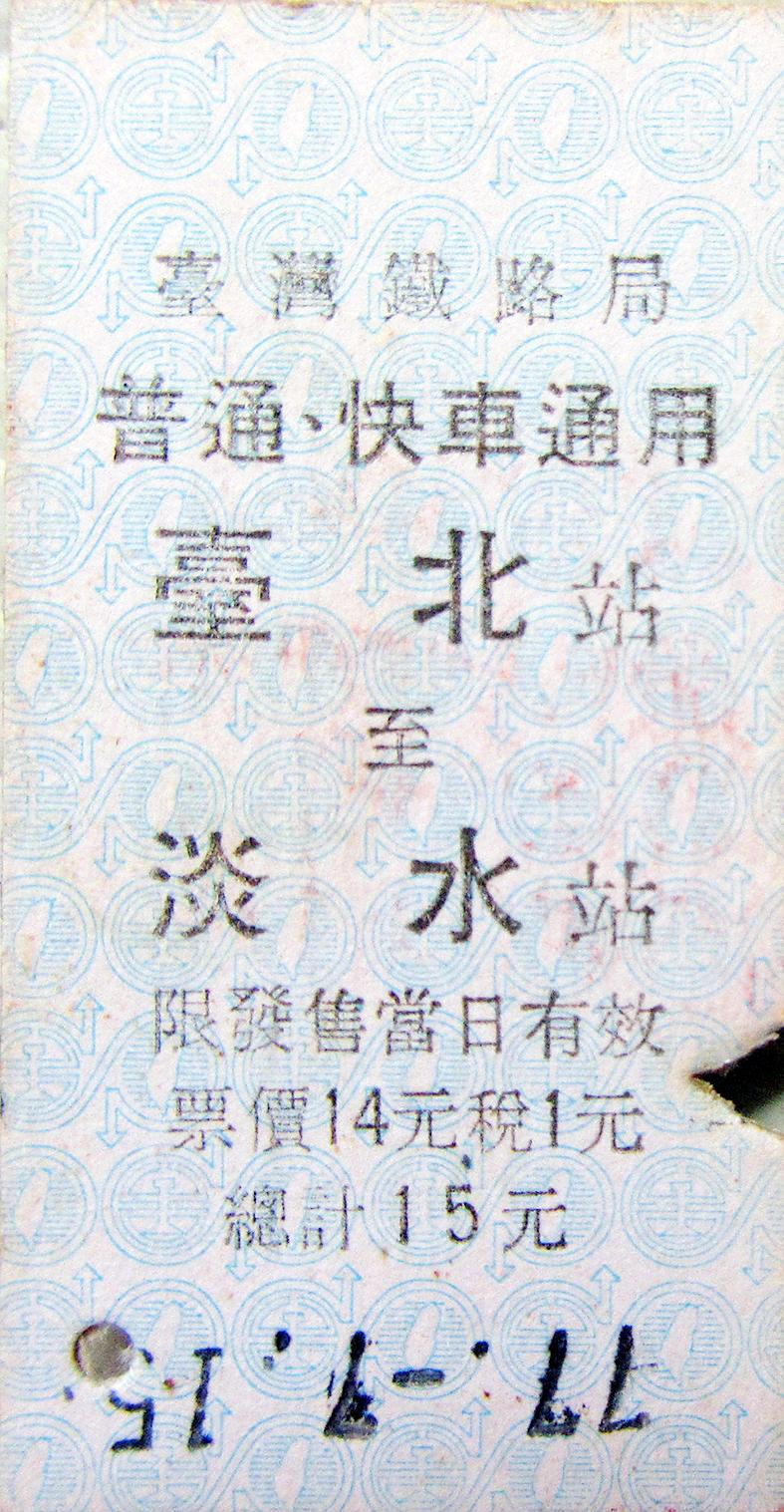
Photo courtesy of Wikimedia Commons
Five more stations opened in 1915, including Miyanoshita (literally “under the shrine”), which was set at the foot of the path leading to the Taiwan Grand Shrine, the colony’s highest-ranking Shinto place of worship. The shrine was built in 1901 to honor Prince Kitashirakawa Yoshihisa, who died during the 1895 war between the colonizers and resisting local militias. Much effort was made to improve access to the shrine, parts of today’s Zhongshan N Road and Zhongshan Bridge (then called the Meiji Bridge) were built for this purpose.
The shrine was damaged during World War II, and after the war much of its materials were removed for projects elsewhere, including the Zushih Temple (清水祖師廟) in New Taipei City’s Sansia District (三峽). The Chinese Nationalist Party (KMT) renamed Miyanoshita Station “Jiantan” after the mountain the shrine sat on, and built the Grand Hotel in its place in 1952. Jiantan Station was discontinued the following year, but the MRT station in the area took on this name four decades later.
MANY CHANGES
Another notable addition to the Taipei-Tamsui line was the branch from Beitou to the hot springs haven of Xinbeitou in 1916. It was Taiwan’s first railroad built for tourism purposes, and led to a massive boon in the area. The tracks were removed in 1945 and reportedly used as anti-landing barricades along the Tamsui shore to prevent an Allied invasion. It was rebuilt the following year.
After the discontinuation of the railway in 1988, the Taipei City Government sold the historic Xinbeitou Station to the now-defunct Taiwan Folk Village (台灣民俗村) theme park in Changhua for NT$1. Locals launched a campaign to reclaim the station in the late 1990s, and they finally got their wish on April 1, 2017, the 101st birthday of the structure.
A temporary station was added in the Fuxinggang area (復興崗) for a week in 1954 to accommodate that year’s Taiwan Provincial Games (today’s National Games). Riders received commemorative tickets.
In 1966, a single-lane, muddy road between Taipei and Tamsui was widened and named Xiandu Road (仙渡路), providing an alternative means for people to traverse the two locales. It was expanded again in 1972 and given the current name of Dadu Road (大度路). Coupled with the advent of private car ownership, this road began to eat into ridership on the Taipei-Tamsui railway.
By the 1980s, the government determined it viable to remove the railway to make way for the MRT. Dadu Road was upgraded again in 1984, and in May 1986 its speed limit was raised to 70km per hour. The railway’s demolition was approved that same year.
The Tamsui-Taipei MRT line took on all of the railway’s station’ names except for Wangjia Temple (王家廟), which was located between today’s Qilian and Qiyan stations. Curiously, there was never a Wangjia Temple in that area. The station was meant to be named after the nearby Chengan Temple (鎮安宮, also known as Wangye Temple), but it was inexplicably misnamed due to a clerical error.
The MRT line went through many adjustments over the next decade, and between 1999 and 2012 there were two lines running on the tracks, Tamsui-Xindian and Beitou-Nanshijiao. It assumed the current Tamsui-Xiangshan route in 2014.
Taiwan in Time, a column about Taiwan’s history that is published every Sunday, spotlights important or interesting events around the nation that either have anniversaries this week or are tied to current events.
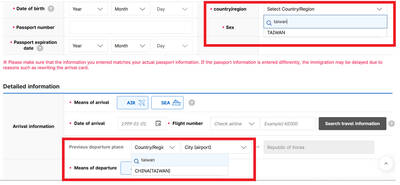
Jason Han says that the e-arrival card spat between South Korea and Taiwan shows that Seoul is signaling adherence to its “one-China” policy, while Taiwan’s response reflects a reciprocal approach. “Attempts to alter the diplomatic status quo often lead to tit-for-tat responses,” the analyst on international affairs tells the Taipei Times, adding that Taiwan may become more cautious in its dealings with South Korea going forward. Taipei has called on Seoul to correct its electronic entry system, which currently lists Taiwan as “China (Taiwan),” warning that reciprocal measures may follow if the wording is not changed before March 31. As of yesterday,

The Portuguese never established a presence on Taiwan, but they must have traded with the indigenous people because later traders reported that the locals referred to parts of deer using Portuguese words. What goods might the Portuguese have offered their indigenous trade partners? Among them must have been slaves, for the Portuguese dealt slaves across Asia. Though we often speak of “Portuguese” ships, imagining them as picturesque vessels manned by pointy-bearded Iberians, in Asia Portuguese shipping between local destinations was crewed by Asian seamen, with a handful of white or Eurasian officers. “Even the great carracks of 1,000-2,000 tons which plied
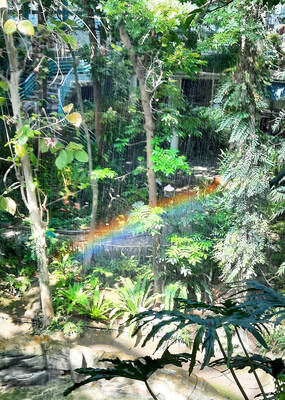
It’s only half the size of its more famous counterpart in Taipei, but the Botanical Garden of the National Museum of Nature Science (NMNS, 國立自然科學博物館植物園) is surely one of urban Taiwan’s most inviting green spaces. Covering 4.5 hectares immediately northeast of the government-run museum in Taichung’s North District (北區), the garden features more than 700 plant species, many of which are labeled in Chinese but not in English. Since its establishment in 1999, the site’s managers have done their best to replicate a number of native ecosystems, dividing the site into eight areas. The name of the Coral Atoll Zone might
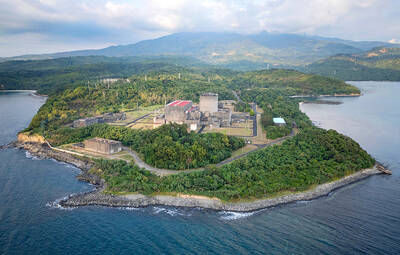
Nuclear power is getting a second look in Southeast Asia as countries prepare to meet surging energy demand as they vie for artificial intelligence-focused data centers. Several Southeast Asian nations are reviving mothballed nuclear plans and setting ambitious targets and nearly half of the region could, if they pursue those goals, have nuclear energy in the 2030s. Even countries without current plans have signaled their interest. Southeast Asia has never produced a single watt of nuclear energy, despite long-held atomic ambitions. But that may soon change as pressure mounts to reduce emissions that contribute to climate change, while meeting growing power needs. The


 RSS
RSS