


The National Taichung Theater and the National Kaohsiung Center for the Arts is presenting four dance-themed short films this month free of charge. The four films were produced under a joint project called “Dance en Scene” between the two Taiwanese venues and their counterparts in Singapore (Esplanade — Theatres on the Bay) and Hong Kong (Tai Kwun — Centre for Heritage and Arts), the Taichung theater said on Monday.
The work commissioned by the Taichung theater is a collaboration involving two Taiwanese choreographers — Chen Wu-kang (陳武康) and Yu Yen-fang (余彥芳) — and Hong Kong film director Maurice Lai (黎宇文), according to the statement.
In Transmission: Beginning Step into Walk/Dance Project (山林轉換:走跳計畫初步), Lai documents how Chen and Yu tapped into their journeys exploring Taiwan’s mountains and came up with an improvisational performance as their finished work, the Taichung theater said.
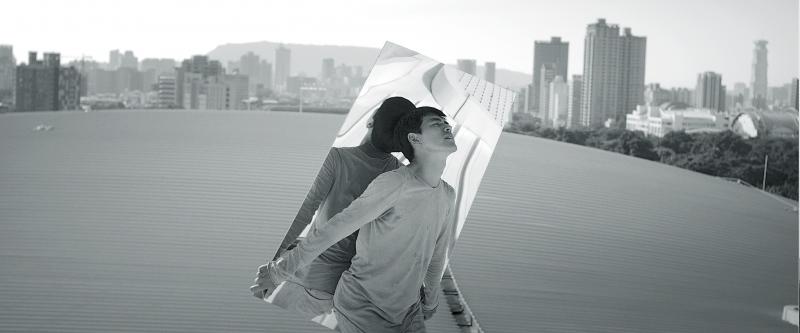
Photo courtesy of National Kaohsiung Center for the Arts
Meanwhile, the Kaohsiung arts center, also known as Weiwuying, presents After Sea Level Rise, I ...(暖化之後,我住在…) featuring its artist-in-residence, choreographer Chou Shu-yi (周書毅). Co-directed by Chou and William Lu (呂威聯), the film shows Chou dancing on the rooftop of Weiwuying to music composed by Wang Yu-jun (王榆鈞), to share his “perspectives on the future of climate change and flood,” said Weiwuying.
In the film presented by Esplanade, Rooms, Singaporean choreographer and dancer Albert Tiong (張永祥) retraces his three-decade career and asks, “Who am I really?”
The offering from Hong Kong is titled Terry-Fying (Work in Progress) (毛‧恐不入 毛鬙鬙), which originates from choreographer and performer Terry Tsang’s (曾景輝) previous work about his fear of hair. In the film, which is part of his research for a future work, Tsang explores life and death through chanting and movements from a Taoist ritual for the dead called “Breaking Hell.”
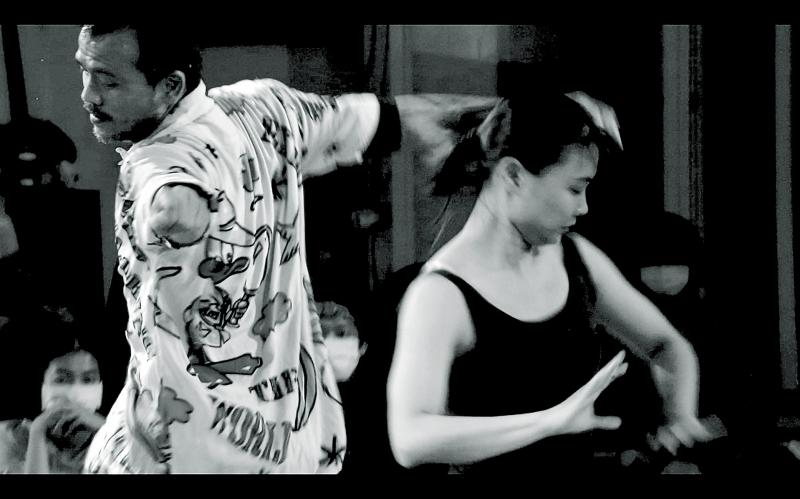
Photo courtesy of National Kaohsiung Center for the Arts
Weiwuying is currently screening the four films daily at 11am until March 28, except on Tuesdays, while the Taichung theater will screen them from 12pm to 6pm on Saturday and Sunday.
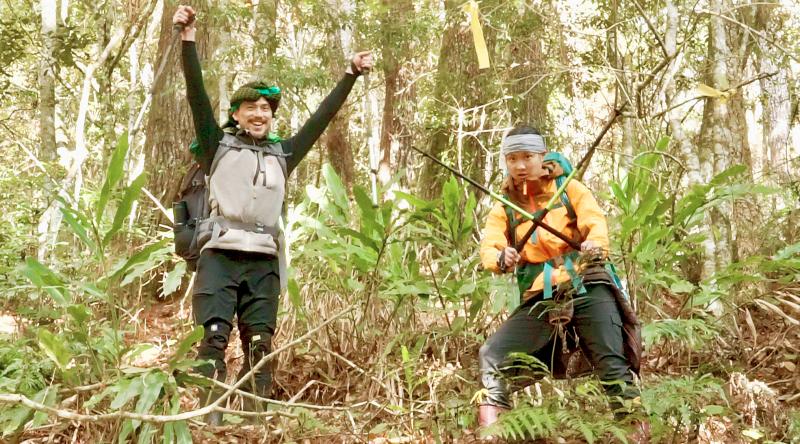
Photo courtesy of National Taichung Theater
Towering high above Taiwan’s capital city at 508 meters, Taipei 101 dominates the skyline. The earthquake-proof skyscraper of steel and glass has captured the imagination of professional rock climber Alex Honnold for more than a decade. Tomorrow morning, he will climb it in his signature free solo style — without ropes or protective equipment. And Netflix will broadcast it — live. The event’s announcement has drawn both excitement and trepidation, as well as some concerns over the ethical implications of attempting such a high-risk endeavor on live broadcast. Many have questioned Honnold’s desire to continues his free-solo climbs now that he’s a

As Taiwan’s second most populous city, Taichung looms large in the electoral map. Taiwanese political commentators describe it — along with neighboring Changhua County — as Taiwan’s “swing states” (搖擺州), which is a curious direct borrowing from American election terminology. In the early post-Martial Law era, Taichung was referred to as a “desert of democracy” because while the Democratic Progressive Party (DPP) was winning elections in the north and south, Taichung remained staunchly loyal to the Chinese Nationalist Party (KMT). That changed over time, but in both Changhua and Taichung, the DPP still suffers from a “one-term curse,” with the
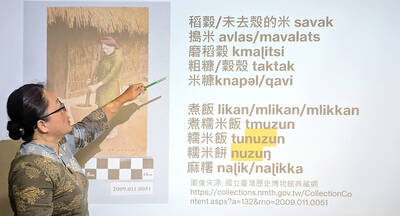
Jan. 26 to Feb. 1 Nearly 90 years after it was last recorded, the Basay language was taught in a classroom for the first time in September last year. Over the following three months, students learned its sounds along with the customs and folktales of the Ketagalan people, who once spoke it across northern Taiwan. Although each Ketagalan settlement had its own language, Basay functioned as a common trade language. By the late 19th century, it had largely fallen out of daily use as speakers shifted to Hoklo (commonly known as Taiwanese), surviving only in fragments remembered by the elderly. In

William Liu (劉家君) moved to Kaohsiung from Nantou to live with his boyfriend Reg Hong (洪嘉佑). “In Nantou, people do not support gay rights at all and never even talk about it. Living here made me optimistic and made me realize how much I can express myself,” Liu tells the Taipei Times. Hong and his friend Cony Hsieh (謝昀希) are both active in several LGBT groups and organizations in Kaohsiung. They were among the people behind the city’s 16th Pride event in November last year, which gathered over 35,000 people. Along with others, they clearly see Kaohsiung as the nexus of LGBT rights.


 RSS
RSS