


Los Angeles’ long-awaited Academy Museum of Motion Pictures will tackle the Oscars’ “problematic history,” from racism over Gone With The Wind to the recent #OscarsSoWhite campaign and snubbing of female directors, officials said Wednesday.
The Oscar-awarding Academy first envisioned a museum dedicated to the magic of movies almost a century ago, and its doors are finally set to open in September after numerous delays, most recently caused by the pandemic.
On the day voting for this award season’s Oscar nominees closes, last year’s best supporting actress winner Laura Dern took journalists on a virtual tour of the museum.
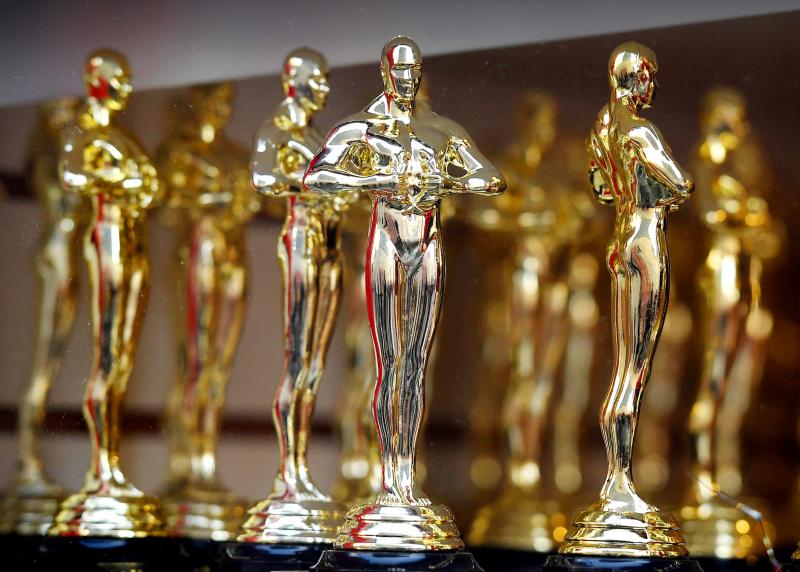
Photo: AFP
“We will not shy away from problematic histories, including #OscarsSo-White, the lack of female representation and Hattie McDaniel’s mistreatment at the Oscars ceremony,” said Dern.
McDaniel became the first Black actor to win an Oscar for Gone With The Wind in 1940, but was forced to sit at a segregated table away from her white fellow nominees.
Other controversies to be addressed include the harassment of actress Sacheen Littlefeather when she accepted Marlon Brando’s Oscar as a protest against Hollywood’s portrayal of Native American, and the casting of white actresses to play Chinese characters in 1937’s The Good Earth.
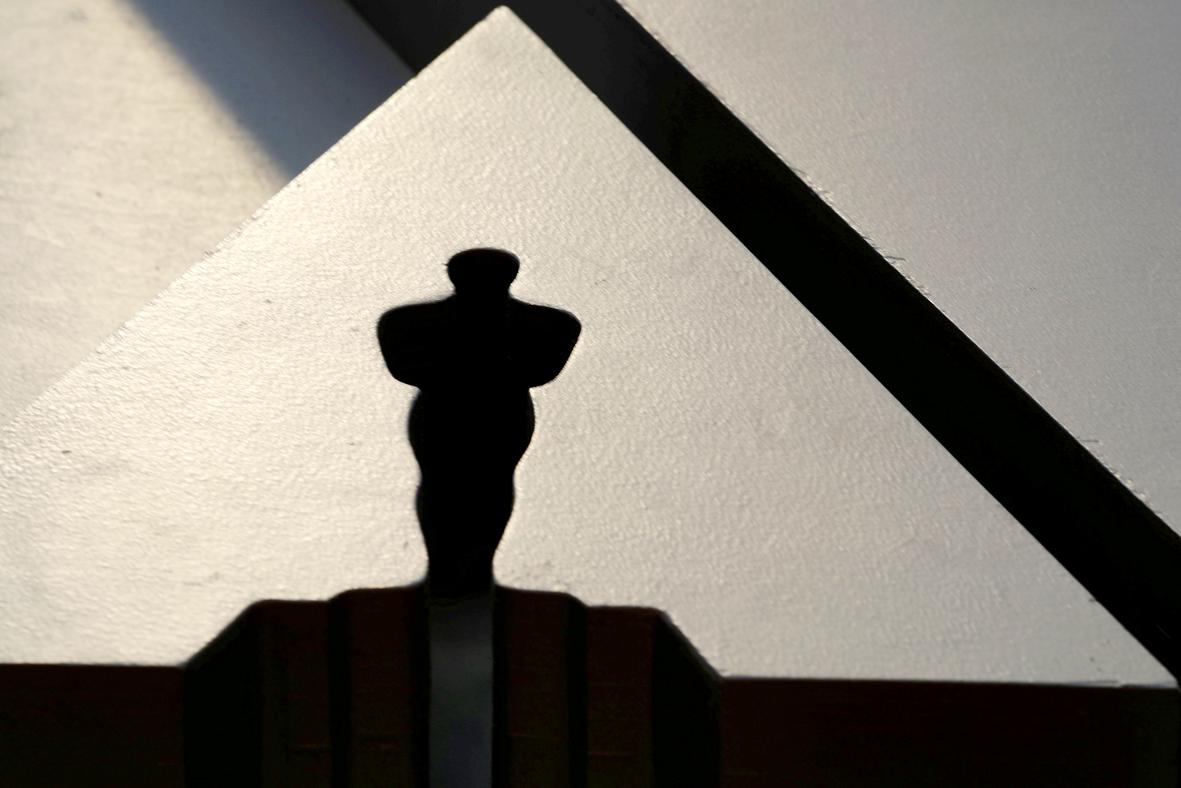
Photo: Reuters
“We didn’t want to erase films and artists and moments that may be uncomfortable. We wanted to confront them and contextualize them, throughout all of our core gallery spaces,” said museum director Bill Kramer.
The 50,000 square-foot museum is set to host iconic Hollywood treasures from Judy Garland’s Wizard of Oz ruby slippers to Dracula’s cape, as well as a giant orb-shaped theater designed by Renzo Piano for premieres and screenings.
INTRODUCTION TO FILM
Spike Lee and Pedro Almodovar will be among the first directors to curate temporary galleries devoted to the works of individual filmmakers.
“I want to see yellow school buses double-parked in front of the museum, and these young, beautiful minds get introduced to cinema,” said Lee.
In the Oscars history section, 20 statuettes awarded from silent-era classics such as Friedrich Wilhelm Murnau’s Sunrise (1927) through to Barry Jenkins’ shock 2016 winner Moonlight will go on display.
Other galleries will honor crafts from animation and directing to hair and makeup, where the exhibition will “talk about black face and yellow face makeup, specifically designed for white actors to play certain roles,” Kramer said.
A section devoted to iconic costume designs will feature the African-inspired outfit worn by Danai Gurira in 2018’s seminal superhero movie Black Panther.
“The inclusion of Okoye’s uniform in the Academy’s museum is incredibly powerful because the history of Hollywood doesn’t look like the cast of Black Panther, said Gurira.
“But through the immortalization of this iconic film, and this iconic character at the museum, it gives me hope that the future of Hollywood will.”
Kramer admitted the museum “will not open if it’s not safe” but said the building was now fully ready to receive visitors, and expressed optimism that California’s vaccination roll-out and decline in COVID-19 cases would allow the museum to meet its Sept. 30 date.
Until then, the museum will run virtual pre-opening events, including talks with women who achieved historic Oscars milestones such as Sophia Loren, Whoopi Goldberg, Marlee Matlin and Buffy Sainte-Marie.
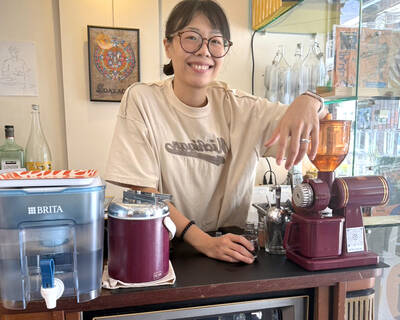
Cheng Ching-hsiang (鄭青祥) turned a small triangle of concrete jammed between two old shops into a cool little bar called 9dimension. In front of the shop, a steampunk-like structure was welded by himself to serve as a booth where he prepares cocktails. “Yancheng used to be just old people,” he says, “but now young people are coming and creating the New Yancheng.” Around the corner, Yu Hsiu-jao (饒毓琇), opened Tiny Cafe. True to its name, it is the size of a cupboard and serves cold-brewed coffee. “Small shops are so special and have personality,” she says, “people come to Yancheng to find such treasures.” She
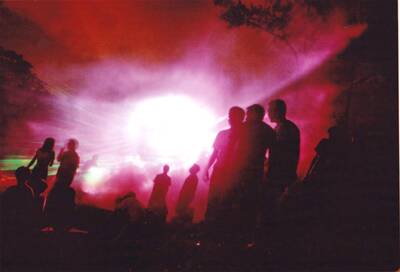
In July of 1995, a group of local DJs began posting an event flyer around Taipei. It was cheaply photocopied and nearly all in English, with a hand-drawn map on the back and, on the front, a big red hand print alongside one prominent line of text, “Finally… THE PARTY.” The map led to a remote floodplain in Taipei County (now New Taipei City) just across the Tamsui River from Taipei. The organizers got permission from no one. They just drove up in a blue Taiwanese pickup truck, set up a generator, two speakers, two turntables and a mixer. They

Late last month Philippines Foreign Affairs Secretary Theresa Lazaro told the Philippine Senate that the nation has sufficient funds to evacuate the nearly 170,000 Filipino residents in Taiwan, 84 percent of whom are migrant workers, in the event of war. Agencies have been exploring evacuation scenarios since early this year, she said. She also observed that since the Philippines has only limited ships, the government is consulting security agencies for alternatives. Filipinos are a distant third in overall migrant worker population. Indonesia has over 248,000 workers, followed by roughly 240,000 Vietnamese. It should be noted that there are another 170,000

Former Chinese Nationalist Party (KMT) chairwoman Hung Hsiu-chu’s (洪秀柱) attendance at the Chinese Communist Party’s (CPP) “Chinese People’s War of Resistance Against Japanese Aggression and the World Anti-Fascist War” parade in Beijing is infuriating, embarrassing and insulting to nearly everyone in Taiwan, and Taiwan’s friends and allies. She is also ripping off bandages and pouring salt into old wounds. In the process she managed to tie both the KMT and the Democratic Progressive Party (DPP) into uncomfortable knots. The KMT continues to honor their heroic fighters, who defended China against the invading Japanese Empire, which inflicted unimaginable horrors on the


 RSS
RSS