


For John Domingue, director of the Open University’s pioneering research and development lab, the Knowledge Media Institute (KMI), the “online genie” is out of the bottle and won’t go back in.
“It’s slightly galling to see some universities trying to replicate online almost exactly what they delivered face-to-face before COVID. Standing before a camera and broadcasting is not online teaching. You need to do things differently,” he says.
So what can universities undertake to make online learning more than just a heavy focus on streaming and recording technology? Domingue points to artificial intelligence (AI) and the concept of an online library for educators based on a Google search engine dedicated to education, and a Netflix-style recommendation tool that tracks down content to suit a lecturer’s own field, based on previous searches.
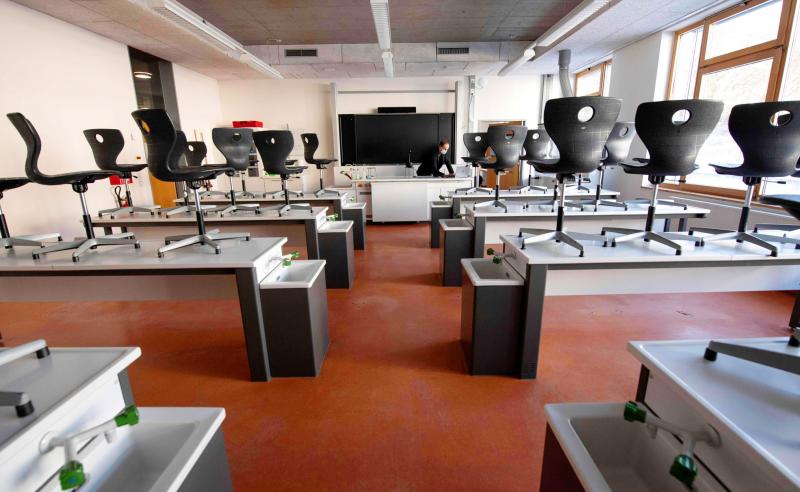
Photo: AFP
KMI is currently developing a personalized AI assistant or chatbot, an AI career coach and other tools that can analyse essays for marking and set up quizzes on revision topics.
Personalization is also key to giving students and lecturers a better online experience. In 2017, Oxford’s Said Business School installed the first immersive virtual classroom of its kind in the UK: a bank of 27 HD screens able to simultaneously support up to 84 students from across the globe, called the Oxford Hub for International Virtual Education. An in-room camera follows lecturers moving around the room, who can respond — as in real life — to visual cues from and talk directly to individual students.
While such technology could be prohibitively expensive for many institutions, Duncan Peberdy, a consultant specializing in tech-enabled learning spaces and former adviser at the educational IT body, Jisc, says a much cheaper alternative in the form of a three to four meter wide screen offering a different dynamic based on simplified specifications has been developed by ViewSonic.
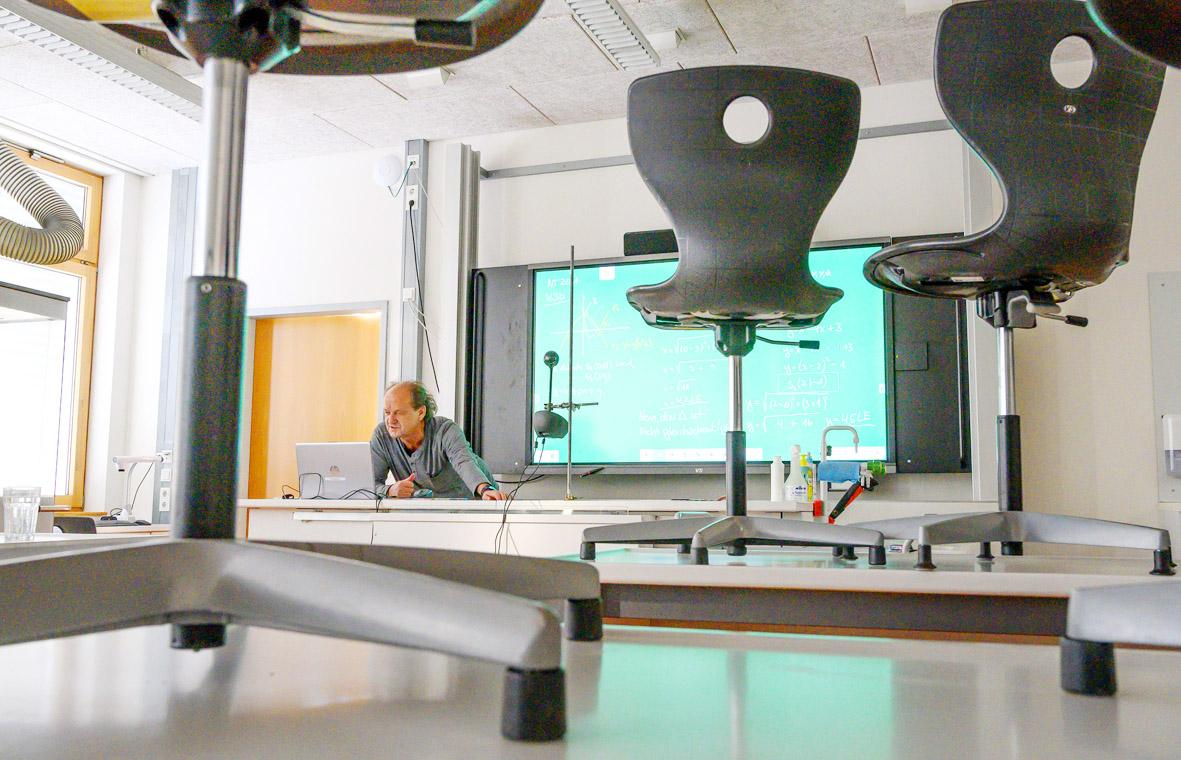
Photo: AFP
“We are now in talks with two UK universities to jointly develop it on their campuses,” he says.
Meanwhile on UK campuses, many universities are striving to make the online experience more than just a lecturer broadcasting in front of a camera.
“We didn’t want that approach so we ‘shifted’ academics who were simply recurating their material with PowerPoint slides and brought in new hardware and specialists to assist them,” says Guy Daly, deputy vice-chancellor (education and students) at Coventry University.
“We realized our academics either needed the skills or support to deliver online learning in a very engaging way in a now very different world. Since March, we’ve repurposed 2,500 course modules at under and postgraduate level for delivery in the first term of this academic year.”
Coventry has moved virtually all its student assessments and exams online.
“We also used to talk about the death of the traditional lecture and bringing in more student activity-based learning as opposed to traditional didactic methods, but we’ve accelerated that journey due to COVID,” says Daly.
Wholesale and now permanent changes have gone hand in hand with the launches of Coventry’s first online postgraduate certificate in education and the first online nursing degree in England.
Many taught postgrad students, particularly those using labs, have been among students hardest hit, according to Danielle George, associate dean for teaching and learning at the University of Manchester.
“They only have one year to ensure they receive all their intended learning outcomes from their course. So we’ve invested in software to enable them to do prep work at home so they will then need less time in the lab itself,” she says.
“We have also helped them with time management, which is absolutely key [during short courses]. COVID took away their daily structure of going from room to room on campus so we’ve timetabled asynchronous activities — their lecturer will, say, be available ‘live’ at 9am to deliver a lecture and then answer questions, or they can choose to watch a recorded version later in their own time.
“My best advice to postgrads is to get involved in anything to do with induction — we’ve invested a lot more energy, time and passion in this area than we’ve done before and put on numerous practical online sessions,” says George.
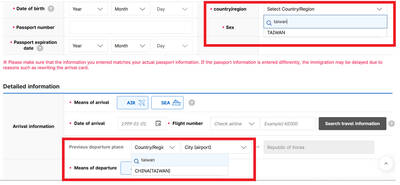
Jason Han says that the e-arrival card spat between South Korea and Taiwan shows that Seoul is signaling adherence to its “one-China” policy, while Taiwan’s response reflects a reciprocal approach. “Attempts to alter the diplomatic status quo often lead to tit-for-tat responses,” the analyst on international affairs tells the Taipei Times, adding that Taiwan may become more cautious in its dealings with South Korea going forward. Taipei has called on Seoul to correct its electronic entry system, which currently lists Taiwan as “China (Taiwan),” warning that reciprocal measures may follow if the wording is not changed before March 31. As of yesterday,

The Portuguese never established a presence on Taiwan, but they must have traded with the indigenous people because later traders reported that the locals referred to parts of deer using Portuguese words. What goods might the Portuguese have offered their indigenous trade partners? Among them must have been slaves, for the Portuguese dealt slaves across Asia. Though we often speak of “Portuguese” ships, imagining them as picturesque vessels manned by pointy-bearded Iberians, in Asia Portuguese shipping between local destinations was crewed by Asian seamen, with a handful of white or Eurasian officers. “Even the great carracks of 1,000-2,000 tons which plied

It’s only half the size of its more famous counterpart in Taipei, but the Botanical Garden of the National Museum of Nature Science (NMNS, 國立自然科學博物館植物園) is surely one of urban Taiwan’s most inviting green spaces. Covering 4.5 hectares immediately northeast of the government-run museum in Taichung’s North District (北區), the garden features more than 700 plant species, many of which are labeled in Chinese but not in English. Since its establishment in 1999, the site’s managers have done their best to replicate a number of native ecosystems, dividing the site into eight areas. The name of the Coral Atoll Zone might
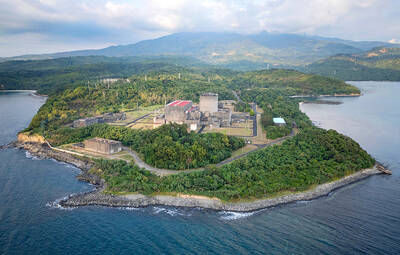
Nuclear power is getting a second look in Southeast Asia as countries prepare to meet surging energy demand as they vie for artificial intelligence-focused data centers. Several Southeast Asian nations are reviving mothballed nuclear plans and setting ambitious targets and nearly half of the region could, if they pursue those goals, have nuclear energy in the 2030s. Even countries without current plans have signaled their interest. Southeast Asia has never produced a single watt of nuclear energy, despite long-held atomic ambitions. But that may soon change as pressure mounts to reduce emissions that contribute to climate change, while meeting growing power needs. The


 RSS
RSS