


After making their debut in Ximending on Jan. 20, the Protectors of the Algal Reef Goddess (藻礁女神護衛隊) struck again with their risque placards and slogans.
Holding signs reading “The algal reef goddess sincerely seeks a sugar daddy,” “I’m a Taiwanese white dolphin looking for friends with benefits” and voicing the needs of an endangered coral species for a “place to shag,” the activists appeared on Sunday in front of National Taiwan University’s main gate.
This group is one of many around the nation trying to collect 350,000 signatures before the Feb. 28 deadline to have the question, “Do you agree that CPC Corp (台灣中油) should relocate the third liquefied natural gas terminal away from Taoyuan’s Datan (大潭) algal reefs and its surrounding waters?” included in the upcoming national referendums in August.

Photo: Han cheung, Taipei Times
Organizer Nancy Wang (王南昕) says that the signs are not just meant to grab attention, but to provoke thought on human development against the environment.
“We wanted to present the viewpoint from the creatures’ perspectives,” Wang says. “We constantly talk about human needs, how much electricity we need and how it should be delivered faster and more conveniently, but don’t even allow these creatures to reproduce — we say ‘shag’ here — and survive.”
They’ve only gathered about 50,000 signatures with less than three weeks to go. After a decades-long struggle, this may be the last bid for environmental activists to stop the project, which experts state would lead to a “complete breakdown” of the ecosystem of the algal reef, which is over 7,600 years old and supports many rare and possibly yet-to-be discovered species.
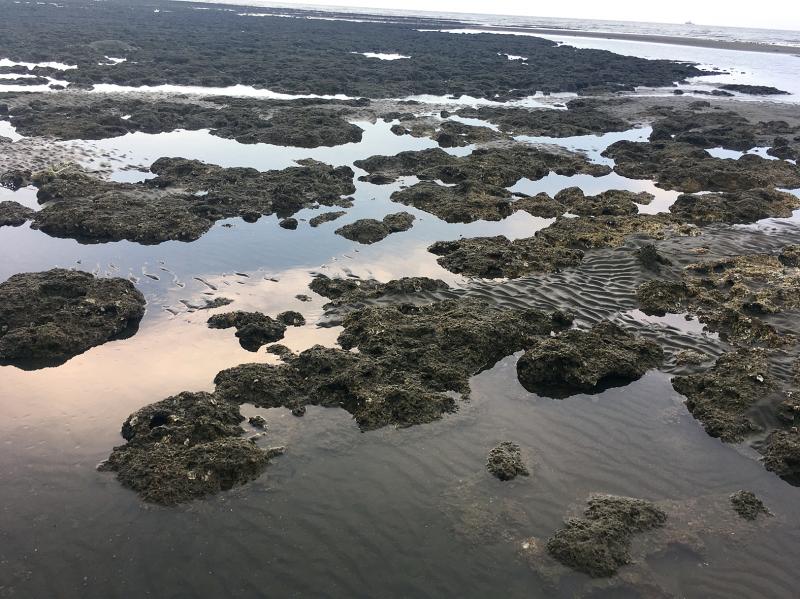
Photo: Huang Pei-chun, Taipei Times
“We are trying to protect Taiwan’s 7,600-year old diary of its coastline,” says veteran activist and cofounder of the now-defunct Tree Party (樹黨) Pan Han-shen (潘翰聲), who was on scene Sunday. “There’s so much recorded in this diary that we don’t know about yet. We have to preserve it for our descendants to decipher.
ACADEMIC SUPPORT
Despite calls from activists and mounting academic evidence, the state-run CPC insists that it has already greatly reduced its original development scope to avoid damaging the reefs and conducted tests to make sure the project wouldn’t disturb the ecosystem.

Photo: Han Cheung, Taipei Times
The project passed an environmental impact assessment in October 2018, and CPC in July of last year declared that the plant is “the only and irreplaceable option” to further the government’s goal of generating 50 percent of the nation’s energy with natural gas by 2025.
Activists say that the assessment was politically manipulated and and pushed through unfairly, referring to it as “the darkest day in environmental impact assessment history.”
Even with CPC’s concessions, experts have said that the only way to save the algal reef ecosystem is to completely relocate the project, since the various impacts from construction still have a high chance of ruining the ecosystem. CPC argues that relocating will take too long for them to meet the government’s deadline.
A group of life scientists were the latest to support the activists’ claims in November of last year through the paper, “Coastal development threatens Datan area supporting greatest fish diversity at Taoyuan Algal Reef, northwestern Taiwan,” which appeared in the journal Aquatic Conservation: Marine and Freshwater Ecosystems.
“Until recently, [the reefs] have long been regarded as a barren environment. However, recent studies have revealed that the reef is inhabited by a diverse array of organisms, particularly at Datan,” the paper says. “If construction work resumes at Datan, it will be likely to have adverse consequences for the reef itself.“
These conclusions contradict the CPC’s claims last July that due to the turbidity of the waters, the area doesn’t get much sunlight, resulting in the area being “not rich” in biodiversity. The company touts the benefits of the terminal, which enhances and stabilizes the nation’s ability to provide electricity through natural gas and will help reduce air pollution and further the nation’s goal toward a nuclear-free homeland.
However, Pan and Wang question the efficacy and accuracy of CPC’s testing methods and note that unlike coral reefs, algal reefs can survive in muddy waters and support ecosystems under unfavorable conditions.
COUNTING DOWN
Wang, who is studying at National Taiwan Normal University’s Graduate Institute of Environmental Education, says the idea for the slogans came from the recent phenomena of people holding placards outside Ximen MRT Station seeking boyfriends, sugar daddies and friends with benefits for various personal or promotional purposes.
“Our slogans may seem controversial, but we’re actually directly pointing to the ethical issues in the relationship between humans and the environment,” Wang says. She adds that even if one prioritizes humans over nature, they should think about how all these undiscovered or new species can benefit people before wiping them out.
Wang says that they’re the only pro-algae reef group using such methods so far, and have yet to hear any criticism from more conservative activists. However, one of the female members was harassed by a passerby at Ximending and the police also warned them that some might report them for public indecency.
There’s no need to worry, Wang says, as the group has already reached their goal of generating buzz with the signs and will go back to “regular” methods of garnering signatures until the end of the month.
One of the obstacles to reaching 350,000 signatures is a general unfamiliarity with algae reefs, especially compared to “cuter” creatures such as black bears and leopard cats.
“I just say ‘protect the ocean,’ at first because many people haven’t heard of these algae reefs,” Pan says. “And I tell them that these reefs are more precious than coral reefs, since they obviously know what a coral reef is. We only have about 30 seconds to give our spiel before people want to get going.”
Another obstacle is that since the CPC project has spanned both Chinese Nationalist Party (KMT) and Democratic Progressive Party rule, neither side is eager to oppose it.
“In nearly all the protests I’ve been involved in before, the opposition party would mobilize their followers,” Pan says. “But this movement has almost entirely been organized by the people. If this petition succeeds, it shows that Taiwan has enough civic power to truly be a democratic nation.”
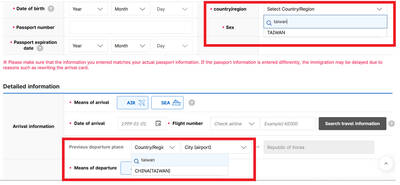
Jason Han says that the e-arrival card spat between South Korea and Taiwan shows that Seoul is signaling adherence to its “one-China” policy, while Taiwan’s response reflects a reciprocal approach. “Attempts to alter the diplomatic status quo often lead to tit-for-tat responses,” the analyst on international affairs tells the Taipei Times, adding that Taiwan may become more cautious in its dealings with South Korea going forward. Taipei has called on Seoul to correct its electronic entry system, which currently lists Taiwan as “China (Taiwan),” warning that reciprocal measures may follow if the wording is not changed before March 31. As of yesterday,

The Portuguese never established a presence on Taiwan, but they must have traded with the indigenous people because later traders reported that the locals referred to parts of deer using Portuguese words. What goods might the Portuguese have offered their indigenous trade partners? Among them must have been slaves, for the Portuguese dealt slaves across Asia. Though we often speak of “Portuguese” ships, imagining them as picturesque vessels manned by pointy-bearded Iberians, in Asia Portuguese shipping between local destinations was crewed by Asian seamen, with a handful of white or Eurasian officers. “Even the great carracks of 1,000-2,000 tons which plied
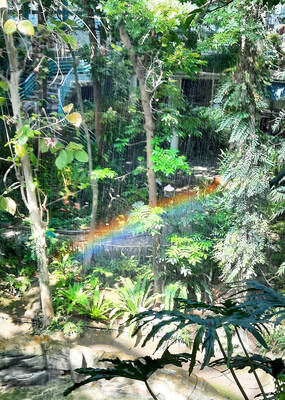
It’s only half the size of its more famous counterpart in Taipei, but the Botanical Garden of the National Museum of Nature Science (NMNS, 國立自然科學博物館植物園) is surely one of urban Taiwan’s most inviting green spaces. Covering 4.5 hectares immediately northeast of the government-run museum in Taichung’s North District (北區), the garden features more than 700 plant species, many of which are labeled in Chinese but not in English. Since its establishment in 1999, the site’s managers have done their best to replicate a number of native ecosystems, dividing the site into eight areas. The name of the Coral Atoll Zone might
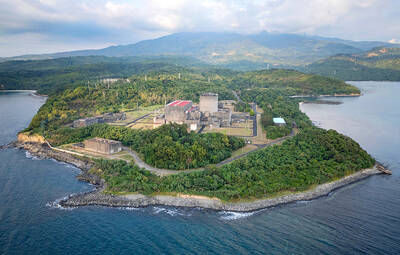
Nuclear power is getting a second look in Southeast Asia as countries prepare to meet surging energy demand as they vie for artificial intelligence-focused data centers. Several Southeast Asian nations are reviving mothballed nuclear plans and setting ambitious targets and nearly half of the region could, if they pursue those goals, have nuclear energy in the 2030s. Even countries without current plans have signaled their interest. Southeast Asia has never produced a single watt of nuclear energy, despite long-held atomic ambitions. But that may soon change as pressure mounts to reduce emissions that contribute to climate change, while meeting growing power needs. The


 RSS
RSS