


The farming of African oil palms, which has transformed vast areas of Malaysia and Indonesia, is one of the world’s most controversial types of agriculture.
Demand for palm oil — a common ingredient in processed foods and personal care products — drives deforestation and the destruction of tropical peatlands. To make space for oil-palm plantations, tracts of forest are cleared, sometimes by bulldozer, but often by burning. Forest fires release huge amounts of carbon dioxide, the principal greenhouse gas, as well as soot.
In Sumatra and Borneo, orangutans, rhinos, elephants and tigers are losing their habitats to the African oil palm, as are clouded leopards, pangolins, macaques and tapirs. Several of these species are vulnerable; some are critically endangered.
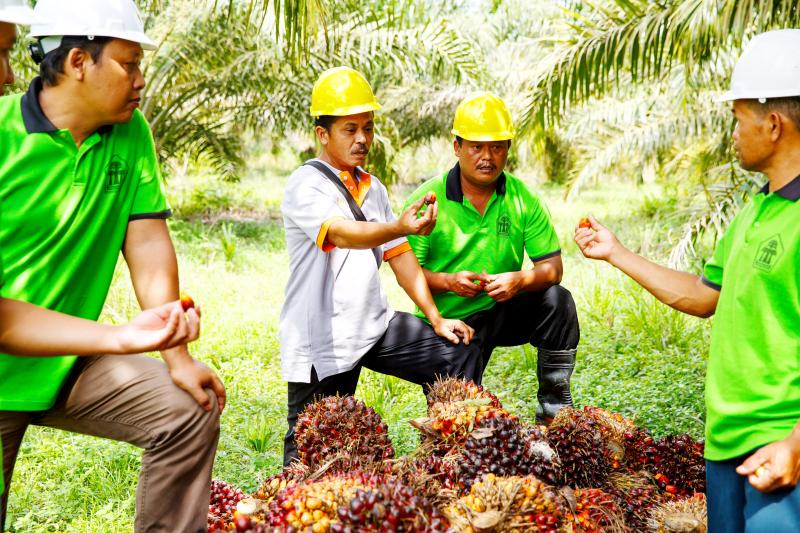
Photo courtesy of the Roundtable on Sustainable Palm Oil
In Europe in particular, photos of orphaned orangutans upset consumers. Fearing boycotts, retailers have sought alternatives to palm oil, or to source the commodity from growers certified by the Roundtable on Sustainable Palm Oil (RSPO). This Kuala Lumpur-based NGO develops and implements global standards for the environmentally and ethically-sound production of palm oil.
The industry-dominated RSPO is not without its problems. It has been accused of greenwashing and, as recently as last month, of certifying palm oil produced on plantations guilty of serious labor abuses.
Switching from palm to other oils could be even worse for the environment. Joe Fassler, in the March 2016 issue of Smithsonian Magazine, points out that: “No other crop can yield even a third as much oil per acre planted. And along with using less land, the oil palm gobbles up significantly fewer pesticides and chemical fertilizers than coconut, corn or any other vegetable oil source.”
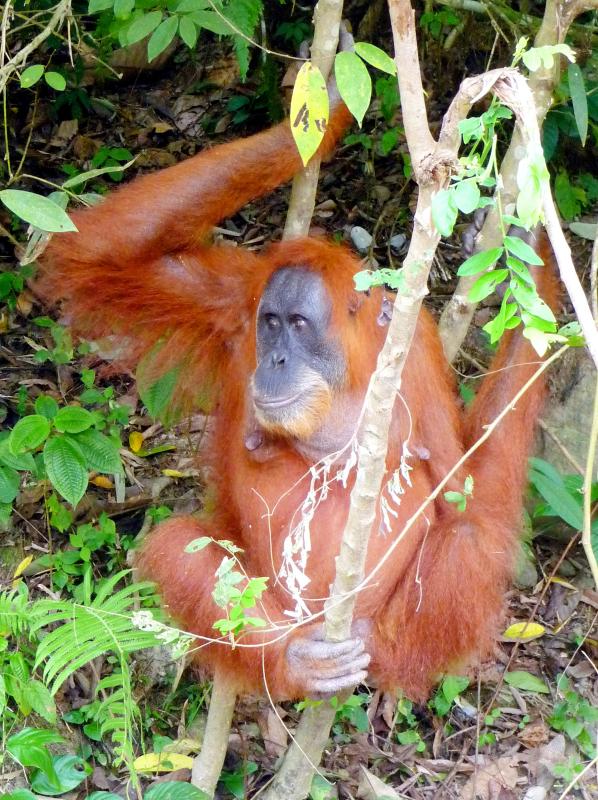
Photo: Steven Crook
At the end of 2018, British supermarket chain Iceland ceased manufacturing products which contain palm oil. By May 2019, UK department-store chain Selfridges had eliminated palm oil from its own-label range. British online retailer Ocado lists more than 2,100 palm oil-free items on its Web site.
CONSUMER PRESSURE LACKING
According to Carrefour’s global Web site, since 2015, 100 percent of the palm oil used in its own-brand products has come from RSPO-certified suppliers.
Carrefour, which has 131 stores in Taiwan, began working with RSPO in 2006. The French multinational’s palm oil procurement policy now includes RSPO standards “and additional requirements to do with protecting forests and peat bogs.”
In 2019, 86 percent of the palm oil shipped to Europe met RSPO standards. RSPO says it can’t provide a figure for Taiwan, but the behavior of local manufacturers and retailers — even those doing the right thing — suggests that local consumers’ priorities do not include saving the orangutan.
Sifting through Carrefour’s Taiwan Web site turns up very few mentions of sustainable palm oil. The frozen scallion pies and pancakes supplied by Taipei-based Laurel Corp are made using “green and sustainable internationally certified palm oil,” but that’s about all.
Searching for palm-oil free products brings up just three items. Two are car-care products; the third is a nut-flavored spread imported from France. Surely other items on Carrefour’s shelves in Taiwan include sustainable palm oil, or no palm oil whatsoever, but it seems there’s no incentive to highlight this characteristic.
The Environmental Impacts section of Costco’s global Web site says the company is committed to ensuring that all palm oil and other palm-based derivatives and fractions in its Kirkland Signature products “will be 100-percent RSPO certified (or equivalent) by 2021 or sooner.” This policy applies to the local sourcing team in Taiwan as well as to non-Kirkland Signature products made elsewhere. However, Costco’s Taiwan Web site currently doesn’t acknowledge this undertaking.
The Web site of RT-Mart, which operates 22 stores around Taiwan, makes no mention of sustainable palm oil. Nor does that of PX-Mart, a chain of 1,015 supermarkets.
By contrast, the English and Chinese versions of Hsin Tung Yang’s 2019 Corporate Social Responsibility Report highlight the company’s decision to begin using sustainable palm-oil products. In 2019, 14.3 percent of the palm oil purchased by Hsin Tung Yang — known for the meat jerkies and pineapple cakes it sells at Taiwan’s airports — was RSPO certified.
The number of Taiwanese companies holding RSPO membership grew in 2020 to 42, but Hsin Tung Yang and Laurel Corp aren’t among them.
Units of some high-profile conglomerates, including Uni-President Enterprises Corp and Want Want Holdings Ltd, have signed up to RSPO. Certain household names like I-Mei Foods Co (palm oil is an ingredient in its ice cream) and Kuai Kuai Co (whose signature snack includes palm oil) aren’t in the grouping.
Joining RSPO doesn’t necessarily mean a wholehearted embrace of the organization’s principles. As an e-mail from Chi Mei Frozen Food Co — an associate member since mid-2018, and the only local food producer willing to discuss the issue of palm oil with this reporter — concedes, if it weren’t for supply-chain pressure from outside Taiwan, there’d be even less progress on this issue.
“So far, we only use sustainable palm oil in one product [a type of frozen guabao bun], that is exported to Europe because our customer requires it. And we don’t use much of the oil since COVID-19 has hit the economy badly all over the world,” says a member of the company’s marketing and planning department.
GLOBAL PROBLEM
Taiwan isn’t the only place where food companies and soap manufacturers aren’t eager to source the palm oil they use from responsible growers.
China imported 8.49 million tonnes of palm oil in 2019, according to China Dialogue, an NGO that investigates the country’s environmental challenges. Less than 2 percent of it was RSPO-certified.
In Taiwan, several Chinese-language media have reported the consequences of the palm-oil industry’s rapid expansion. Local NGOs like the Environmental Information Center (環境資訊中心, e-info.org.tw) are trying to educate the public.
In recent years, palm oil has sold for between US$600 and US$750 per tonne, with a tonne of sustainable palm oil costing around US$30 more. This premium doesn’t make much difference to the cost of items on supermarket shelves, because palm oil is a minor ingredient in most finished products.
Ten years ago, CommonWealth magazine reported that in a nine-country survey of green consumerism, 24 percent of respondents were willing to pay more for eco-friendly goods, while according to the magazine’s own survey, 80 percent of Taiwanese respondents were amenable to paying a green premium.
Kantar’s Purpose in Asia report on consumer concerns, published in late 2018, found that Taiwanese were the only group (of nine Asia-Pacific nationalities surveyed) to put “climate action” among their top three concerns. Air pollution afflicting Taiwan was the top environmental issue.
Could it be that local consumers are still unaware of the ubiquity of palm oil in everyday products? Or that they say one thing, but do another when it comes to spending their own money? Or, perhaps, their interest in environmental issues doesn’t extend beyond the country’s borders? For the sake of Southeast Asia’s forests, it’s time local consumers began putting pressure on supermarkets and the companies they buy from.
Steven Crook, the author or co-author of four books about Taiwan, has been following environmental issues since he arrived in the country in 1991. He drives a hybrid and carries his own chopsticks.
Jason Han says that the e-arrival card spat between South Korea and Taiwan shows that Seoul is signaling adherence to its “one-China” policy, while Taiwan’s response reflects a reciprocal approach. “Attempts to alter the diplomatic status quo often lead to tit-for-tat responses,” the analyst on international affairs tells the Taipei Times, adding that Taiwan may become more cautious in its dealings with South Korea going forward. Taipei has called on Seoul to correct its electronic entry system, which currently lists Taiwan as “China (Taiwan),” warning that reciprocal measures may follow if the wording is not changed before March 31. As of yesterday,

The Portuguese never established a presence on Taiwan, but they must have traded with the indigenous people because later traders reported that the locals referred to parts of deer using Portuguese words. What goods might the Portuguese have offered their indigenous trade partners? Among them must have been slaves, for the Portuguese dealt slaves across Asia. Though we often speak of “Portuguese” ships, imagining them as picturesque vessels manned by pointy-bearded Iberians, in Asia Portuguese shipping between local destinations was crewed by Asian seamen, with a handful of white or Eurasian officers. “Even the great carracks of 1,000-2,000 tons which plied
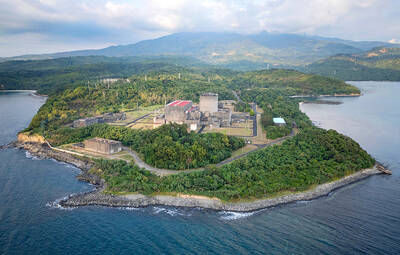
Nuclear power is getting a second look in Southeast Asia as countries prepare to meet surging energy demand as they vie for artificial intelligence-focused data centers. Several Southeast Asian nations are reviving mothballed nuclear plans and setting ambitious targets and nearly half of the region could, if they pursue those goals, have nuclear energy in the 2030s. Even countries without current plans have signaled their interest. Southeast Asia has never produced a single watt of nuclear energy, despite long-held atomic ambitions. But that may soon change as pressure mounts to reduce emissions that contribute to climate change, while meeting growing power needs. The
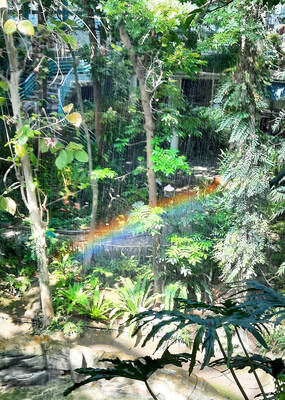
It’s only half the size of its more famous counterpart in Taipei, but the Botanical Garden of the National Museum of Nature Science (NMNS, 國立自然科學博物館植物園) is surely one of urban Taiwan’s most inviting green spaces. Covering 4.5 hectares immediately northeast of the government-run museum in Taichung’s North District (北區), the garden features more than 700 plant species, many of which are labeled in Chinese but not in English. Since its establishment in 1999, the site’s managers have done their best to replicate a number of native ecosystems, dividing the site into eight areas. The name of the Coral Atoll Zone might


 RSS
RSS