


This year almost became the first since 2009 that the Red Room went without its signature Stage Time and Wine open mic event. After four years at the Taiwan Air Force Innovation Base, the nonprofit arts and culture organization had to dial things back after losing its space at the end of last year.
After 11 months of vagrancy, the organizers celebrated on Dec. 5 the opening of their new home at Red Room Rendezvous, a for-profit vegan restaurant and bar with a gallery and performance space. And tomorrow night, Stage Time and Wine will make its long awaited return, recurring every third Saturday of the month.
Gone are the volunteers who help wash dishes and the bring-your-own-wine ethos as there’s now a full menu and kitchen staff, but Manav Mehta, who has been involved with Red Room since its inception and now runs the restaurant bar, says the spirit of the event will stay the same. As usual, all types of expression are welcome, from spoken word to movement to music and visual arts.
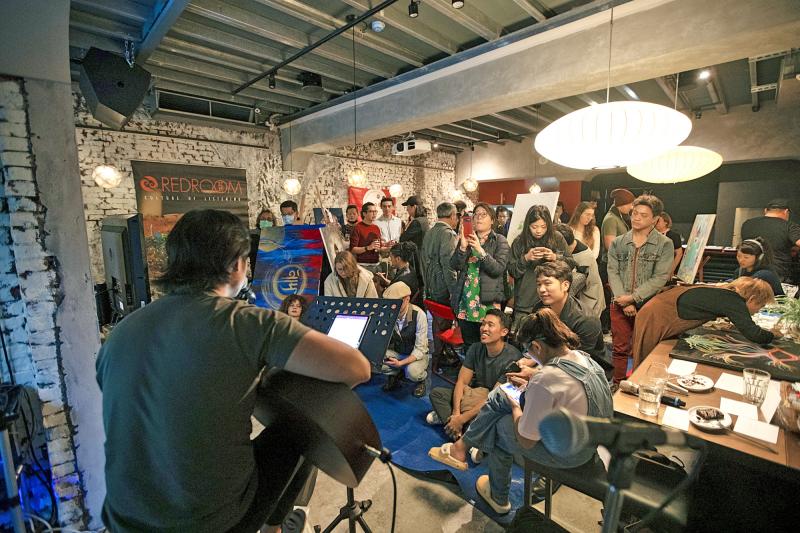
Photo courtesy of Red Room
“I want to emphasize that Stage Time and Wine is an intimate place of sharing,” Mehta says. “We don’t want it to be a talent show. Instead of ‘You’ve got five minutes to show off what you got,’ it should be ‘You get five minutes to share and we listen.’ The culture of listening is still part of the [Red Room] brand.”
Since the first edition was launched in November 2009, Mehta says they’ve only missed at most five Saturdays — due to typhoons — before this year.
“Now we have a home, I know I can consistently run it and we never have to make any compromise,” he says. “Even if we get a major business day, if it’s the third Saturday — I’ll say, sorry, Stage Time is more important.”
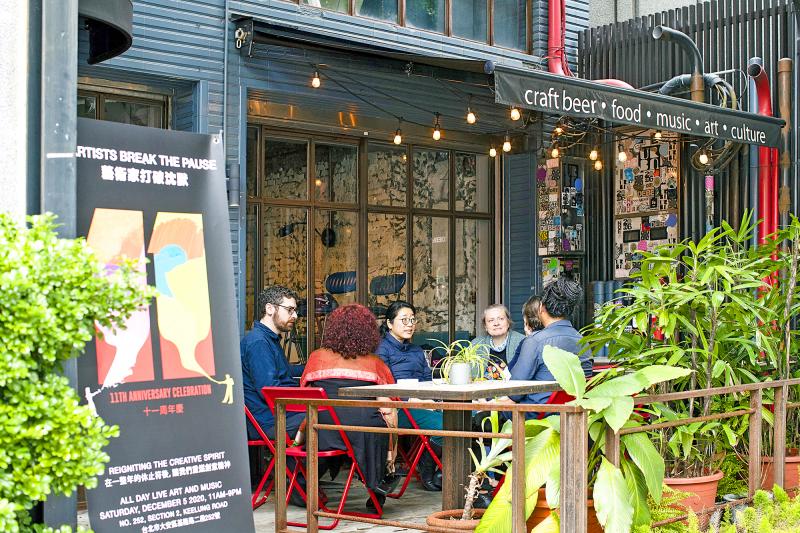
Photo courtesy of Red Room
Mehta had left Taiwan for other opportunities last year, but after returning due to COVID-19, he started running musical jams at vegetarian cafe URBN Culture, which used to occupy Red Room Rendezvous. The former owner was looking to move on, and after hearing that Mehta wanted to open something, she offered him the space.
“I was thinking of starting it under a different name, then I thought: ‘Why am I racking my brain to rebuild something that we’ve already put together?’ We can use the same brand,” he says.
While keeping the non-profit association intact, Mehta proposed launching a new for-profit vehicle under the Red Room tag, continuing to create intimate events that celebrate the arts while being able to pay for its own space.
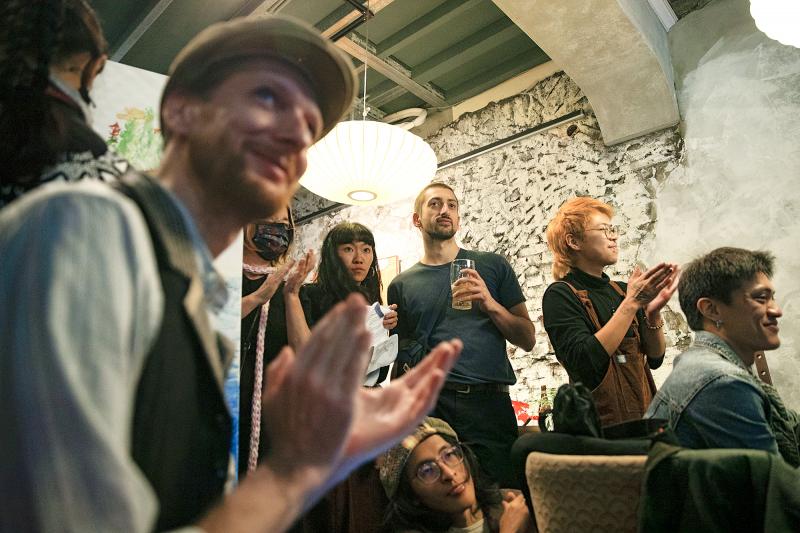
Photo courtesy of Red Room
“If you’re creating platforms, you are offering support and nourishing others,” Mehta says. “But we have to make sure we can [support ourselves] first, and this is the first time we’re actually doing it.”
The non-profit, Mehta adds, is its own branch of the Red Room run by the board, and they don’t have financial ties. The association will focus on running art-related, family-friendly programs.
The restaurant offers an eclectic vegan menu (except for the grilled cheese), which was developed in partnership with Sprout restaurant (初芽) in Tianmu and vegan caterer Hanseasian, with R&D Cocktail Lab helping create the drinks.

Photo courtesy of Red Room
“Red Room’s voice is the program, the network, the space, the vibe,” Mehta says.
The key lies in curation, cultivation and cross pollination, as Mehta hopes it becomes even more of a venue where foreigners and locals can mix.
“Now that there’s a restaurant bar, there’s less fear that Red Room is just for foreigners,” he says, adding that many locals walk in for the food and become interested in the programs.
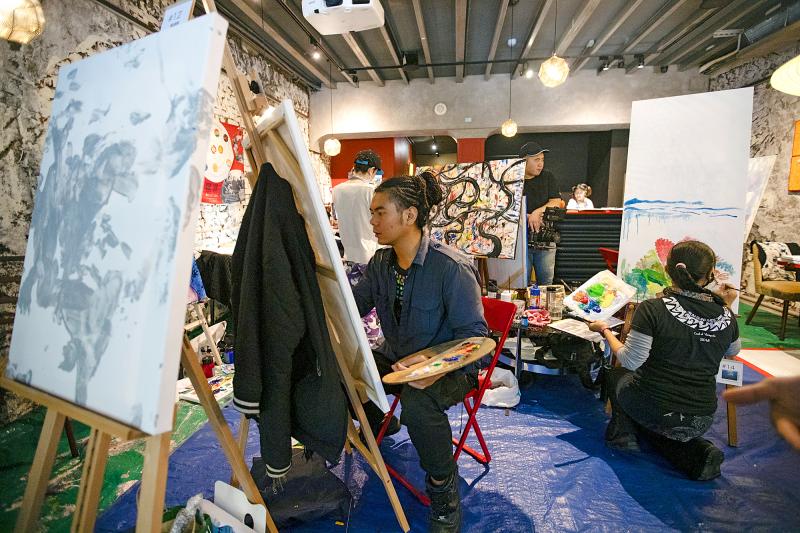
Photo courtesy of Red Room
“Our current exhibit features a British man [Tom Rook] drawing all of Taiwan in detail and Taiwanese are buying the work. This kind of exchange is what we want.”

Taiwan’s English education system is being pulled apart by three opposing forces. Bilingual Nation 2030 pulls students toward English and global communication. Artificial Intelligence (AI) readiness pulls them toward digital judgment, verification and AI-mediated work. But Taiwan’s old exam culture pulls them back toward memorization, grammar drills, timed reading and correct answers. If the education system keeps using old exams to define success, it risks producing graduates who are neither genuinely bilingual nor genuinely AI-ready, but trained for tasks machines can already perform. The first force is Bilingual Nation 2030. Launched in 2018, the policy aimed to “help Taiwan’s workforce connect

It seems every few days one bumps into one of those “real man” comments in which Taiwan is urged to “face reality” or similar, and “make a deal,” with the speaker implying that soon it will be too late. “Deal” advocates always present themselves as having a superior grip on reality, and the manly ability to make the “hard choice.” Their testosterone-laden language often echoes that of Taiwan sellout advocates. Note that such commentary always specifies a process (“make a deal, work with, make progress”), never the end state of what occupation by a violent authoritarian colonialist state will entail. In

There are shadowy cabals plotting to sell out Taiwan to be annexed by China, by invasion if necessary. Fortunately, they are buffoons. In 2019, former Bamboo Union gangster and founder of the China Unification Promotion Party (CUPP), Chang An-le (張安樂, colorfully known as “White Wolf”), led a protest at the Legislative Yuan against comments made by then-premier Su Tseng-chang (蘇貞昌) that in the event of an attack by China, he would never surrender, but would protect the nation by fighting to the end, even if he only had a broom. Chang had party members bring a wooden casket that they
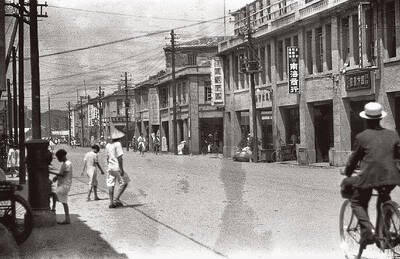
June 1 to June 7 "If all Taiwanese were as afraid of dying as you, then what would happen?” Physician Shih Chiang-nan (施江南) reportedly said this to his wife Chen Chiao-tung (陳焦桐) after she urged him to stop intervening on behalf of Taiwanese soldiers stranded overseas after serving in the Japanese Army during World War II. Shih had clashed with high-ranking officials over the issue, engaged in several heated arguments with Taiwan governor-general Chen Yi (陳儀) and allegedly shouted at general Ko Yuan-fen (柯遠芬), chief of staff of the Taiwan Garrison Command, over


 RSS
RSS