


Every day, 90-year-old Japanese grandma Hamako Mori flexes her fingers to keep them nimble. Not for knitting or needlepoint, but to keep them in shape for playing video games.
The pensioner known as “Gamer Grandma” spends three or more hours a day battling monsters and going on missions in the virtual worlds of her favorite games, and even has a popular YouTube channel for her fans.
“I’m passionate about playing games every day,” the white-haired widow said in an interview conducted by videochat.

Photo: YouTube screen grab
“Every day is an enjoyable day,” she said, describing eviscerating on-screen foes as a fantastic stress reliever.
Mori cuts an elegant, mild-mannered figure, with her hair pulled back into a ponytail and a pair of large glasses perched on her nose.
She begins the videos she posts on her YouTube channel with a friendly “Konnichiwa” and a bow.
But her grandmotherly demeanor disappears when she plays, transformed into a gun-toting character in Call of Duty or a sword-wielding android in NieR: Automata.
Mori, who lives in Chiba, southeast of Tokyo with her family, holds a Guinness World Record certifying her as the world’s oldest gaming YouTuber.
“She always gets into the games,” her only grandchild, 43-year-old Keisuke Nagao, said.
“I think she is slightly different. Ordinary old people are not so enthusiastic about video games as she is.”
300,00 YOUTUBE FANS
Mori isn’t new to the gaming world, and has played some 200 titles since she took up the hobby some four decades ago.
Her first console was a Cassette Vision, which she bought in 1981 after being intrigued by her children’s obsession with gaming.
“I discovered that there was this fascinating thing that existed in the world,” she said.
She has played most of the gaming world’s smash hits including Super Mario Brothers, Dragon Quest, Final Fantasy and Call of Duty, and admits to sometimes staying up until 2am when she is sucked into a session.
Her favorite games include action-adventure series “Grand Theft Auto” and popular fantasy role-playing game Elder Scrolls V: Skyrim.
“You can do whatever you want to” in a game, she said, describing them as a “motivation in life.”
Mori usually plays alone at home, but launched a YouTube channel in 2014 to connect with other gamers.
She posts new videos filmed by her grandson three or four times a month and has attracted 300,000 subscribers and millions of views with content featuring her gaming but also showing her daily life.
“It’s fun being watched by a lot of people, rather than playing alone,” she said of her “Gamer Grandma” channel.
Among her videos is one showing her blowing out candles on a cake to celebrate her 90th birthday with her family. Another features her “unboxing” a brand-new PlayStation console.
At 90, Mori is fighting fit, but she says some state-of-the-art games require agile hand motions that can prove challenging.
“It’s getting hard. It really is,” she said, describing exercises she does with her fingers and hands every day to keep herself game-ready.
‘BETTER THAN DOING NOTHING!’
But she has no intention of giving up gaming.
“I won’t put it down just because it’s difficult... It’s better than doing nothing!”
And she hopes with practice she can improve further.
“I want to play well no matter how old I am,” she said. “I want to continue as long as possible.”
Mori is something of an evangelist for video games, and encourages other older people to get into gaming, or find other hobbies that keep them going.
“It doesn’t have to be video games necessarily. But it’s good to do something,” said Mori, who swam regularly until the age of 80 and still knits.
And while Mori said she understands concerns about video game addiction, particularly among young people, she pointed out that gaming may have helped many survive lockdowns over the coronavirus.
“It’s safer to play at home, rather than going out,” she said.
For now, Mori is eagerly awaiting the release of the PlayStation 5, due to hit shops later this year.
“It’s seriously preoccupying me,” she said. “I want one. I really do.”

If one asks Taiwanese why house prices are so high or why the nation is so built up or why certain policies cannot be carried out, one common answer is that “Taiwan is too small.” This is actually true, though not in the way people think. The National Property Administration (NPA), responsible for tracking and managing the government’s real estate assets, maintains statistics on how much land the government owns. As of the end of last year, land for official use constituted 293,655 hectares, for public use 1,732,513 hectares, for non-public use 216,972 hectares and for state enterprises 34 hectares, yielding

The small platform at Duoliang Train Station in Taitung County’s Taimali Township (太麻里) served villagers from 1992 to 2006, but was eventually shut down due to lack of use. Just 10 years later, the abandoned train station had become widely known as the most beautiful station in Taiwan, and visitors were so frequent that the village had to start restricting traffic. Nowadays, Duoliang Village (多良) is known as a bit of a tourist trap, with a mandatory, albeit modest, admission fee of NT$10 giving access to a crowded lane of vendors with a mediocre view of the ocean and the trains

Traditionally, indigenous people in Taiwan’s mountains practice swidden cultivation, or “slash and burn” agriculture, a practice common in human history. According to a 2016 research article in the International Journal of Environmental Sustainability, among the Atayal people, this began with a search for suitable forested slopeland. The trees are burnt for fertilizer and the land cleared of stones. The stones and wood are then piled up to make fences, while both dead and standing trees are retained on the plot. The fences are used to grow climbing crops like squash and beans. The plot itself supports farming for three years.
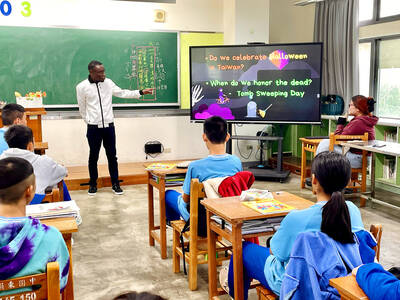
For many people, Bilingual Nation 2030 begins and ends in the classroom. Since the policy was launched in 2018, the debate has centered on students, teachers and the pressure placed on schools. Yet the policy was never solely about English education. The government’s official plan also calls for bilingualization in Taiwan’s government services, laws and regulations, and living environment. The goal is to make Taiwan more inclusive and accessible to international enterprises and talent and better prepared for global economic and trade conditions. After eight years, that grand vision is due for a pulse check. RULES THAT CAN BE READ For Harper Chen (陳虹宇), an adviser


 RSS
RSS