


Boluomi (菠蘿蜜) carries noble intentions in portraying the hardships of disenfranchised Southeast Asian migrants, but the resulting production is rather disjointed and overly bleak, with many parts not clearly explained. The main problem stems from directors Lau Kek Huat and Vera Chen (陳雪甄) trying to tell two stories that don’t really connect.
The trailer bills the film as a simple love story between a Malaysian university student and Filipino migrant worker in Taiwan. It’s understandable that the directors would strive for something more complex, but sometimes a leaner framework allows more room for character development and a deeper exploration into their lives as well as the people around them.
It’s not often that Southeast Asian migrants, who make up a growing section of Taiwanese society, are featured as leads in a box office feature film. Once suffering in silence, they have in recent years become increasingly vocal in fighting for their rights and their plight has been widely reported on by both local and international media. But discrimination and mistrust by Taiwanese remains common, and any mainstream portrayal of them doing something besides toiling as caretakers or manual laborers should be lauded.

Photo Courtesy of atmovies.com
If it were just a love story, it wouldn’t be an average cheesy one anyway, as it features two foreigners of different socioeconomic classes who bond over their marginalization as they try their best to seek a better life in Taiwan. Yi-fan, the Malaysian student (Wu Nien-hsuan, 吳念軒), is openly discriminated for being Chinese in Malaysia, but in Taiwan he only hangs out with his Malaysian-Chinese buddy and professor and is in constant conflict with his Taiwanese dorm-mates and boss. Laila (Laila Ulao), on the other hand, mostly interacts with the Vietnamese workers in the massage parlour she works at as a cleaning lady.
The film doesn’t hold back in showing how they are mistreated in Taiwanese society, painting a vastly different picture from the liberal and “friendly to foreigners” image that the country tries to propagate. It also is critical of racial issues in multi-ethnic Malaysia. The plight of Vietnamese brides in Taiwan who often end up as sex workers is also touched on, and really, that’s enough material to work with. Not only would it make Taiwanese think twice about how things are going on in their own country, its international exposure at film festivals also offers insights to people wanting to understand better of the complexities beneath the surface in Asian societies.
But as mentioned earlier, there’s an entirely independent storyline going on at the same time that cuts significantly in and out of the present-day narrative. Set in the 1950 and 60s, it depicts the turbulent childhood of Yi-fan’s father as the son of ethnic Chinese communist guerrillas in the war-torn jungles of Malaysia. While it is an intriguing and worth telling piece of history that serves as an ode to Lau’s family history, there’s little to link it to the present day tale in a meaningful way, especially since the memories belong to Yi-fan’s father and not himself.
It would make more sense if it showed Yi-fan’s childhood, as that would shed much light on his adult character, but the timelines do not match up. That said, the directors didn’t just cram the two timelines together carelessly, since the parallels and metaphors are clearly stated, including the consumption of the titular boluomi (jackfruit). But still, it feels like overload for the viewer. Instead of complementing each other, the timelines interrupt the flow of the narratives, each taking up too much space and leaving the audience wanting to know more on both ends.
The elements are all there for a good story and there are a few poignant moments, but the film lacks a strong driving narrative and eventually the audience gets weighed down by the sheer bleakness of the scenarios. Perhaps that is the stark reality for these migrants in real life, but it could also be done in a way that people don’t leave the theater feeling immensely depressed.
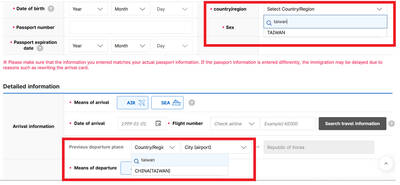
Jason Han says that the e-arrival card spat between South Korea and Taiwan shows that Seoul is signaling adherence to its “one-China” policy, while Taiwan’s response reflects a reciprocal approach. “Attempts to alter the diplomatic status quo often lead to tit-for-tat responses,” the analyst on international affairs tells the Taipei Times, adding that Taiwan may become more cautious in its dealings with South Korea going forward. Taipei has called on Seoul to correct its electronic entry system, which currently lists Taiwan as “China (Taiwan),” warning that reciprocal measures may follow if the wording is not changed before March 31. As of yesterday,

The Portuguese never established a presence on Taiwan, but they must have traded with the indigenous people because later traders reported that the locals referred to parts of deer using Portuguese words. What goods might the Portuguese have offered their indigenous trade partners? Among them must have been slaves, for the Portuguese dealt slaves across Asia. Though we often speak of “Portuguese” ships, imagining them as picturesque vessels manned by pointy-bearded Iberians, in Asia Portuguese shipping between local destinations was crewed by Asian seamen, with a handful of white or Eurasian officers. “Even the great carracks of 1,000-2,000 tons which plied

It’s only half the size of its more famous counterpart in Taipei, but the Botanical Garden of the National Museum of Nature Science (NMNS, 國立自然科學博物館植物園) is surely one of urban Taiwan’s most inviting green spaces. Covering 4.5 hectares immediately northeast of the government-run museum in Taichung’s North District (北區), the garden features more than 700 plant species, many of which are labeled in Chinese but not in English. Since its establishment in 1999, the site’s managers have done their best to replicate a number of native ecosystems, dividing the site into eight areas. The name of the Coral Atoll Zone might
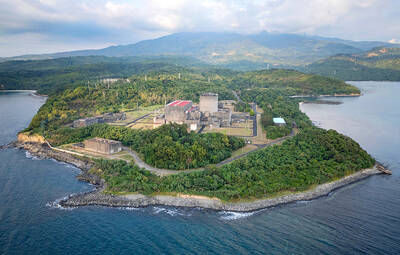
Nuclear power is getting a second look in Southeast Asia as countries prepare to meet surging energy demand as they vie for artificial intelligence-focused data centers. Several Southeast Asian nations are reviving mothballed nuclear plans and setting ambitious targets and nearly half of the region could, if they pursue those goals, have nuclear energy in the 2030s. Even countries without current plans have signaled their interest. Southeast Asia has never produced a single watt of nuclear energy, despite long-held atomic ambitions. But that may soon change as pressure mounts to reduce emissions that contribute to climate change, while meeting growing power needs. The


 RSS
RSS