


You might not know who Tung Yang-tzu (董陽孜) is, but chances are, you already own a piece of her artwork.
The 78-year-old is responsible for the calligraphy on Taiwan’s passport immigration stamps. Her design, introduced in 2013, contains a play on words — the characters for “arrival” have an extra dot, creating a homonym for “more” (多一點) and symbolizing Tung’s wish for the country to have more visitors. It’s typical of the civic-mindedness that permeates much of her work.
One of Taiwan’s most visible proponents of the role of calligraphy in public life, Tung’s work is featured in physical and cultural landmarks such as the inscription of “Taipei Main Station” (台北車站) in the station’s main lobby, as well as the logos of Cloud Gate Dance Theatre and Kingstone Bookstore. At Eslite, prints of her renditions of ancient sayings are sold in box sets, and her paintings of auspicious words are emblazoned on tote bags, gift sets and red packets.
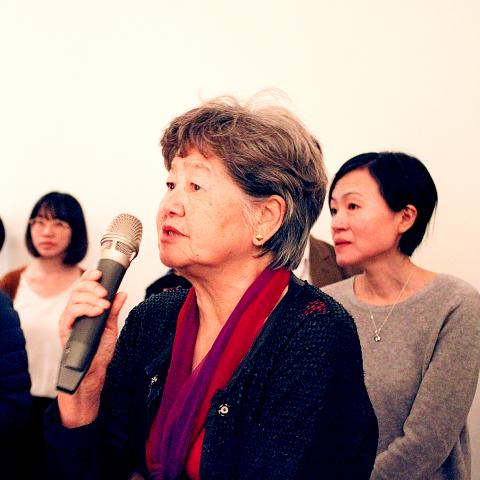
Artist Tung Yang-tzu speaks at the opening of her first solo retrospective Moving Ink last week.
Despite this level of mainstream success, the artist was initially startled when the Taipei Fine Arts Museum approached her about staging her first solo retrospective, quipping that she “wasn’t dead yet.”
Tung was eventually persuaded by the prospect of bringing her work — in a medium now often consigned to antique collections and history museums — to a wider and younger audience. The result, Moving Ink (行墨), spans five decades of her career and is a singular example of how an ancient art form can still bring to life the emotions and abstractions of the 21st century.
CONTEMPORARY CALLIGRAPHY
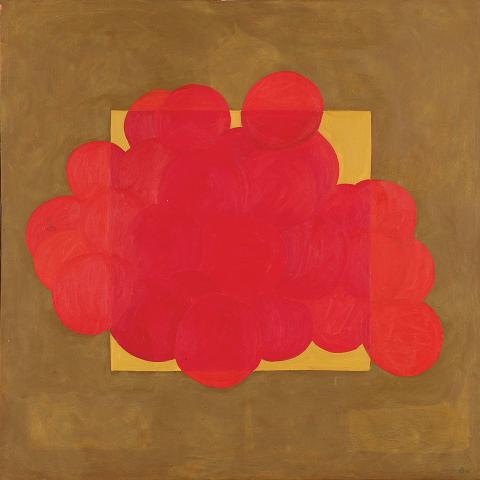
Photo courtesy of Taipei Fine Arts Museum
“Tradition is necessary, but the contemporary is even more important,” said Tung, who rejects the label “calligrapher” and instead identifies as a contemporary artist who uses text as her medium.
Speaking at the opening of her retrospective last week, Tung stressed the urgency of defending Taiwan’s calligraphic heritage. Calling for more action to not merely preserve but develop the future of calligraphy, Tung recounted entreaties she had made to senior officials for brush calligraphy to continue being taught in all elementary and middle schools.
Turning her attention across the strait, Tung also sounded a warning about the growing enthusiasm in China for learning traditional Chinese characters, and expressed hope that Taiwan would not lose its edge in mastering the artistry of that writing system.
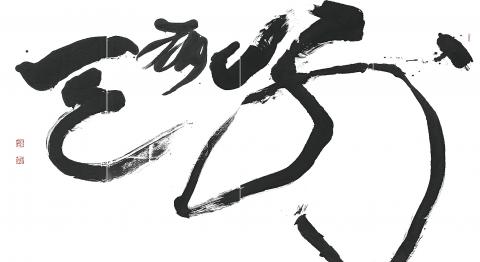
Photo courtesy of Taipei Fine Arts Museum
Born in Shanghai in 1942, Tung moved to Taiwan at the age of 10. She began her calligraphy studies under her father’s tutelage by imitating classical works, first the regular script (楷書) of Tang Dynasty scholar Yan Zhenqing (顏真卿) and the Northern Wei Dynasty steles, and then the running script (行書) of Song Dynasty scholars Su Shi (蘇軾) and Huang Tingjian (黃庭堅).
But in the 1960s and 1970s, Tung spent time in the US, where she studied oil painting and ceramic arts, before working as a graphic designer in New York. Paintings from these formative years are displayed in the first part of the exhibition, which starts on the museum’s second floor devoted to art history and winds down to the ground floor galleries reserved for major works. In that sequence, the novice paintings foreshadow some of the unusual square and triangular compositions of her later calligraphy.
During the exhibition’s opening, Tung occasionally sounded out of step with the times when she made the case for cultural preservation by exalting handwritten letters over digital correspondence. In fact, there was no need to make the point that way. Her work alone is the most compelling argument for calligraphy’s continued relevance and resonance with contemporary life.
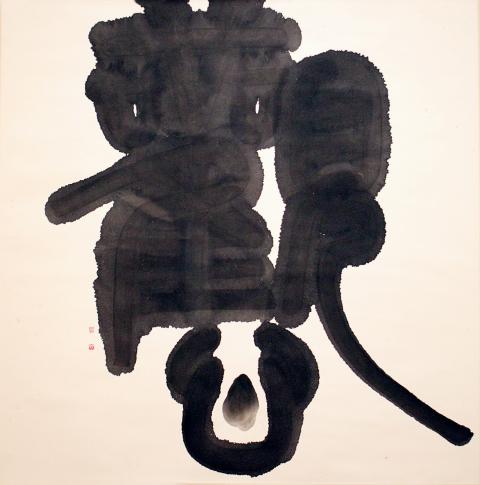
Photo: Davina Tham, Taipei Times
The captions in Moving Ink are indispensable for providing fleshed-out translations of the ancient sayings. In plain English, some sound like quotes from a hypothetical Oriental pop psychology manual, which is to say that they will not be lost on the uninitiated: “Find work suitable to your talents” for one; “The dragon that finds its element comes fully alive” for another.
Others will take closer reading and an understanding of Buddhist, Confucian and Taoist thought, which are not available in on-site materials. The most prominent of these is a series of 10 paintings based on the Buddhist concept of wu (無), or “without,” each of which contains deep philosophical subtext. Tung, a Christian, has painted each two-word phrase with its own unique personality.
But even as Chinese calligraphy features phrases consistently replicated from the same classical works over millennia, the medium also has inherent abstract, self-expressive and spontaneous values.
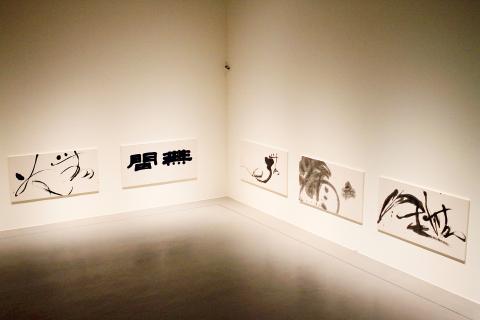
Photo: Davina Tham, Taipei Times
“This powerfully graphic art is still celebrated as an outward expression of the artist’s inner psychology,” writes Malcolm McNeill, the Chinese painting specialist at British auction house Christie’s. “Its rhythm, movement and flow is accessible to anyone who views it, not only to those of us who can read Chinese characters.”
These qualities are very forthcoming in Tung’s work, which are always sensitive to the aesthetic possibilities of the characters in addition to their semantic meanings. One section of Moving Ink even juxtaposes paintings of the same phrases made at different times, so that viewers can observe how the artist’s spontaneity affects the final product.
In Tung’s hands, the swoops, dots, curls and angles of Chinese characters approach Western abstract expressionism, and are likely to appeal even to the sensibilities of younger and foreign viewers. Wild and forceful or quiet and meditative, she conjures different emotions through subtle changes in the placement, intensity and structure of each stroke.
One of the most startling examples of this is Vast as the misty sea (浩如煙海), the accidental result of using day-old ink that creates a uniquely watery and bleary effect befitting the subject matter.
In the same display alcove, Tung’s painting, Understanding your heart (觀心), based on a Buddhist saying, manages to infuse a gentle light into the character for “heart” while depicting the immensity of effort required for self-knowledge.
Tung’s expressiveness is literally writ large in the supersized scrolls in the first floor galleries. By her own explanation, these monumental works are also where more of her feelings about matters affecting the nation and people come to bear.
In 2006, Tung painted Mine the mountains [for copper,] boil the seawater [for salt] (鑄山煮海), an exhortation to make the most of all the natural resources at one’s disposal. She said it captured the energy Taiwanese exhibited when trying to join the UN. In 2003, she painted The anger of an emperor kills millions, and causes blood to flow a thousand miles (天子之怒 伏屍百萬 流血萬里), which was in response to the 9/11 terrorist attack two years prior, and the then-unfolding SARS crisis.
Describing Moving Ink as an exhibition for “Taiwanese who love Taiwan,” Tung called on her compatriots to have greater appreciation for their national heritage.
“Every single one of us Taiwanese should pay attention to our mother culture,” she said. “It’s the mother culture of the Republic of China. So the art of calligraphy is very important. Our children may not know English, but they must know Chinese.”
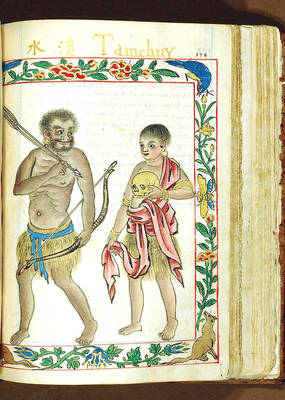
The Portuguese never established a presence on Taiwan, but they must have traded with the indigenous people because later traders reported that the locals referred to parts of deer using Portuguese words. What goods might the Portuguese have offered their indigenous trade partners? Among them must have been slaves, for the Portuguese dealt slaves across Asia. Though we often speak of “Portuguese” ships, imagining them as picturesque vessels manned by pointy-bearded Iberians, in Asia Portuguese shipping between local destinations was crewed by Asian seamen, with a handful of white or Eurasian officers. “Even the great carracks of 1,000-2,000 tons which plied
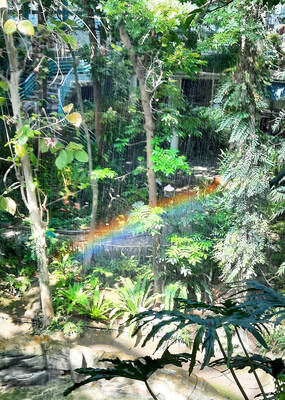
It’s only half the size of its more famous counterpart in Taipei, but the Botanical Garden of the National Museum of Nature Science (NMNS, 國立自然科學博物館植物園) is surely one of urban Taiwan’s most inviting green spaces. Covering 4.5 hectares immediately northeast of the government-run museum in Taichung’s North District (北區), the garden features more than 700 plant species, many of which are labeled in Chinese but not in English. Since its establishment in 1999, the site’s managers have done their best to replicate a number of native ecosystems, dividing the site into eight areas. The name of the Coral Atoll Zone might
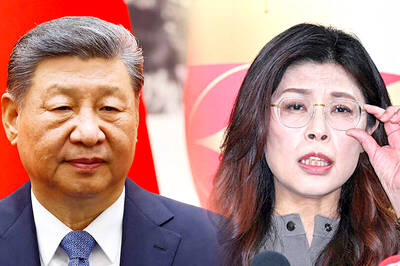
On Monday morning, in quick succession, the Chinese Communist Party (CCP) and the Chinese Nationalist Party (KMT) released statements announcing “that the Central Committee of the Communist Party of China and General Secretary Xi Jinping (習近平) have invited KMT Chairwoman Cheng Li-wun (鄭麗文) to lead a delegation on a visit to the mainland” as the KMT’s press release worded it. The KMT’s press release added “Chairwoman Cheng expressed her gratitude for the invitation and has gladly accepted it.” Beijing’s official Xinhua news release described Song Tao (宋濤), head of the Taiwan Work Office of the CCP Central Committee, as
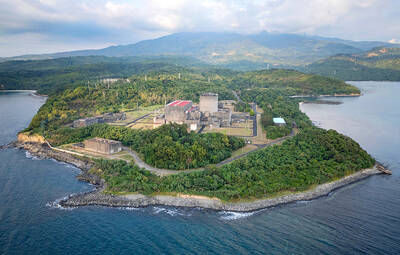
Nuclear power is getting a second look in Southeast Asia as countries prepare to meet surging energy demand as they vie for artificial intelligence-focused data centers. Several Southeast Asian nations are reviving mothballed nuclear plans and setting ambitious targets and nearly half of the region could, if they pursue those goals, have nuclear energy in the 2030s. Even countries without current plans have signaled their interest. Southeast Asia has never produced a single watt of nuclear energy, despite long-held atomic ambitions. But that may soon change as pressure mounts to reduce emissions that contribute to climate change, while meeting growing power needs. The


 RSS
RSS