


The Crucible remains one of US playwright Arthur Miller’s best-known works, and a film of a highly acclaimed 2014 London production is now showing at Vieshow Cinemas around Taiwan.
The 1953 play is a retelling of the Salem witch trials of 1692 to 1693 in what was then the Massachusetts Bay Colony, but Miller wrote it amid the hysteria of the US government’s hunt for communists following the end of the Chinese Civil War, Chiang Kai-shek (蔣介石) and his Chinese Nationalist Party (KMT) government fleeing to Taiwan and the establishment of the People’s Republic of China.
Then-US senator Joseph McCarthy, who was chairman of the Senate’s Government Operations Committee, and other members of the US Congress became obsessed with the idea that the US “had lost China” because the US Department of State — and many other organizations such as universities, labor unions and the entertainment industry — harbored pro-Soviet traitors and could soon lose Western Europe.
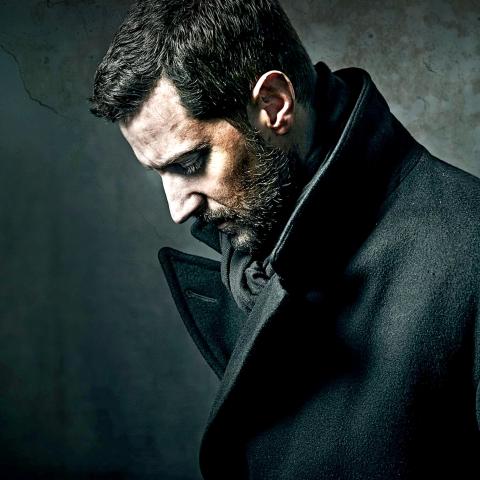
Photo courtesy of the Old Vic
The paranoia led to the State Department firing many of its “China experts” and hundreds of people being accused of being communist sympathizers finding themselves under investigation, losing their jobs and, in many case, jailed.
As Miller intended, people saw The Crucible as an allegory for the US House of Representatives’ Committee on Un-American Activities’ hunt for communist sympathizers.
Three years after The Crucible opened, Miller himself was questioned by committee. While willing to talk about his own political activities, he would not give the names of others who might have been at the same meetings and so he was convicted of contempt of Congress.
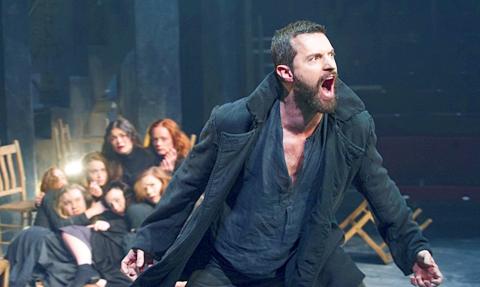
Photo courtesy of the Old Vic
In a piece published in the The New Yorker magazine on Oct. 13, 1966, about the writing of the play and his memories of that time, Miller wrote: “Few of us can easily surrender our belief that society must somehow make sense. The thought that the state has lost its mind and is punishing so many innocent people is intolerable. And so the evidence has to be internally denied.”
South African director Yael Farber’s production of The Crucible ran for 12 weeks from June to September 2014 at The Old Vic theater in London, starring Richard Armitage, who had gained worldwide recognition for his portrayal of the doomed dwarf leader Thorin Oakenshield in Peter Jackson’s The Hobbit trilogy.
The Guardian’s Michael Billington called it “an extraordinary production that preserves the integrity of Miller’s language while investing the action with a raw, visceral power.”
This film production was captured by Digital Theatre live at the Old Vic over three nights.
The play ran three-and-a-half hours with an intermission. The film clocks in at 3 hours and 19 minutes.
■ The Farber/Armitage film can be seen in Taipei at the Xinyi complex at 7:20pm on Monday and Friday next week, in Hsinchu, Taichung, Tainan and Kaohsiung at 7:20pm on Tuesday next week, and in Taoyuan at 2pm on Dec. 1.
■ More information and ticket links can be found on the company’s Web site Crucible page (www.vscinemas.com.tw/vsweb/film/detail.aspx?id=4182).
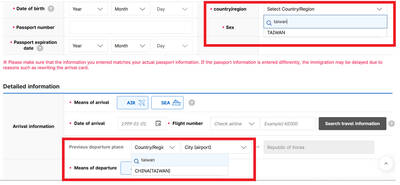
Jason Han says that the e-arrival card spat between South Korea and Taiwan shows that Seoul is signaling adherence to its “one-China” policy, while Taiwan’s response reflects a reciprocal approach. “Attempts to alter the diplomatic status quo often lead to tit-for-tat responses,” the analyst on international affairs tells the Taipei Times, adding that Taiwan may become more cautious in its dealings with South Korea going forward. Taipei has called on Seoul to correct its electronic entry system, which currently lists Taiwan as “China (Taiwan),” warning that reciprocal measures may follow if the wording is not changed before March 31. As of yesterday,
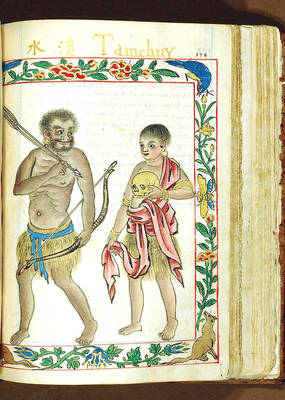
The Portuguese never established a presence on Taiwan, but they must have traded with the indigenous people because later traders reported that the locals referred to parts of deer using Portuguese words. What goods might the Portuguese have offered their indigenous trade partners? Among them must have been slaves, for the Portuguese dealt slaves across Asia. Though we often speak of “Portuguese” ships, imagining them as picturesque vessels manned by pointy-bearded Iberians, in Asia Portuguese shipping between local destinations was crewed by Asian seamen, with a handful of white or Eurasian officers. “Even the great carracks of 1,000-2,000 tons which plied
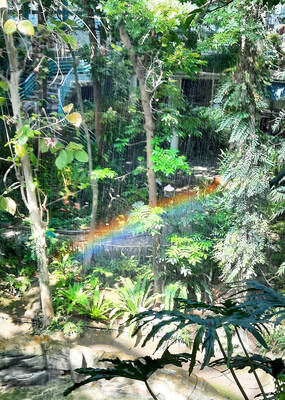
It’s only half the size of its more famous counterpart in Taipei, but the Botanical Garden of the National Museum of Nature Science (NMNS, 國立自然科學博物館植物園) is surely one of urban Taiwan’s most inviting green spaces. Covering 4.5 hectares immediately northeast of the government-run museum in Taichung’s North District (北區), the garden features more than 700 plant species, many of which are labeled in Chinese but not in English. Since its establishment in 1999, the site’s managers have done their best to replicate a number of native ecosystems, dividing the site into eight areas. The name of the Coral Atoll Zone might
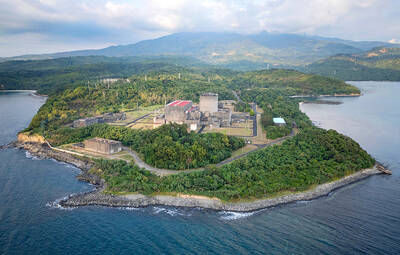
Nuclear power is getting a second look in Southeast Asia as countries prepare to meet surging energy demand as they vie for artificial intelligence-focused data centers. Several Southeast Asian nations are reviving mothballed nuclear plans and setting ambitious targets and nearly half of the region could, if they pursue those goals, have nuclear energy in the 2030s. Even countries without current plans have signaled their interest. Southeast Asia has never produced a single watt of nuclear energy, despite long-held atomic ambitions. But that may soon change as pressure mounts to reduce emissions that contribute to climate change, while meeting growing power needs. The


 RSS
RSS