


Nov. 11 to Nov. 17
Eight months after her failed armed resistance against the Chinese Nationalist Party (KMT), Hsieh Hsueh-hung (謝雪紅) notified authorities that she wasn’t giving up.
The communist revolutionary had fled to China after her 27 Brigade disbanded in the aftermath of the 228 Incident, an anti-government uprising in 1947 that was brutally suppressed. From Hong Kong, she issued a statement on Nov. 1, 1947, blasting the KMT’s misrule of Taiwan, concluding with a call for Taiwanese to rally and join the united front with China to “oppose the KMT’s treasonous infighting and authoritarianism, and fight for an independent, peaceful and democratic new China!”
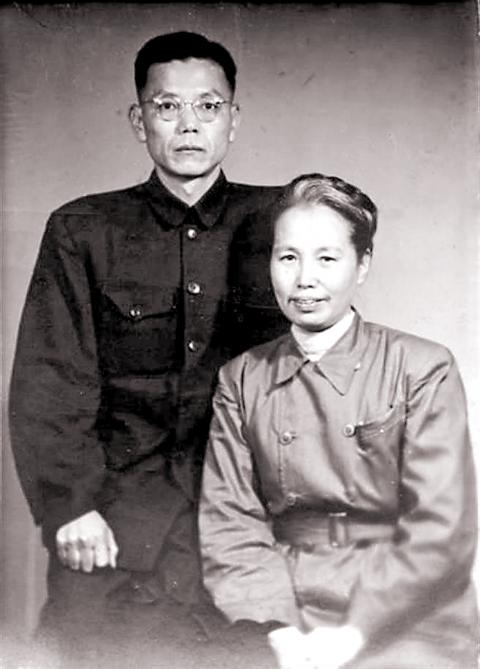
Photo courtesy of Wikimedia Commons
On Nov. 12, Hsieh, along with her long-time lover and comrade Yang Ke-huang (楊克煌) and former rival Su Hsin (蘇新) announced the formation of the Taiwan Democratic Self Governing League (台灣民主自治同盟, Taimeng). This party relocated to Beijing in 1949 and still exists today as one of the eight legally-recognized political parties in China.
According to a publication released by the party on its 70th anniversary, Taimeng “consists of people from Taiwan Province who reside in the motherland and are patriotic supporters of socialism. It is an active political party devoted to socialism with Chinese characteristics. In 70 years, Taimeng has never wavered in its support of the leadership of the Chinese Communist Party (CCP), and has actively participated in the revolution, development and reform of China.”
Since 1987, the party’s official mission has been to oppose Taiwanese independence and facilitate unification. But back when it was founded, its goal was to “liberate” Taiwan from the oppressive rule of KMT leader Chiang Kai-shek (蔣介石) and his imperialist American allies who sought to claim Taiwan as their own.
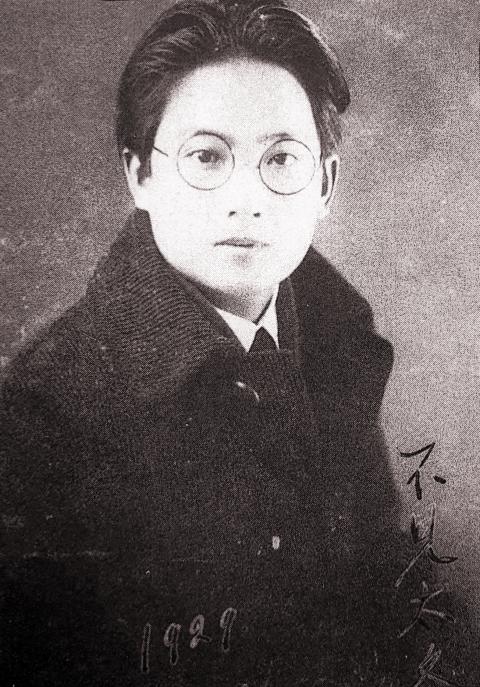
Photo courtesy of National Central Library
A number of White Terror cases in Taiwan were tied to this party, but further analysis shows that Taimeng was focused on China and had little clout in Taiwan. The KMT used the name as an excuse to arrest suspected communists, while other organizations operated under the name as a cover.
OPPOSE THE KMT
Hsieh met Yang when he joined the Taiwanese Communist Party in Japanese-ruled Taiwan in the late 1920s and 1930s, both spending significant time in prison for their activities. Su, who once opposed Hsieh as party leader, was also jailed around the same time.
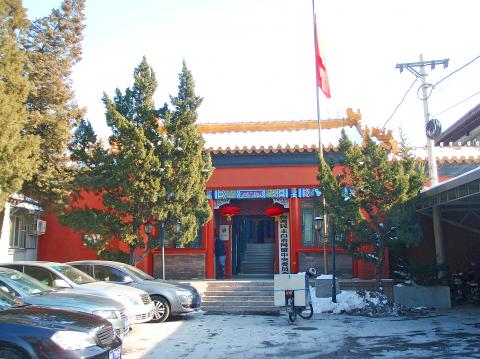
Photo courtesy of Wikimedia Commons
When Hsieh learned that the KMT was coming to take over Taiwan after Japan’s defeat, she issued a “Message to the Youth of Taiwan,” noting that if the new government didn’t give Taiwan democracy, they would continue to fight.
Hsieh founded the leftist Taiwan People’s Association (台灣人民協會) in September 1945, but the KMT forcefully disbanded it in January 1946. They kept their activities underground until the 228 Incident broke out. They made contact with the CCP after arriving in China and were soon dispatched to Hong Kong.
During the 228 Incident, Su ran a newspaper that criticized Taiwanese who sought to compromise with the government. He fled to China after escaping the large-scale newspaper purge in March 1947, reuniting with Hsieh and Yang in Hong Kong, and setting aside their past differences.
“Although we engaged in an intense factional struggle 20 years ago, I felt very happy that we were able to fight for the revolution together,” Su writes in his autobiography.
Since Hsieh and Yang’s autobiographies only detail their time in Taiwan, much information on Taimeng’s early days is gleaned from Su’s autobiography. He writes that their mission was to “inform Taiwanese of the domestic and international situation, especially regarding the revolution in China; to expose to the world “bandit Chiang’s” oppression and exploitation of Taiwanese; to use Hong Kong’s newspapers to openly oppose trusteeship and to prevent the imperialist Americans from invading Taiwan, and to unite Taiwanese in China and abroad.”
What’s ironic is that Su and Hsieh were both persecuted during the Cultural Revolution. Hsieh died in 1970, and wasn’t rehabilitated by the CCP until 1986. Su was rehabilitated in 1978, and rejoined the Taimeng in 1979. His writings continued to blast the KMT’s “extreme, brutal and barbaric political persecution” of Taiwanese, contending that the Taiwanese have been yearning to be liberated by the CCP for 30 years, even though he acknowledged that problems with the CCP have prevented that from happening.
Taimeng’s current chairwoman is Su Hui (蘇輝), daughter of former chairman Tsai Hsiao (蔡嘯), a Tainan native who joined the Chinese Red Army in 1937.
TAIMENG OR NOT TAIMENG?
In “Study of Taiwan Democratic Self-Governing League Incidents” (台灣民主自治同盟案件研究), Tseng Pei-chiang (曾培強) found 58 White Terror cases involving 417 people, the bulk of them taking place between 1950 and 1954, with the criminal details containing Taimeng’s full name instead of the abbreviation. Nearly half of the defendants were sentenced to more than 10 years in prison, while 91 of them received the death penalty.
However, many dispute the influence Taimeng had in Taiwan. Further research by Tseng shows that many of the so-called Taimeng cases were actually related to the Taiwan Provincial Work Committee (台灣省工作委員會), an underground CCP organization who often used Taimeng’s name as a cover for their activities.
Tseng concludes that only two of the cases were directly related to Taimeng: The 1949 Kuo Ming-che (郭明哲) case and the 1951 Ku Jui-ming (古瑞明) case. The study, “Investigation on leftist political cases during the 1950s” (1950年代左翼政治案件之探討) by Lin Cheng-hui (林正慧) reaches the same conclusion.
According to case documents, Kuo was a former Taiwan People’s Association member who joined Taimeng in 1947, while Tsai Po-chung (蔡伯仲) participated in Taimeng training in Hong Kong in 1948, returning to Taiwan that same year to “spread the poison of communism,” states his court documents.
Ku was a member of Hsieh’s 27 Brigade who returned to Taiwan after fleeing to Hong Kong and allegedly joining Taimeng. He was accused of plotting an armed rebellion in Taiwan, and 16 people were arrested for either participating in or failing to report Ku’s activities. Ku was executed, while fellow 27 Brigade member Huang Chin-tao (黃金島) was sentenced to life in prison.
Ku’s elder brother, Ku Jui-yun (古瑞雲) was also a founding member of Taimeng. He remained in China and suffered the same fate as Hsieh and Su.
Taiwan in Time, a column about Taiwan’s history that is published every Sunday, spotlights important or interesting events around the nation that have anniversaries this week.

The small platform at Duoliang Train Station in Taitung County’s Taimali Township (太麻里) served villagers from 1992 to 2006, but was eventually shut down due to lack of use. Just 10 years later, the abandoned train station had become widely known as the most beautiful station in Taiwan, and visitors were so frequent that the village had to start restricting traffic. Nowadays, Duoliang Village (多良) is known as a bit of a tourist trap, with a mandatory, albeit modest, admission fee of NT$10 giving access to a crowded lane of vendors with a mediocre view of the ocean and the trains

For many people, Bilingual Nation 2030 begins and ends in the classroom. Since the policy was launched in 2018, the debate has centered on students, teachers and the pressure placed on schools. Yet the policy was never solely about English education. The government’s official plan also calls for bilingualization in Taiwan’s government services, laws and regulations, and living environment. The goal is to make Taiwan more inclusive and accessible to international enterprises and talent and better prepared for global economic and trade conditions. After eight years, that grand vision is due for a pulse check. RULES THAT CAN BE READ For Harper Chen (陳虹宇), an adviser
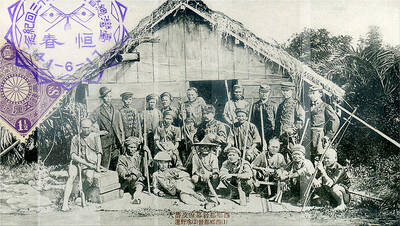
Traditionally, indigenous people in Taiwan’s mountains practice swidden cultivation, or “slash and burn” agriculture, a practice common in human history. According to a 2016 research article in the International Journal of Environmental Sustainability, among the Atayal people, this began with a search for suitable forested slopeland. The trees are burnt for fertilizer and the land cleared of stones. The stones and wood are then piled up to make fences, while both dead and standing trees are retained on the plot. The fences are used to grow climbing crops like squash and beans. The plot itself supports farming for three years.
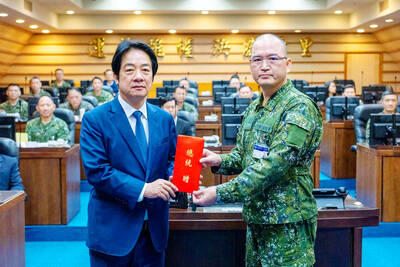
President William Lai (賴清德) on Nov. 25 last year announced in a Washington Post op-ed that “my government will introduce a historic US$40 billion supplementary defense budget, an investment that underscores our commitment to defending Taiwan’s democracy.” Lai promised “significant new arms acquisitions from the United States” and to “invest in cutting-edge technologies and expand Taiwan’s defense industrial base,” to “bolster deterrence by inserting greater costs and uncertainties into Beijing’s decision-making on the use of force.” Announcing it in the Washington Post was a strategic gamble, both geopolitically and domestically, with Taiwan’s international credibility at stake. But Lai’s message was exactly


 RSS
RSS