


The Taipei Capital Ballet (台北首都芭蕾舞團) is one of the nation’s oldest ballet troupes, having been established by the husband and wife team of Hsu Chin-feng (徐進豐) and Lee Shu-hui (李淑惠) in 1990, although it often falls under the radar despite their determination to bring local ballet not just to audiences in Taipei, but around the nation.
This weekend the company kicks off a four-city tour with its latest production, Variations on a Rococo Theme, with two shows at Taipei’s Metropolitan Hall, before traveling to Taoyuan, Nantou and Hsinchu.
The first piece on the double bill is set to Pyotr Ilyich Tchaikovsky’s Rococo Theme Variations for cello and orchestra, which was inspired by the work of his idol, Wolfgang Amadeus Mozart.
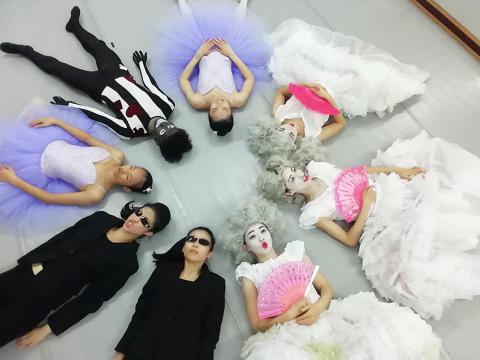
Photo courtesy of Taipei Capital Ballet
The dance follows the music, being divided into a theme, eight variations and a finale.
The second half of the performance is made up of three short works: Sangu Liupo, Dancing dolls and little blacks and Cool brother, works that are unified by their witty take on life and entertainment.
Over in New Taipei City, the Water Reflection Dance Ensemble (水影舞集), which has been around for 18 years, will perform its news work, 2019 Flower of Life (2019繁花).
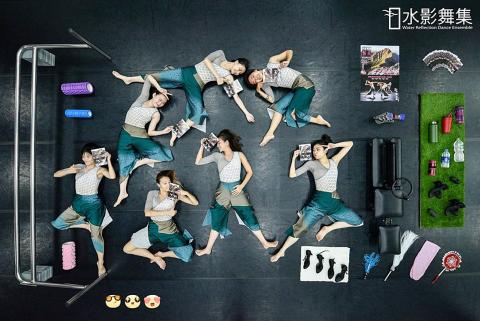
Photo courtesy of Water Reflection Dance Ensemble
It further explores themes that choreographer Tan Hui-chen (譚惠貞) used for a 2016 production by the same name celebrating the work of several female Taiwanese poets, set to the music of Luo Si-rong (羅思容).
Through her choreography and her seven female dancers, Tan seeks to demonstrate the enormous and strong life energy of women and the richness of contemporary social culture in Taiwan.
■ The Taipei Capital Ballet tomorrow at 7:30pm and Sunday at 2:30pm
■ Metropolitan Hall (城市舞台), 25 Bade Rd, Sec 3, Taipei (台北市八德路三段25號).
■ Tickets are NT$400 to NT$1,200. Available at NTCH box offices, Eslite ticket desks, online at www.artsticket.com.tw and convenience store ticket kiosks
■ Additional performances: on Oct. 26 at 7:30pm the Taoyuan Department of Cultural Affairs (桃園市政府文化局), 21, Xianfu Rd, Taoyuan City (桃園市縣府路21號), tickets NT$400; on Nov. 2 at 7:30pm at the Concert Hall of Cultural Affairs Bureau of Nantou County (南投縣文化局演藝廳), 135 Chienkuo Rd, Nantou City (南投市建國路135號), tickets NT$200 and on Nov. 9 at 7:30pm at the Hsinchu Municipal Performance Hall (新竹市文化局演藝廳), 16, Dongda Rd Sec 2, Hsinchu City (新竹市東大路二段17號), tickets NT$300 and NT$500
■ The Water Reflection Dance Ensemble will be at the New Taipei City Arts Center (新北市藝文中心演藝廳), 62 Jhuangjing Rd, Banciao District, New Taipei City (新北市板橋區莊敬路62號), tomorrow at 7:30pm and Sunday at 2:30pm
■ Tickets are NT$400 to NT$800, available as above NTCH box offices, Eslite ticket desks, online at www.artsticket.com.tw and convenience store ticket kiosks
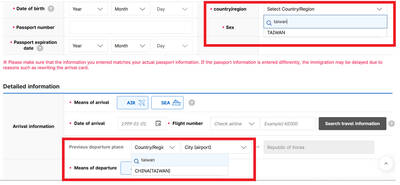
Jason Han says that the e-arrival card spat between South Korea and Taiwan shows that Seoul is signaling adherence to its “one-China” policy, while Taiwan’s response reflects a reciprocal approach. “Attempts to alter the diplomatic status quo often lead to tit-for-tat responses,” the analyst on international affairs tells the Taipei Times, adding that Taiwan may become more cautious in its dealings with South Korea going forward. Taipei has called on Seoul to correct its electronic entry system, which currently lists Taiwan as “China (Taiwan),” warning that reciprocal measures may follow if the wording is not changed before March 31. As of yesterday,
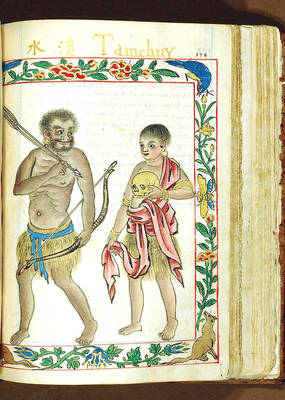
The Portuguese never established a presence on Taiwan, but they must have traded with the indigenous people because later traders reported that the locals referred to parts of deer using Portuguese words. What goods might the Portuguese have offered their indigenous trade partners? Among them must have been slaves, for the Portuguese dealt slaves across Asia. Though we often speak of “Portuguese” ships, imagining them as picturesque vessels manned by pointy-bearded Iberians, in Asia Portuguese shipping between local destinations was crewed by Asian seamen, with a handful of white or Eurasian officers. “Even the great carracks of 1,000-2,000 tons which plied
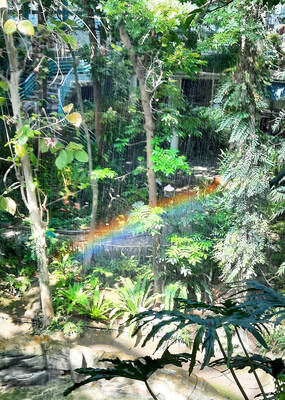
It’s only half the size of its more famous counterpart in Taipei, but the Botanical Garden of the National Museum of Nature Science (NMNS, 國立自然科學博物館植物園) is surely one of urban Taiwan’s most inviting green spaces. Covering 4.5 hectares immediately northeast of the government-run museum in Taichung’s North District (北區), the garden features more than 700 plant species, many of which are labeled in Chinese but not in English. Since its establishment in 1999, the site’s managers have done their best to replicate a number of native ecosystems, dividing the site into eight areas. The name of the Coral Atoll Zone might
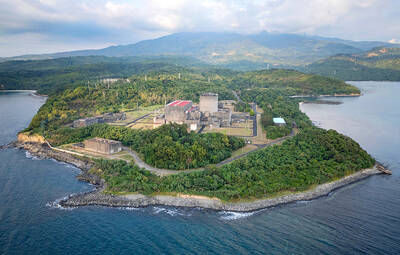
Nuclear power is getting a second look in Southeast Asia as countries prepare to meet surging energy demand as they vie for artificial intelligence-focused data centers. Several Southeast Asian nations are reviving mothballed nuclear plans and setting ambitious targets and nearly half of the region could, if they pursue those goals, have nuclear energy in the 2030s. Even countries without current plans have signaled their interest. Southeast Asia has never produced a single watt of nuclear energy, despite long-held atomic ambitions. But that may soon change as pressure mounts to reduce emissions that contribute to climate change, while meeting growing power needs. The


 RSS
RSS