


Weng Wen-yu (翁文妤) was 15-years-old when she went to college in Thailand, where her family moved when she was six.
The accomplished debater, who holds master’s degrees from Oxford University and the London School of Economics and Political Science, comes back to Taiwan every summer to hold debate camps, and is critical of the nation’s reliance on rote learning, test scores and cram schools.
“I feel like our education is failing our young people,” says Weng, 28, who works as a renewable energy consultant in London. “I think it’s absolutely critical that [Taiwan’s] young people learn how to think critically.”
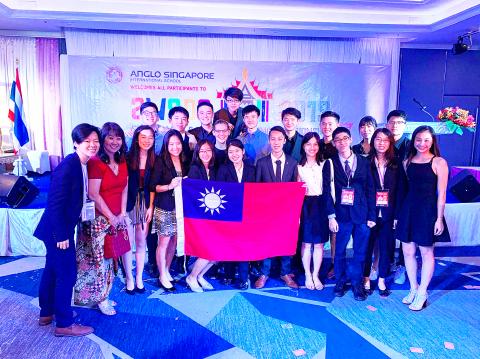
Photo courtesy of Taiwan Debate Union
Five years ago, Weng founded the Taiwan Debate Union (TDU), a non-profit organization that trains students from middle and junior high schools in English-language parliamentary-style debate.
In the cutthroat world of academic debate, where precocious teens flex intellectual muscle for prizes, scholarships and the sheer glory of winning, it can be hard to look past the competition. Yet Taiwan’s young debaters say debate has taught them more about teamwork and self-development, and they are overcoming the odds to pursue international recognition.
TALENT DEVELOPMENT
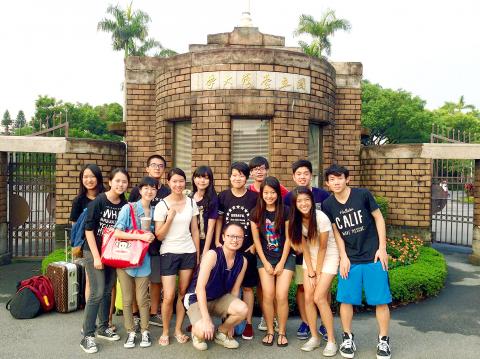
Photo courtesy of Taiwan Debate Union
Weng first encountered debate as an undergraduate in Thailand. As the youngest person in her year and “very, very introverted,” debate was a hobby to find like-minded people and become a better public speaker. With time, it grew in importance.
“Debating has really helped me to round my opinions and make me a better thinker and also a better activist, and therefore I think just a better [citizen],” she says.
TDU’s national squad currently consists of 28 students. As Weng, Tsai and their debate coaches are scattered around the globe for work and studies, fortnightly training sometimes takes place over Internet conference calls. It’s an unconventional arrangement, but then much is unconventional about TDU’s operation — a consequence of Taiwan’s fledgling domestic debate scene and lack of funding.
“There is often a disparity between the people we want to reach and the people who can afford to debate as a hobby,” Weng says. Whereas most national teams receive sponsorship to participate in international competitions, TDU’s debaters are self-funded.
The Ministry of Education and Ministry of Foreign Affairs have not responded to requests for financial support, Weng says.
To ensure that finances are not a barrier for talent, fees are kept low — a year’s worth of training in TDU’s national squad costs NT$16,000, and any unused funds are returned to the students.
The nascent English-language debate scene here also means that debaters tend to be less seasoned and drawn from a smaller national pool. And while students come to TDU with at least conversational English, academic debate requires more rigorous use of the language, giving native speakers a natural advantage.
These limitations made it all the more exceptional when TDU managed a historic performance last month, ranking third out of 60 teams in the preliminary round of the annual Asia World Schools Debate Championship in Bangkok. They lost in the advanced round featuring the top 24 teams.
TRAVELING THROUGH DEBATE
The squad competed under the name “Taiwan” in the championship, and maintain a friendly relationship with China’s national debaters. But these noteworthy details only highlight the country’s complicated diplomatic status. It’s an area where Weng believes English-language debate can also contribute, by increasing the ability of young people to communicate with the rest of the world.
“I think it’s absolutely important that Taiwan engages in English communication, because that’s a way we’re going to get out of... the diplomatic black hole that Taiwan is slowly moving toward,” she says.
TDU debater Victor Su (蘇昱璿), 18, who will study computer science at New York University in the fall, says that while he was initially drawn to debate because of the travel opportunities, he later learned that the non-profit taught him soft skills — the ability to build a case, communicate on a team and persuade an audience — essential in a rapidly changing job market.
For fellow debater Jefferey Cheng (鄭凱中), 17, who will go to the University of California, Berkeley, debate has made him more informed about political, economic and technological developments.
“You also get to see how things are being changed and what we can do to change it,” Cheng says, citing climate change and social movements as examples. “You’re more empathetic and compassionate towards a lot of these issues.”
Despite the immense effort and expectations they put into competition, Cheng and Su say that debate has taught them to take defeat, as well as victory, in its stride.
“You only lose a debate when you don’t learn anything from the round,” Cheng says, quoting his coaches. “I feel like that’s a pretty good mentality to go on.”
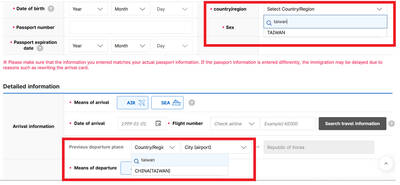
Jason Han says that the e-arrival card spat between South Korea and Taiwan shows that Seoul is signaling adherence to its “one-China” policy, while Taiwan’s response reflects a reciprocal approach. “Attempts to alter the diplomatic status quo often lead to tit-for-tat responses,” the analyst on international affairs tells the Taipei Times, adding that Taiwan may become more cautious in its dealings with South Korea going forward. Taipei has called on Seoul to correct its electronic entry system, which currently lists Taiwan as “China (Taiwan),” warning that reciprocal measures may follow if the wording is not changed before March 31. As of yesterday,
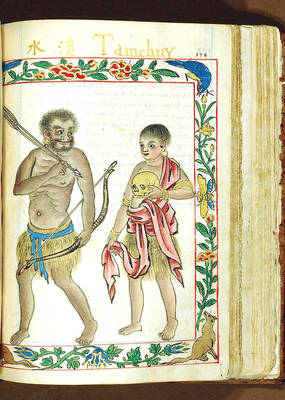
The Portuguese never established a presence on Taiwan, but they must have traded with the indigenous people because later traders reported that the locals referred to parts of deer using Portuguese words. What goods might the Portuguese have offered their indigenous trade partners? Among them must have been slaves, for the Portuguese dealt slaves across Asia. Though we often speak of “Portuguese” ships, imagining them as picturesque vessels manned by pointy-bearded Iberians, in Asia Portuguese shipping between local destinations was crewed by Asian seamen, with a handful of white or Eurasian officers. “Even the great carracks of 1,000-2,000 tons which plied
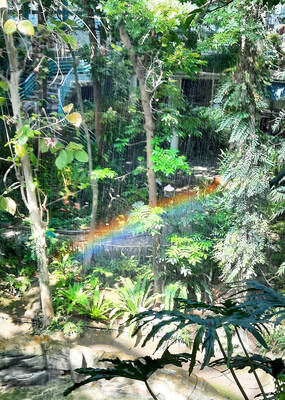
It’s only half the size of its more famous counterpart in Taipei, but the Botanical Garden of the National Museum of Nature Science (NMNS, 國立自然科學博物館植物園) is surely one of urban Taiwan’s most inviting green spaces. Covering 4.5 hectares immediately northeast of the government-run museum in Taichung’s North District (北區), the garden features more than 700 plant species, many of which are labeled in Chinese but not in English. Since its establishment in 1999, the site’s managers have done their best to replicate a number of native ecosystems, dividing the site into eight areas. The name of the Coral Atoll Zone might
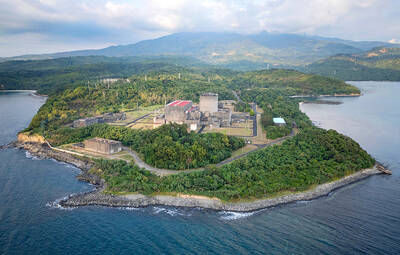
Nuclear power is getting a second look in Southeast Asia as countries prepare to meet surging energy demand as they vie for artificial intelligence-focused data centers. Several Southeast Asian nations are reviving mothballed nuclear plans and setting ambitious targets and nearly half of the region could, if they pursue those goals, have nuclear energy in the 2030s. Even countries without current plans have signaled their interest. Southeast Asia has never produced a single watt of nuclear energy, despite long-held atomic ambitions. But that may soon change as pressure mounts to reduce emissions that contribute to climate change, while meeting growing power needs. The


 RSS
RSS