


Let’s clear the air about cow farts.
In the climate change debate, some policymakers seem to be bovine flatulence deniers.
This became apparent in the fuss over the Green New Deal put forward by some liberal Democrats. More precisely, the fuss over an information sheet issued by the plan’s advocates.
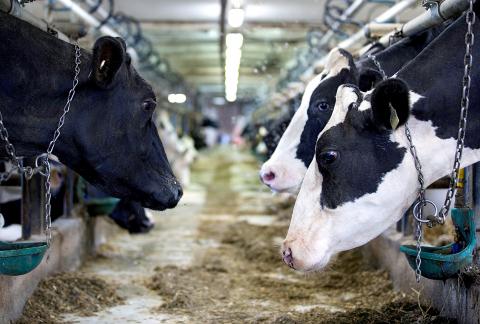
Photo: Reuters
With tongue in cheek or foot in mouth, depending on whom you ask, the statement’s authors said that despite the plan’s proposals for strong limits on emissions over a decade, “we aren’t sure that we’ll be able to fully get rid of farting cows and airplanes that fast.”
Airplanes don’t fart. But cows?
Exasperated by merciless mocking from Republicans on this matter, Democratic Senator Debbie Stabenow of Michigan lectured the Senate majority leader, Mitch McConnell, on the floor of the chamber last month.
“The Republican majority leader said that we want to end air travel and cow farts,” Stabenow said. “By the way, just for the record, cows don’t fart. They belch.”
The Associated Press surveyed global experts on global warming on this question, as well as an author who wrote the definitive science book on gassy animals, which comes with funny pictures.
THE FACTS
Cows fart. That contributes to global warming. But cow burps are worse for the climate.
“Cows are pretty disgusting eaters, with methane coming from both ends,” said Christopher Field at the Stanford Woods Institute for the Environment. “But most of it comes from burping.”
Field cited the “classic quote from the technical literature” on the topic: “Of the CH4 (methane) produced by enteric fermentation in the forestomach 95 percent was excreted by eructation (burp), and from CH4 produced in the hindgut 89 percent was found to be excreted through the breath.”’
In a nutshell, belches are bad news.
At Tuscia University in Viterbo, Italy, environmental scholar Giampiero Grossi said methane emitted by ruminant livestock accounts for about 5.5 percent of the greenhouse gasses that come from human activity. More than 70 percent of livestock emissions are from cattle, he said.
“Ruminants are a significant source of methane,” which traps more heat than carbon dioxide but doesn’t last as long in the air, said Kristie Ebi, director of the Center for Health and the Global Environment at the University of Washington in Seattle. “The belches have to do with digesting their food” in the stomach compartments, not intestines, and that fermentation produces methane.
Warming from the burning of fossil fuels is roughly 10 times to 17 times greater than warming caused by livestock burping and farting, Field said.
GASEOUS POLITICS
For all of that, the Green New Deal does not seek to ban cows or planes as it sets ambitious targets to eliminate most greenhouse gas emissions responsible for global warming by 2030.
Democratic leaders in Congress have largely shunned the plan, considering it politically fraught. Many Republicans are a hard sell on the reality of human-caused climate change at all and apt to be dismissive about livestock’s part in it.
Politicians and other nonscientists who reject mainstream climate science cite cow farts and airplane travel as “a go-to rhetorical weapon they use against having a serious discussion” about how climate change is already causing dramatic and deadly changes, such as last year’s extreme weather, Georgia Tech climate scientist Kim Cobb said.
“It’s a form of mockery,” said Anthony Leiserowitz, director of the Yale Program on Climate Change Communication. “They’re trying to whip up their own base’s opposition to any kind of action.”
According to the US government’s 2018 National Climate Assessment report: “Climate change is transforming where and how we live and presents growing challenges to human health and quality of life, the economy and the natural systems that support us.”
WHAT FARTS, WHAT DOESN’T?
Does It Fart? a book by Dani Rabaiotti of the Zoological Society of London and Virginia Tech conservationist Nick Caruso, answers the question it poses about dozens of species.
Millipedes fart, no doubt discreetly.
Several species of herring communicate with each other that way. If you startle a zebra, says the book, it will fart with each stride as it runs away. Flatulence signals a baboon is ready to mate.
For the Bolson pupfish, found in Mexico, it’s fart or die. They feed on algae that make them buoyant, easy prey near the surface. Farts sink them to safety. Similarly, manatees may let loose when it’s time to dive deeply.
Whale farts are, of course, epic.
Birds and most sea creatures don’t. Clams clam up, though they’ve been known to throw up.
The jury is out on spiders: More research is needed.
From London, Rabaiotti said methane emissions from cattle are belch-focused because the gas is produced near the start of their digestive system and comes up when they regurgitate their food to chew the cud.
One answer, she says: “Just cut down beef to, say, once a week or once a month and replace it with chicken or pork or options without meat. Emissions from dairy are lower per food serving than emissions from beef so cutting down dairy will reduce your carbon footprint less but it’s another area where people can easily lower their emissions, particularly for people that are already vegetarian.”
And for the record, says this authority on the animal kingdom’s ruder moments, “Yes, cows do fart.”
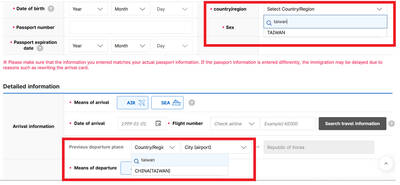
Jason Han says that the e-arrival card spat between South Korea and Taiwan shows that Seoul is signaling adherence to its “one-China” policy, while Taiwan’s response reflects a reciprocal approach. “Attempts to alter the diplomatic status quo often lead to tit-for-tat responses,” the analyst on international affairs tells the Taipei Times, adding that Taiwan may become more cautious in its dealings with South Korea going forward. Taipei has called on Seoul to correct its electronic entry system, which currently lists Taiwan as “China (Taiwan),” warning that reciprocal measures may follow if the wording is not changed before March 31. As of yesterday,

The Portuguese never established a presence on Taiwan, but they must have traded with the indigenous people because later traders reported that the locals referred to parts of deer using Portuguese words. What goods might the Portuguese have offered their indigenous trade partners? Among them must have been slaves, for the Portuguese dealt slaves across Asia. Though we often speak of “Portuguese” ships, imagining them as picturesque vessels manned by pointy-bearded Iberians, in Asia Portuguese shipping between local destinations was crewed by Asian seamen, with a handful of white or Eurasian officers. “Even the great carracks of 1,000-2,000 tons which plied
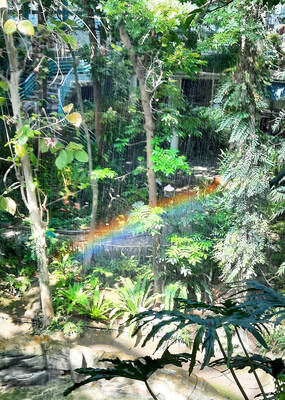
It’s only half the size of its more famous counterpart in Taipei, but the Botanical Garden of the National Museum of Nature Science (NMNS, 國立自然科學博物館植物園) is surely one of urban Taiwan’s most inviting green spaces. Covering 4.5 hectares immediately northeast of the government-run museum in Taichung’s North District (北區), the garden features more than 700 plant species, many of which are labeled in Chinese but not in English. Since its establishment in 1999, the site’s managers have done their best to replicate a number of native ecosystems, dividing the site into eight areas. The name of the Coral Atoll Zone might
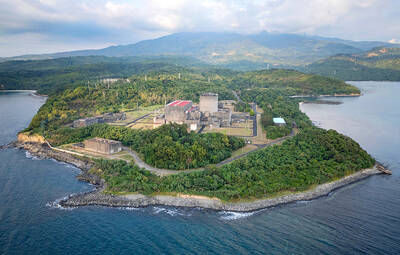
Nuclear power is getting a second look in Southeast Asia as countries prepare to meet surging energy demand as they vie for artificial intelligence-focused data centers. Several Southeast Asian nations are reviving mothballed nuclear plans and setting ambitious targets and nearly half of the region could, if they pursue those goals, have nuclear energy in the 2030s. Even countries without current plans have signaled their interest. Southeast Asia has never produced a single watt of nuclear energy, despite long-held atomic ambitions. But that may soon change as pressure mounts to reduce emissions that contribute to climate change, while meeting growing power needs. The


 RSS
RSS