


The Neo-Classic Dance Company (新古典舞團) returns to Taipei’s Metropolitan Hall tonight with its new production Glory of Mother (伊娜的光芒).
The company’s founder and artistic director, Liu Feng-shueh (劉鳳學), the doyenne of modern dance in Taiwan, spent decades creating contemporary abstract works the fused Western and Asian elements.
She also gained fame for her research into and reconstruction of Chinese court and ceremonial dances from the Tang, Sung and Ming dynasties, as well as her works inspired by the dances of Taiwan’s Aboriginal communities that focused on social and cultural issues facing these communities.

Photo courtesy of Neo-Classic Dance Company
While Liu, now in her early 90s, created the majority of works her company has performed, in the past few years she has encouraged former and current dancers with the troupe to choreograph dances for it.
Glory of Mother was choreographed by Wei Kuang-ching (魏光慶), who joined the company in the early 1990s, when he was still a student at the Taipei Physical Education College and later at what is now the Taipei National University of Arts, and continued to work for Liu even after founding his own troupe, the Hualien-based Kumud Dance Theatre (谷慕特舞蹈劇場).
Wei, who is an Ami, uses modern dance forms to present the culture and traditions of Taiwan’s indigenous communities.
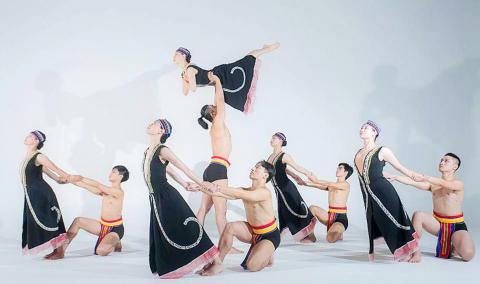
Photo courtesy of Neo-Classic Dance Company
For Glory of Mother, Wei brought in 17 Aboriginal performers familiar with Ami songs and dances to join the Neo-Classic crew.
The 70-minute dance tells the story of a mother’s selfless dedication to her children, but also draws upon Ami mythology that tells of the goddess of the earth, as well as viewing the sun as female.
Wei said the show is a tribute to his own mother, whom he often quarreled with when he was young, but missed terribly when he left his home to move to Taipei for university.
■ Tonight and tomorrow at 7:30pm, Sunday at 2:30pm at Metropolitan Hall (城市舞台), 25 Bade Rd, Sec 3, Taipei (台北市八德路三段25號).
■ Tickets are NT$500 to NT$1,200, available at NTCH box offices, Eslite ticket desks, online at www.artsticket.com.tw and at convenience store ticketing kiosks
■ Additional performances on Friday, Saturday and Sunday next week at 7:30pm at Hualien Tian Yuan Theater (花蓮田園舞蹈劇場), 239-1 Zhongyang Rd, Sec 4, Hualien City (花蓮市中央路四段239之1號).
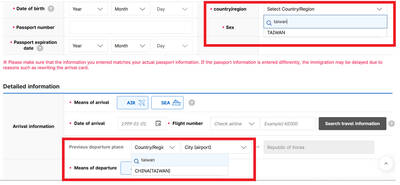
Jason Han says that the e-arrival card spat between South Korea and Taiwan shows that Seoul is signaling adherence to its “one-China” policy, while Taiwan’s response reflects a reciprocal approach. “Attempts to alter the diplomatic status quo often lead to tit-for-tat responses,” the analyst on international affairs tells the Taipei Times, adding that Taiwan may become more cautious in its dealings with South Korea going forward. Taipei has called on Seoul to correct its electronic entry system, which currently lists Taiwan as “China (Taiwan),” warning that reciprocal measures may follow if the wording is not changed before March 31. As of yesterday,
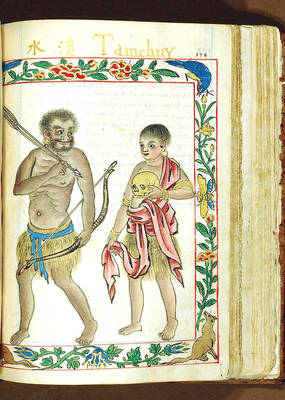
The Portuguese never established a presence on Taiwan, but they must have traded with the indigenous people because later traders reported that the locals referred to parts of deer using Portuguese words. What goods might the Portuguese have offered their indigenous trade partners? Among them must have been slaves, for the Portuguese dealt slaves across Asia. Though we often speak of “Portuguese” ships, imagining them as picturesque vessels manned by pointy-bearded Iberians, in Asia Portuguese shipping between local destinations was crewed by Asian seamen, with a handful of white or Eurasian officers. “Even the great carracks of 1,000-2,000 tons which plied
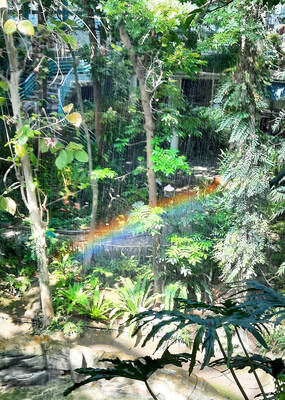
It’s only half the size of its more famous counterpart in Taipei, but the Botanical Garden of the National Museum of Nature Science (NMNS, 國立自然科學博物館植物園) is surely one of urban Taiwan’s most inviting green spaces. Covering 4.5 hectares immediately northeast of the government-run museum in Taichung’s North District (北區), the garden features more than 700 plant species, many of which are labeled in Chinese but not in English. Since its establishment in 1999, the site’s managers have done their best to replicate a number of native ecosystems, dividing the site into eight areas. The name of the Coral Atoll Zone might
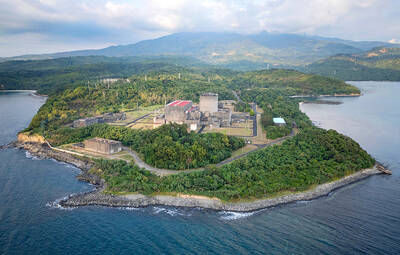
Nuclear power is getting a second look in Southeast Asia as countries prepare to meet surging energy demand as they vie for artificial intelligence-focused data centers. Several Southeast Asian nations are reviving mothballed nuclear plans and setting ambitious targets and nearly half of the region could, if they pursue those goals, have nuclear energy in the 2030s. Even countries without current plans have signaled their interest. Southeast Asia has never produced a single watt of nuclear energy, despite long-held atomic ambitions. But that may soon change as pressure mounts to reduce emissions that contribute to climate change, while meeting growing power needs. The


 RSS
RSS