


Aug. 20 to Aug. 26
On Aug. 24, 1962, Indonesia refused to allow Taiwan and Israel to participate in the Asian Games in Jakarta. And exactly 30 years later, Taiwan severed relations with its long-time close ally, South Korea.
Both events happened because of China, not unlike today’s situation where Taiwan continues to lose allies and faces challenges in international competitions such as being stripped of the right to host the East Asian Youth Games.
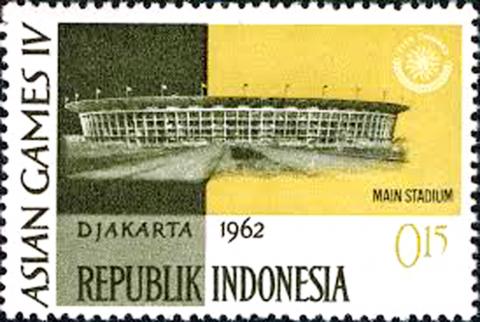
Photo courtesy of Wikimedia Commons
The way things happened and the consequences, however, differ from that of today — the International Olympic Committee (IOC) suspended Indonesia’s membership indefinitely for the move and the South Korea incident sparked huge anti-Korean outrage in Taiwan with flags burned, direct flights canceled and other forms of protest.
BARRED FROM COMPETITION
Friederike Trotier writes in The Legacy of the Games of the New Emerging Forces and Indonesia’s Relationship with the International Olympic Committee that the Asian Games Federation (AGF) kept a low profile with regard to the “two Chinas” issue after the Chinese Civil War, and since the Taiwan-based Republic of China was an AGF member, it participated in the 1954 and 1958 Asian Games while the People’s Republic of China stayed home.
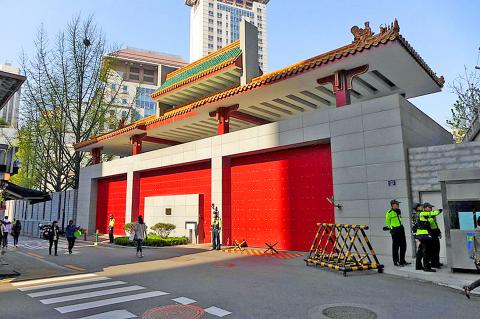
Photo courtesy of Wikimedia Commons
Not nearly as powerful as it is today, China could only boycott the 1956 Summer Olympics when Taiwan was also invited. The Chinese Olympic Committee exchanged heated letters with IOC chair Avery Brundage, who was American, including the following passage: “As for your remark that there is a separate government in Taiwan … you must not forget how this situation is brought about … that these traitors are able to survive in Taiwan today is due to the political, economic and military aid brought directly by the US government and the open interference in the internal affairs of our country…”
But Indonesia had different ideas. Its president Sukarno had strong views against imperialism, colonialism and capitalism, and sought to become the leader of emerging nations that had been oppressed by the above forces. The country was close to China, who participated in the 1955 Bandung Conference, a meeting held in Indonesia by mostly newly-independent Asian and African states.
Trotier writes that the Asian Games were not only meant to support Sukarno’s ideology and nation-building policy, it also “became a political message of anti-Western sentiments.”
Victor Cha, an American academic and former national policy advisor under US president George W Bush, writes that “Sukarno quietly promised Beijing that Taiwan would not be there.” Israel was also excluded because of Indonesia’s ties with its enemies.
Of course, Indonesia couldn’t do this openly. Even though Taiwan received an invitation in February 1962, its delegation never received their visas. When Taiwan’s Asia Games director Hao Keng-sheng (郝更生) flew to Indonesia in August without a visa to figure out what was going on, he was denied entry. When Indonesia officially announced Taiwan’s exclusion on Aug. 24, it blamed the decision on Hao for trying to illegally enter the country — though it was clear that it was due to “communist bandit meddling.”
The games went on as usual, and although Indonesia was suspended from the IOC, it was reinstated in April 1964 by apologizing and agreeing to abide by IOC rules.
BROTHERLY SPLIT
In the afternoon of Aug. 24, 1992, the staff of the Taiwanese embassy in Seoul held a ceremony to lower the Republic of China flag. The decision was abrupt — only a day earlier did China and South Korea “strongly suggest” that they were about to establish relations in the following few days, with Taiwan breaking off ties with South Korea in response.
“For decades, China’s ties with North Korea, and Taiwan’s relations with South Korea, were built on ideological similarities. But now, the new ties seem to be dominated by pragmatism,” the New York Times reported, citing economic factors for the switch. In 1991, trade between South Korea and Taiwan was at about US$3 billion, while the number was almost double for that with China.
In the year before ties were severed, South Korea was discouraging Taiwan from “selling consulates and the land under its embassy,” which was worth an estimated US$1.9 billion, promising that it wouldn’t jump ship, according to the New York Times. These assets were all transferred to China.
Taiwan announced that it would suspend all direct flights from South Korea and end all economic incentives. News programs aired footage of angry Taiwanese holding signs that read: “Brotherly nations? Bullshit!” and burning South Korean flags.
Rick Chu (朱立熙), a Korean expert and former Taipei Times editor-in-chief, writes in the introduction of his book Goodbye Arirang (再見阿里郎) that the severing of ties with South Korea was unprecedentedly swift, but not unexpected.
Chu writes that he spoke to a Chinese official in New York who told him that although China had already planned to establish ties with South Korea, “the Taiwan factor” hastened that realization.
“Because of Taiwan’s divisionism and diplomatic maneuvering, China felt that they needed to act as soon as possible to cut off Taiwan’s final ‘root’ in Asia,” the official says, pointing to the June 1992 reestablishment of relations between Taiwan and Niger, which only lasted for four years.
Chu writes that since the 1980s, every ambassador to South Korea knew that the “death date was close,” and took on a policy of trying to drag things out for as long as possible despite strong indication that South Korea was cozying up to China.
“Although our citizens are slightly surprised because it happened sooner than expected, and also angry, it seems that everyone also feels that a weight had been lifted off our shoulders. We finally don’t have to stoop to compromise, and give South Korea whatever it wants,” he writes.
“The problem is, what’s our next step? If one day, Taiwan’s allies dip to the single digits, what should we do?”
Chu asks in 1993 the same questions we are pondering today. And we still do not have answers as China’s power and influence continues to increase.
Taiwan in Time, a column about Taiwan’s history that is published every Sunday, spotlights important or interesting events around the nation that have anniversaries this week.
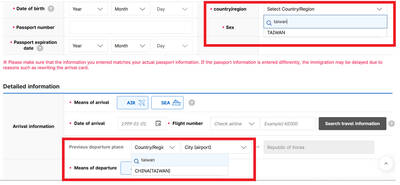
Jason Han says that the e-arrival card spat between South Korea and Taiwan shows that Seoul is signaling adherence to its “one-China” policy, while Taiwan’s response reflects a reciprocal approach. “Attempts to alter the diplomatic status quo often lead to tit-for-tat responses,” the analyst on international affairs tells the Taipei Times, adding that Taiwan may become more cautious in its dealings with South Korea going forward. Taipei has called on Seoul to correct its electronic entry system, which currently lists Taiwan as “China (Taiwan),” warning that reciprocal measures may follow if the wording is not changed before March 31. As of yesterday,
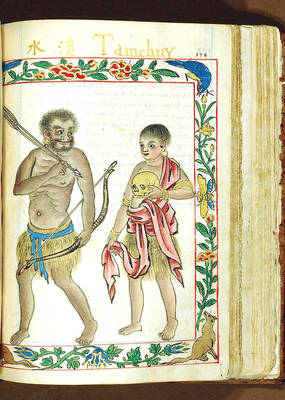
The Portuguese never established a presence on Taiwan, but they must have traded with the indigenous people because later traders reported that the locals referred to parts of deer using Portuguese words. What goods might the Portuguese have offered their indigenous trade partners? Among them must have been slaves, for the Portuguese dealt slaves across Asia. Though we often speak of “Portuguese” ships, imagining them as picturesque vessels manned by pointy-bearded Iberians, in Asia Portuguese shipping between local destinations was crewed by Asian seamen, with a handful of white or Eurasian officers. “Even the great carracks of 1,000-2,000 tons which plied
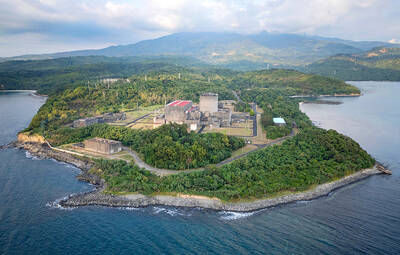
Nuclear power is getting a second look in Southeast Asia as countries prepare to meet surging energy demand as they vie for artificial intelligence-focused data centers. Several Southeast Asian nations are reviving mothballed nuclear plans and setting ambitious targets and nearly half of the region could, if they pursue those goals, have nuclear energy in the 2030s. Even countries without current plans have signaled their interest. Southeast Asia has never produced a single watt of nuclear energy, despite long-held atomic ambitions. But that may soon change as pressure mounts to reduce emissions that contribute to climate change, while meeting growing power needs. The
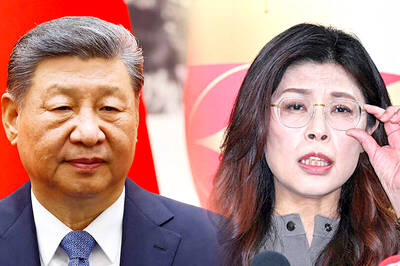
On Monday morning, in quick succession, the Chinese Communist Party (CCP) and the Chinese Nationalist Party (KMT) released statements announcing “that the Central Committee of the Communist Party of China and General Secretary Xi Jinping (習近平) have invited KMT Chairwoman Cheng Li-wun (鄭麗文) to lead a delegation on a visit to the mainland” as the KMT’s press release worded it. The KMT’s press release added “Chairwoman Cheng expressed her gratitude for the invitation and has gladly accepted it.” Beijing’s official Xinhua news release described Song Tao (宋濤), head of the Taiwan Work Office of the CCP Central Committee, as


 RSS
RSS