


For Xu Youyu (徐友漁), the Cultural Revolution is a page in China’s history the country has yet to turn. Xu, a professor of philosophy, political dissident and signatory of Charter 08, a manifesto that calls for political reform in China, worries that nostalgia has warped people’s historical memory of those tumultuous years.
“Many Chinese misunderstand the Cultural Revolution as a glorious time of freedom of speech and association,” Xu says.
This revisionist account, he adds, papers over the tragic and violent effects wrought by this decade-long period of upheaval, and obscures a crucial lesson: “to pin a country’s hopes on a strongman will result in unprecedented disaster.”
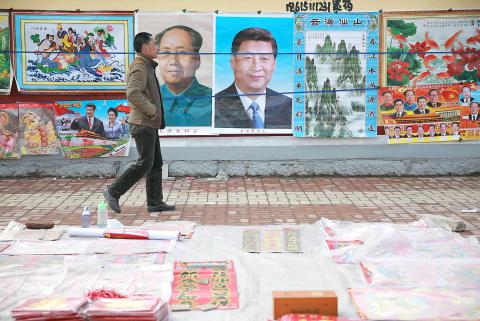
Photo: Reuters
Xu is disheartened by the “re-emergence of a Cultural Revolution mindset” in China. He says that Chinese President Xi Jinping’s (習近平) attempts to become “the second Mao Zedong (毛澤東)” will only spell trouble.
Though some in Taiwan may question democracy and envy Xi, the country must reaffirm its commitment to freedom and its democratic way of life, Xu says. Against the resurgence of authoritarianism and the rise of illiberal political culture, Xu hopes the country will prove a bulwark of liberal values.
CULTURAL REVOLUTION REDUX
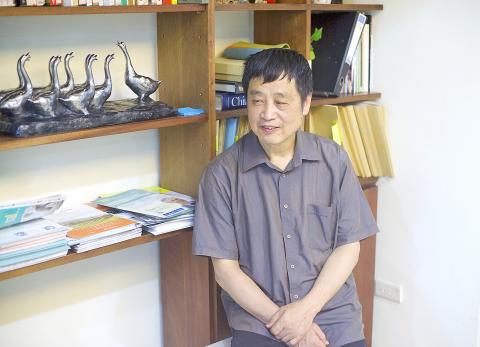
Photo: Philip Tsien
Xu is wary of China’s reversion to Mao-style politics. He hears echoes of the Cultural Revolution in today’s political climate, and fears the consequences.
Xi’s arbitrary anti-corruption campaign mirrors Mao’s peremptory Cultural Revolution-era purges. Xu warns that just as Mao’s purges led to chaos and injustice, so too does Xi’s crackdown undermine the rule of law.
For Xu, this is but one example of Xi’s many efforts to emulate “Mao’s excesses,” such as crafting a cult of personality and centralizing power, to the detriment of the Chinese people. He says that under Xi, the Chinese Communist Party (CCP) has run roughshod over civil society, tightening its grip over political, social and cultural life.
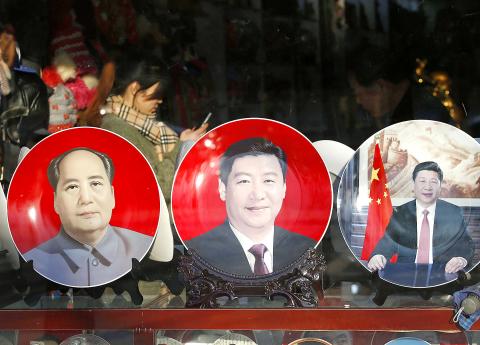
Photo: Reuters
“Officials worship at the altar of Xi, but they have done little to help the people,” Xu says. Instead, Xi and the CCP have moved decisively toward authoritarian governance, as evidenced by their decision to abolish constitutional limits on presidential terms.
Xu, however, remains cautiously optimistic. “Though the current situation is bleak, civil society will continue to grow and develop, however slowly. It is just a matter of time,” he says. “Once born, a baby cannot re-enter the womb.”
HOPE ACROSS THE STRAIT
Xu sees Taiwan as an encouraging and necessary counterpoint to Xi’s unabashed authoritarian posture. He says that since emerging as one of Asia’s most vibrant democracies, the country has been a testament to the enduring strength and appeal of liberal values.
Xu says that while “Taiwanese democracy is not perfect,” its problems pale in comparison to those found in China. A free and dynamic press, diverse civil society, an independent judiciary: for Xu, these institutions, and the ideals they represent, form what he hopes will be Taiwan’s enduring legacy.
He cautions Taiwanese, however, against taking their society for granted. The allure of “efficient and powerful government” under one-party or strongman rule is great, but must be resisted, Xu says. To those who cast doubt on the merits of Taiwan’s democracy, Xu’s suggestion is simple: “They can spend some time in China and see what they prefer. I think the choice will be clear.”
“Taiwanese democracy is young, and the threats it faces are serious,” he says. He adds that Taiwanese should reaffirm their support for the “fundamental values that undergird their free and stable society” and safeguard their democracy.
UNEASY FUTURE
“China’s current situation is hardly a full repeat of the Cultural Revolution,” Xu acknowledges. He says that the Chinese Communist Party’s emphasis on stability rules out the massive social unrest and violence of the 1960s and 1970s. After all, China has embraced a market economy.
“But the circumstances are still grave,” he says.
Xu says that though there exists an active group of young Chinese committed to liberal values and political reform, a majority are either unaware or unconcerned. While he hopes Chinese exchange students studying in Taiwan can “bring home the idealism” that abounds among young Taiwanese, he is unsure of the impact this would have on political conditions in China.
As the CCP extends its reach into Chinese society, he says, the further away the goal of achieving constitutional democracy appears.
To Xu, the specter of the Cultural Revolution still looms.
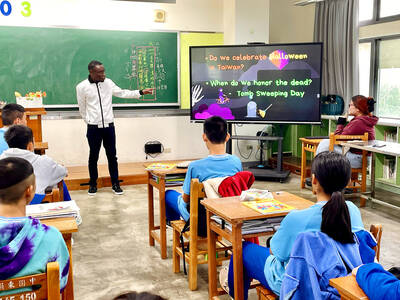
For many people, Bilingual Nation 2030 begins and ends in the classroom. Since the policy was launched in 2018, the debate has centered on students, teachers and the pressure placed on schools. Yet the policy was never solely about English education. The government’s official plan also calls for bilingualization in Taiwan’s government services, laws and regulations, and living environment. The goal is to make Taiwan more inclusive and accessible to international enterprises and talent and better prepared for global economic and trade conditions. After eight years, that grand vision is due for a pulse check. RULES THAT CAN BE READ For Harper Chen (陳虹宇), an adviser
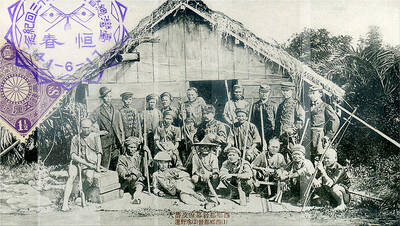
Traditionally, indigenous people in Taiwan’s mountains practice swidden cultivation, or “slash and burn” agriculture, a practice common in human history. According to a 2016 research article in the International Journal of Environmental Sustainability, among the Atayal people, this began with a search for suitable forested slopeland. The trees are burnt for fertilizer and the land cleared of stones. The stones and wood are then piled up to make fences, while both dead and standing trees are retained on the plot. The fences are used to grow climbing crops like squash and beans. The plot itself supports farming for three years.

The breakwater stretches out to sea from the sprawling Kaohsiung port in southern Taiwan. Normally, it’s crowded with massive tankers ferrying liquefied natural gas from Qatar to be stored in the bulbous white tanks that dot the shoreline. These are not normal times, though, and not a single shipment from Qatar has docked at the Yongan terminal since early March after the Strait of Hormuz was shuttered. The suspension has provided a realistic preview of a potential Chinese blockade, a move that would throttle an economy anchored by the world’s most advanced and power-hungry semiconductor industry. It is a stark reminder of
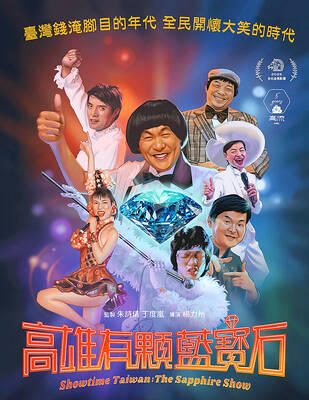
May 4 to May 10 It was once said that if you hadn’t performed at the Sapphire Grand Cabaret (藍寶石大歌廳), you couldn’t truly be considered a star. Taking the stage at the legendary Kaohsiung club was more than just a concert. Performers were expected to entertain in every sense, wearing outlandish or revealing costumes and staying quick on their feet as sharp-tongued, over-the-top hosts asked questions and delivered jokes that would be seen as vulgar, even offensive, by today’s standards. Opening in May 1967 during a period of strict political and social control, Sapphire offered a rare outlet for audiences in


 RSS
RSS