


Chiang Hsun (蔣勳) is a prominent Taiwanese writer, poet and painter who is best known for his popular publications and lectures on art and aesthetics. In addition to his creative writing and painting practice, over the last two decades he has attained tenure at several colleges across Taiwan, including Tunghua University, where he served as director of its fine arts department in the early 80’s. A group exhibition of Chiang and 15 of his former Tunghua students are currently on view at the Asia University Modern Art Museum. “After 30 years… the best way of moving forward from our teacher-student relationship is to show as a group in an exhibition,” says Chiang. “[Let us] return to the act of creating art and become a family of artists with a shared aesthetic lineage.” Chiang Hsun’s Vision of Art Education: Dadu Studio in 1983 features a range of paintings and sculptures that reveal artistic developments of each student over the years. Many of these students have become established artists themselves, including Paris-based painter Lin Li-ling (林麗玲), who explores sensual human qualities such as warmth, feelings and desires in her distinctly styled nude portraits. Xavier Wei’s (魏禎宏) Close Your Eyes is an ongoing epic painting project that the artist began in 1997. In the last two decades Wei has painted countless portraits of people around him, accumulating a vast archive of profiles that are presented as an expansive grid of human portraits on the museum wall.
■ Asia University Museum of Modern Art (亞洲大學現代美術館), 500, Liufong Road, Taichung City (台中市柳豐路500號), tel: (04) 2332-3456X6468. Open Tuesdays to Sundays from 9:30am to 5pm
■ Until Sept 23
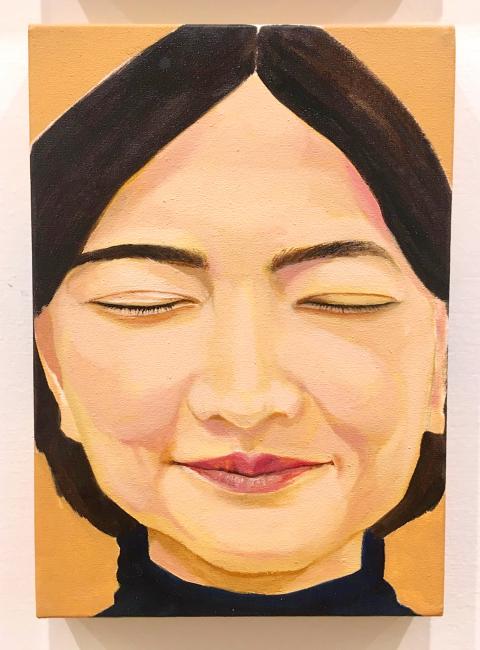
Photo Courtesy of Asia University Museum of Modern Art
Peng Hung-chih (彭弘智) is a conceptually driven artist who works across a range of mediums, including painting, installation, video and sculpture. Peng explores contemporary cultural phenomena related to religion, humanity and society. His solo exhibition, Warm Up the Landscape, at Double Square Gallery features work from his ongoing multi-media project inspired by the legendary qigong manuscript Inner-Scripture (內經圖), through which Peng reveals his artistic interpretation of Taoist meditation and self cultivation practices. “Peng reconfigures the artistic language of East and West, and combines modern technology with traditional practices; through this process, the artist develops a distinct set of aesthetics,” writes the gallery in a press release. The show includes a series of paintings, Post Inner-Scripture (後內經圖系列), and two sculptures created by 3D printing technology. One of the sculptures on view, Transformation into Dragon and Phoenix (成龍成鳳), resembles a set of human bones that stretch across the gallery in the form of a dragon and phoenix. “To Chinese, the dragon is not a monster but a symbol of peace… and an indicator of the human spirit,” writes Peng. This vision of the dragon is manifested in the qigong manuscript, Peng says, which reveals a particular Chinese concept of the human body.
■ Double Square Gallery (雙方藝廊), 28 Lane 770, Beian Road, Taipei City (台北市北安路770巷28號), tel: (02) 8501-2138. Open Tuesdays to Sundays from 10:30am to 6:30pm
■ Until June 2
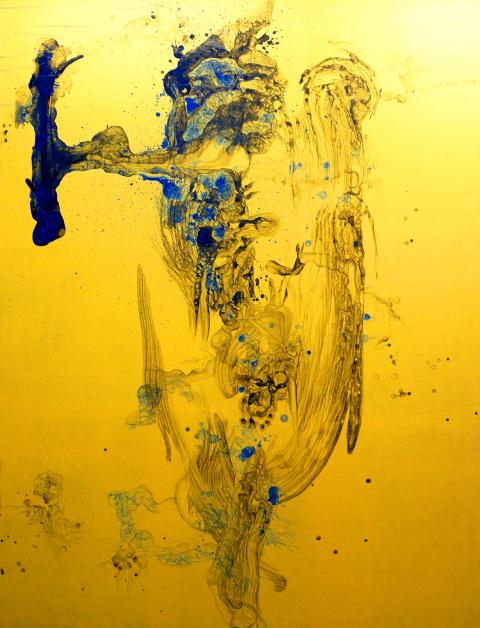
Photo Courtesy of Double Square Gallery
Coffee and cocktail bar TU MII tonight kicks off Fantastical Collection of Animated Films (奇幻收藏動畫影展), a five-day program of film screenings featuring classic animation works from Britain, Russia, Poland, France and the Czech Republic. The program is organized by Ching Leng Chuan Films (清冷淵影像), a film and photography studio based in Taipei. The program begins with British Animation Classics Volume I, a compilation of celebrated shorts from the late 70’s through the 90’s. Phil Austin and Derek Hayes’ Skywhales is a 1983 production about a society of green aliens who live on flying islands and hunt large creatures with wings called skywhales. The film elaborates in impressive detail the culture and environment of alien life, featuring a complex alien language, curious plant and animal life and social practices. Joanne Quinn’s 1987 animation short, Girls Night Out, revolves around a British housewife Beryl and her encounter of a male stripper. The fast-paced, boisterous soundtrack maintains a frenetic pace that reflects the Bery’s state of mind. For a full schedule of the film program, visit TU MII’s facebook event page: www.facebook.com/events/214037786029006/.
■ TU MII (荼靡), 9, Ln 200, Guangfu S Rd, Taipei City (台北市光復南路200巷9號), tel: (02) 2775-3595.
■ Today until Tuesday, from 2pm to 3pm
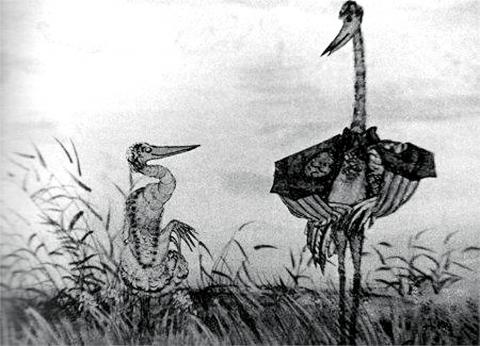
Photo Courtesy of TÚ MII
G Gallery is hosting T3 Photo Festival, a touring photography exhibition that aims to explore international issues and foster greater multicultural dialogue. The title of the festival refers to the three T’s, tolerance, talent, and technology that Richard Florida, a US sociologist, proposes to be the foundation of a prosperous city in his 2012 book The Rise of the Creative Class. With a focus on borders, the festival features eight photographers selected from an open call competition juried by an international committee. Grand Prize winner Daniel Castro Garcia is a Sicily-based photographer and filmmaker who focuses on social documentary and portraiture. His project, Foreigner, is a collaboration with producer Jade Morris and graphic designer Thomas Saxby. For this project Garcia traveled across Europe to capture the lives of refugees and immigrants. The show presents three portraits that portray the character and story of each refugee in an elegant style. Justyna Mielnikiewicz is a Polish photographer who focuses on capturing the social conditions of former soviet states. Her project, Meaning of the Nation, takes on the concepts of border and nationalism in her investigation of the Russian experience after the disintegration of the Soviet Union. Mielnikiewicz searches for unsung heroes in everyday life and hopes to share their stories to the world through photography.
■ G Gallery (居藝廊), 3B, Lane 227, Alley 3, Nongan Rd, Taipei City (台北市農安街227巷3弄3號B), tel: (02) 2501-8326. Open Wednesdays from 12pm to 7pm; Thursdays to Sundays from 11am to 7pm.
■ Until Sunday
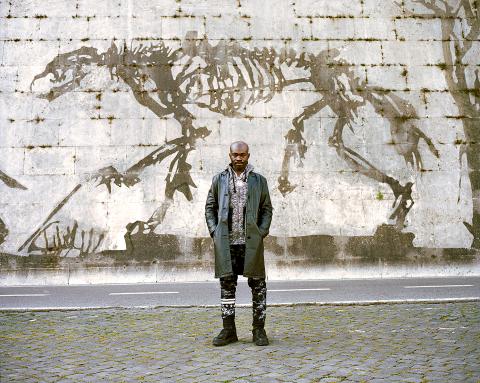
Photo Courtesy of G Gallery
This year Taipei has been graced by a number of gallery shows featuring different collections of paintings by the modern Chinese painter San Yu (常玉). San Yu is a celebrated painter who was among the first group of Chinese artists to study in Paris in the early 1920’s. His works display a graceful interpretation of western modernist abstraction and his background in Chinese painting and calligraphy. A selection of San’s large-scale works will be on display at Lin & Lin Gallery next week in the exhibition In a Reverie of Black, White, and Pink (寄黑藏白醉粉紅). The show features paintings from his iconic series of nudes and flowers, including his largest six-panel oil painting, Lotus and White Crane (荷塘白鶴), which features a small white crane descending into a larger-than-life cluster of lotus leaves. In addition to San’s paintings, the show seeks to provide cultural context to San Yu’s work by presenting a series of works by various artists that were created in Paris during the 20’s and 30’s. The gallery has also published a new San Yu monologue of paintings, historical photos and text. The book includes San Yu’s writing about Picasso and reflections on San Yu by his fellow artist friends, including Chu Teh-chun (朱德群) and Wu Guanzhong (吳冠中).
■ Lin & Lin Gallery (大未來林舍畫廊), 16 Dongfeng St, Taipei City (台北市東豐街16號), tel: (02) 2700-6866. Open Tuesdays to Sundays from 11am to 7pm
■ From May 5 to June 3
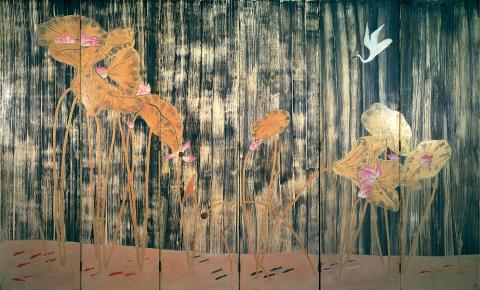
Photo Courtesy of Lin & Lin Gallery
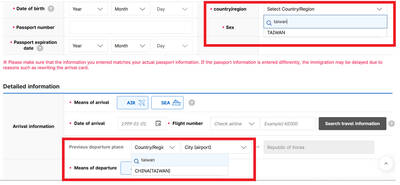
Jason Han says that the e-arrival card spat between South Korea and Taiwan shows that Seoul is signaling adherence to its “one-China” policy, while Taiwan’s response reflects a reciprocal approach. “Attempts to alter the diplomatic status quo often lead to tit-for-tat responses,” the analyst on international affairs tells the Taipei Times, adding that Taiwan may become more cautious in its dealings with South Korea going forward. Taipei has called on Seoul to correct its electronic entry system, which currently lists Taiwan as “China (Taiwan),” warning that reciprocal measures may follow if the wording is not changed before March 31. As of yesterday,
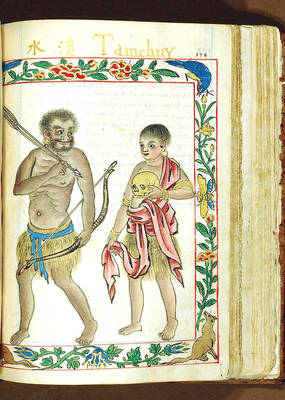
The Portuguese never established a presence on Taiwan, but they must have traded with the indigenous people because later traders reported that the locals referred to parts of deer using Portuguese words. What goods might the Portuguese have offered their indigenous trade partners? Among them must have been slaves, for the Portuguese dealt slaves across Asia. Though we often speak of “Portuguese” ships, imagining them as picturesque vessels manned by pointy-bearded Iberians, in Asia Portuguese shipping between local destinations was crewed by Asian seamen, with a handful of white or Eurasian officers. “Even the great carracks of 1,000-2,000 tons which plied
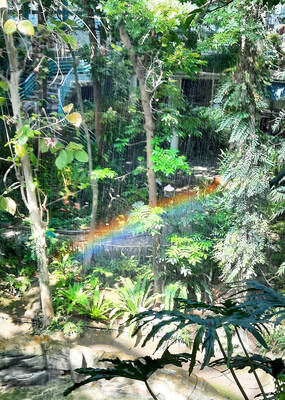
It’s only half the size of its more famous counterpart in Taipei, but the Botanical Garden of the National Museum of Nature Science (NMNS, 國立自然科學博物館植物園) is surely one of urban Taiwan’s most inviting green spaces. Covering 4.5 hectares immediately northeast of the government-run museum in Taichung’s North District (北區), the garden features more than 700 plant species, many of which are labeled in Chinese but not in English. Since its establishment in 1999, the site’s managers have done their best to replicate a number of native ecosystems, dividing the site into eight areas. The name of the Coral Atoll Zone might
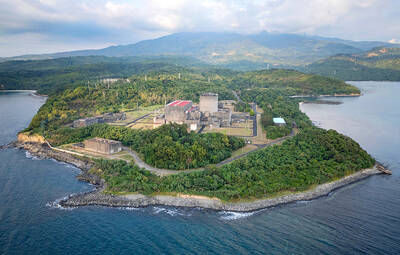
Nuclear power is getting a second look in Southeast Asia as countries prepare to meet surging energy demand as they vie for artificial intelligence-focused data centers. Several Southeast Asian nations are reviving mothballed nuclear plans and setting ambitious targets and nearly half of the region could, if they pursue those goals, have nuclear energy in the 2030s. Even countries without current plans have signaled their interest. Southeast Asia has never produced a single watt of nuclear energy, despite long-held atomic ambitions. But that may soon change as pressure mounts to reduce emissions that contribute to climate change, while meeting growing power needs. The


 RSS
RSS