


The illustration exhibition, futurelog, at d/art gallery showcases over 200 limited edition glicee prints by Japanese artist Range Murata. Over the last three decades, Murata has built an extensive portfolio working across game design, animation and industrial design. He is credited for developing a number of characters for the 90’s video game series Power Instinct, and was involved in numerous animation productions including Blue Submarine 6 and Last Exile. Murata currently works as an independent illustrator while teaching character design at Kyoto Seika University. His drawing style reveals his love for dieselpunk, a retro-futuristic style inspired by the second industrial revolution, which focused on diesel-based technology during the interwar period and throughout the 1950’s. In his work, creative diesel punk clothing and imaginative objects are defining features of his nostalgic imaginations of the future. Murata’s new book, futurelog, is available for sale at the gallery, and two book signing events are scheduled on May 12 and May 13. During the exhibition, a roundtable will be held with Murata and Taiwanese illustrators VOFAN, Blaze Wu, PAPARAYA, Pump and KCN. Contact the gallery for the confirmed time.
■ d/art Taipei, 2F, 14 Wuchang St, Sec 2, Taipei City (台北市武昌街二段14號2F), tel: (02) 2383-0060. Open Tuesdays to Sundays from 1pm to 10pm
■ Until June 3
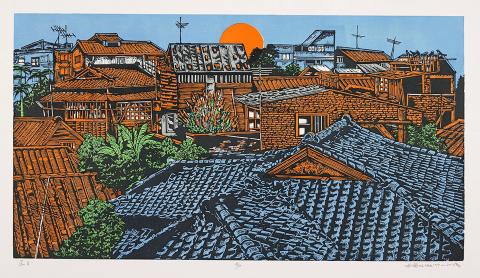
Photo Courtesy of Moon Gallery
The Shape of Taiwanese Living, currently on view at the Taiwan Design Museum, is a survey of daily items that have shaped modern Taiwan. Fifty local designers and brands were invited to showcase their designs, which include kitchen appliances, furniture, domestic accessories and vehicles. New and old designs are placed next to each other to show the evolution of their form, material and functionality. “What is our connection with these objects and what drives their evolution? Is it driven by the survival of the fittest, artificial fabrication or the nature of objects to be transformed throughout time?” according to the museum’s press release. Exhibition highlights include a 50th anniversary special edition, Tatung rice cooker, by award-winning designer Hsieh Jung-ya (謝榮雅); the chic rice cooker is styled with a matte gray body and a gold lid that symbolizes an auspicious marriage. The newest smart scooter by electronic motorcycle manufacturer, Gogoro, the Gogoro 2, features a new security system and double seat space. Pili Wu Design Studio’s Plastic Ceramic is a set of white ceramic table wear inspired by the disposable bowls and plates commonly used in Taiwanese traditional street banquets.
■ Taiwan Design Museum (台灣設計館), 133 Guangfu S St, Taipei City (台北市光復南路133號), tel: (02) 2745-8199 X 382. Open Tuesdays to Sundays from 9:30am to 5:30pm
■ Until Aug. 5
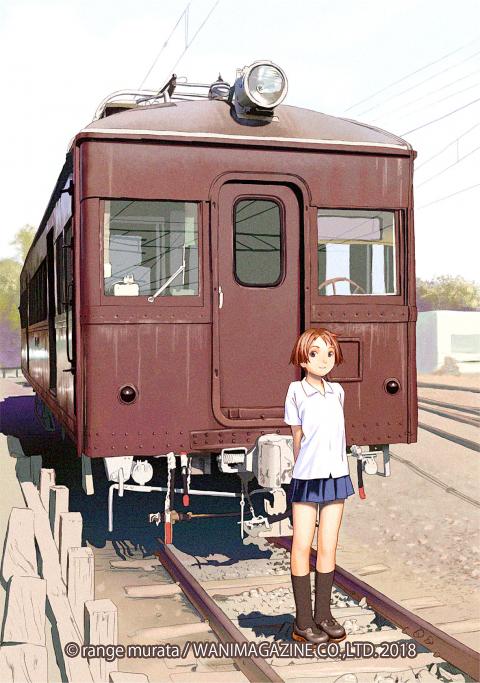
Photo courtesy of Eguchi Toys
Chu Wei-bor (朱為白) and Wu Hao (吳昊) are two Nanking-born painters who played a significant role in modern Taiwanese art. After immigrating to Taiwan with their families in the 1940’s, both became actively involved in the Ton Fan Group (東方畫會), an association of painters founded by the students of master artist Lee Chun-shan (李仲生). Wu was one of the founding members of the group and enjoyed a six-decade career working in oil painting and printmaking. He is known for creating vibrant images of landscape, flowers and figures with a refreshing air of simplicity. Chu also enjoyed an extensive career experimenting with a variety of mediums and cultivating a distinct woodprint style characterized by bold strokes, strong color contrasts and an ongoing interest in portraying rural life. A selection of works by the two artists are on display at Taichung’s Moon Gallery. Stories of Time highlights their artistic expressions of daily life inspired by childhood memories of China and Taiwan. Wu’s Tulips depicts a vivacious batch of flowers with quivering lines and an energetic drawing style that almost gives an illusion of lively motion. Chu’s Performer and Flour Miniature is a black and white wood print of a craftsman interacting with his stand of flour dolls.
■ Moon Gallery (月臨畫廊), 6, Lane 589, Yingcai Rd, Taichung City (台中市英才路589巷6號), tel: (04) 2371-1219. Opens Tuesdays to Sundays from 11am to 6pm (closed on the last Sunday of the month)
■ Until May 6
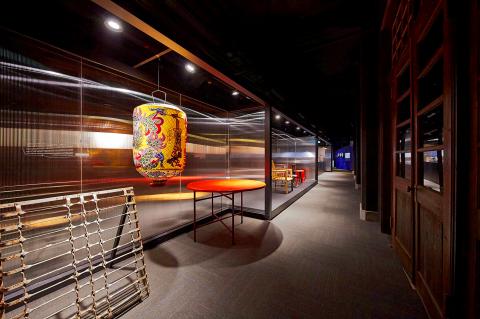
Photo courtesy of Taiwan Design Museum
Liu Yung-jen’s (劉永仁) solo exhibition, Deep Breathing Field, features a series of large-scale paintings that continue the artist’s ongoing explorations about the concept of breathing. His artistic practice is based on a connection between breathing and abstract painting, which he attempts to “permeate into a deep state of consciousness.” Liu has a background in Chinese ink painting and took on oil painting in the 90’s while studying in Milan, Italy. In his work he ponders physical phenomena such as order, movement, crystallization and dissolution, which he identifies as an abstracted state of the material world. Liu often experiments with the materiality of painting surface and texture as well, sometimes using wood panels and metal sheets as the base of his paintings. He also uses oil paint mixed with beeswax to create a glossy semi-transparent quality. Breathing Field 15 is composed of two white lines with blue edges intersecting on a dark blue plain. Asterisks are spread throughout the blue plain, with a small yellow triangle locked in at the intersection. “My painting progresses with the mutual interlacing of arcs and blocks, and I attempted to make them appear light yet full of insight.” Liu says.
■ Powen Gallery (紅野畫廊), 11, Ln 164, Songjiang Rd, Taipei City (臺北市松江路164巷11號), tel: (02) 2523-6009. Open Tuesdays to Sundays from 10am to 7pm.
■ Until May 20th
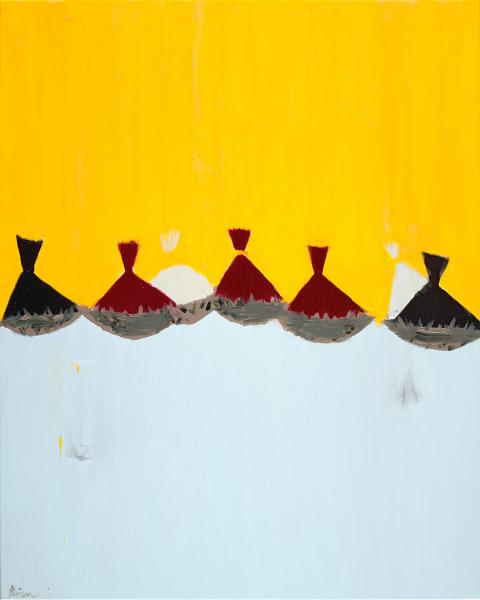
Photo Courtesy of Powen Gallery
Looking Back — Taiwanese Photographers’ Island Gazes 1970s-1990s (回望 — 臺灣攝影家的島嶼凝視 1970s-1990s) is a retrospective of Taiwanese photography from a period of major social transformations before and after the lifting of the martial law. The show features over 150 works by 11 photographers who “engaged in society and interacted closely with various communities including Hokkien, Hakka, mainlanders and indigenous groups,” reads the museum’s press release. Working across “the main island of Taiwan and its outlying islands, up in the mountains or by the coastal shore,” they captured the state of society from a shared humanitarian perspective. Photographer Lin Bor-liang (林柏樑) says, “the most rewarding part of being a photographer is the chance to truly experience the changing times and encounter many loving people.” His Residual Warmth (餘溫) depicts three teenage boys riding their motorcycles along the coastline. Chang Yung-chieh’s (張詠捷) Indigenous Atayal Elders with Facial Tattoos (泰雅族紋面長老 — 瑪虹‧拜) is a portrait of an elderly woman with a faint tattoo that stretches across her mouths and cheeks. “Her gentle gaze gave me a lot of encouragement and energy,” comments Chang.
■ National Taiwan Museum of Fine Arts (國立臺灣美術館), 2, Wuquan W Rd Sec 1, Taichung City (台中市西區五權西路一段2號), tel: (04) 2373-3552. Open Tuesdays to Fridays from 9am to 5pm, Saturdays and Sundays from 9am to 6pm.
■ Until May 27
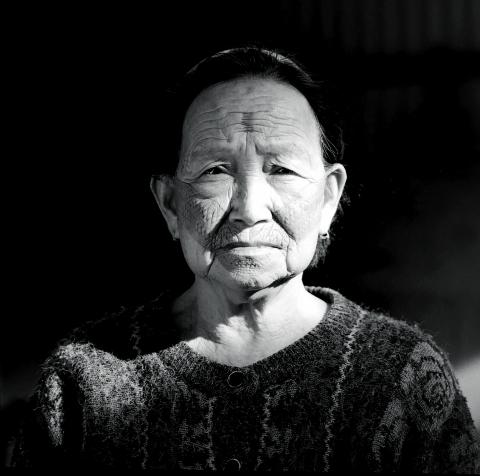
Photo Courtesy of National Taiwan Museum of Fine Arts
Taiwan’s English education system is being pulled apart by three opposing forces. Bilingual Nation 2030 pulls students toward English and global communication. Artificial Intelligence (AI) readiness pulls them toward digital judgment, verification and AI-mediated work. But Taiwan’s old exam culture pulls them back toward memorization, grammar drills, timed reading and correct answers. If the education system keeps using old exams to define success, it risks producing graduates who are neither genuinely bilingual nor genuinely AI-ready, but trained for tasks machines can already perform. The first force is Bilingual Nation 2030. Launched in 2018, the policy aimed to “help Taiwan’s workforce connect
It seems every few days one bumps into one of those “real man” comments in which Taiwan is urged to “face reality” or similar, and “make a deal,” with the speaker implying that soon it will be too late. “Deal” advocates always present themselves as having a superior grip on reality, and the manly ability to make the “hard choice.” Their testosterone-laden language often echoes that of Taiwan sellout advocates. Note that such commentary always specifies a process (“make a deal, work with, make progress”), never the end state of what occupation by a violent authoritarian colonialist state will entail. In

“Taiwan’s Opposition Leader Comes to US With a Message Straight Out of Beijing” read a May 31 headline in the Wall Street Journal. Top US administration officials and members of Congress almost certainly read the WSJ, and if there was a bullet point takeaway that people in Washington should absorb ahead of Chinese Nationalist Party (KMT) Chair Cheng Li-wun’s (鄭麗文) arrival in DC on June 9, that headline is it. The last few columns have discussed this very topic, and the timing is not coincidental. While those top officials likely do not read the Taipei Times, judging by the number
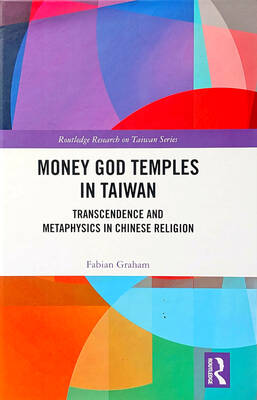
As someone who normally steers clear of books with “transcendence” or “metaphysics” in their subtitles, this reviewer — a casual observer of local belief systems since the 1990s — found Fabian Graham’s Money God Temples in Taiwan a challenging read. Those who’ve only dipped their toes into temple culture will likely need to parse several sections with special care if they’re to keep up with the author, a British ethnographic researcher whose previous books have investigated religious practices among ethnic Chinese in Southeast Asia. This scholarly volume examines a facet of Taiwan’s religious landscape that didn’t exist a century ago, and


 RSS
RSS