


The minefield that co-workers and companies navigate when it comes to love at work has gotten even more complex following the recent flood of sexual misconduct allegations roiling Hollywood, politics and the media.
Office relationships that might have flown under the radar — particularly those between boss and subordinate — are getting a new look. And even those who might be looking to ask a co-worker on a date are thinking twice.
“People need to think hard before they enter into a workplace romance,” said Pennell Locey, a human resources expert at consulting firm Keystone Associates, who knows how complicated love can get in the workplace: She married a co-worker.
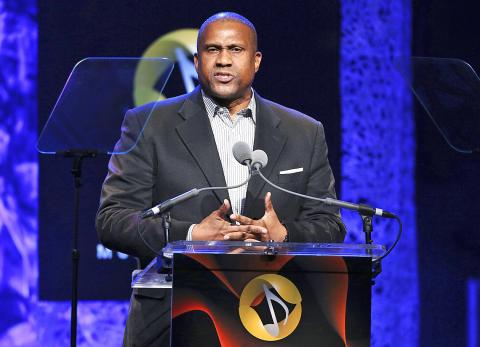
Photo: AP
“One positive thing coming out of this is people are getting educated about what are the boundaries you should be conscious of,” she added. “It kind of takes if off autopilot.”
WORKPLACE ROMANCE COMMON
The office is one of the most popular places to find a lover. One out of four employees reported they have been or are currently involved in a workplace romance, according to a survey by the Society for Human Resource Management.
Increasingly organizations are implementing a written or verbal policy on workplace romance — 42 percent in 2013 versus 25 percent in 2005, according to the most recent data available from the society. Most rules outlaw relationships between bosses and subordinates or push for “love contracts,” where workplace couples are required to disclose their relationships. But some people ignore the rules.
“You can have a handbook and a policy and they’ll ignore everything in there, including the CEO on down,” said Joanne Lee, a vice president at N.K.S. Distributors in New Castle, Delaware, and who has worked in human resources for 35 years. “Sometimes they think, ‘Oh, this doesn’t pertain to me.’ And I think that’s what got everyone in trouble.”
Workplace romances have long played a part in pop culture, whether in the films Broadcast News, Working Girl, Anchorman and Love Actually, or on TV shows like Mad Men, Cheers, The Office and Moonlighting. One top song this holiday season is Garth Brooks’ Ugly Christmas Sweater with a line about “that pretty little girl from accounting.”
In the real world, workplace relationships have been for better, and worse: Bill Gates met his wife Melinda at the office. Former Detroit Mayor Kwame Kilpatrick landed in prison because he lied under oath about his extramarital affair with a staffer.
CONSENSUAL RELATIONSHIPS
The propriety of consensual work relationships is getting renewed attention this week, after PBS announced it was suspending TV host Tavis Smiley following an independent investigation by a law firm, which uncovered “multiple, credible allegations of conduct that is inconsistent with the values and standards of PBS.”
His show’s page at PBS was scrubbed on Thursday. Smiley responded to the allegations on Facebook, saying PBS “overreacted” and calling it “a rush to judgment.”
“If having a consensual relationship with a colleague years ago is the stuff that leads to this kind of public humiliation and personal destruction, heaven help us,” he said. “This has gone too far. And, I, for one, intend to fight back.”
Office relationships may grow more secretive if there is a knee-jerk reaction to try to outlaw all office romance, said Amy Nicole Baker, a psychology professor at the University of New Haven who has studied the topic.
“We know from at least my work and some other peoples’ work that if you try to stamp out consensual attraction in the workplace, you just drive it underground,” she said.
The experts say workplace romances — always fraught, risky propositions — have only gotten more anguished following the uncovering of abuses at offices nationwide. Saturday Night Live recently featured a skit with an overwhelmed HR manager reminding everyone of the rules.
Joshua Lybolt can understand why companies are responding aggressively to new allegations, but he also understands workplace relations: He founded Lifstyl Real Estate in Crown Point, Indiana, with his wife, Magdalena, the same year they were married.
“From an employer standpoint, I think they’re probably taking it too far, but I understand that from a risk-management issue, they want to mitigate conflict as much as possible,” he said.
He said it’s just good policy to keep relationship issues out of the workplace. His company, which employs another married couple, has avoided problems, but “we all know how relationships can turn.” Just to be safe in his own marriage, he and his wife eventually started working from different offices.
— Additional reporting by Jeff Karoub

The breakwater stretches out to sea from the sprawling Kaohsiung port in southern Taiwan. Normally, it’s crowded with massive tankers ferrying liquefied natural gas from Qatar to be stored in the bulbous white tanks that dot the shoreline. These are not normal times, though, and not a single shipment from Qatar has docked at the Yongan terminal since early March after the Strait of Hormuz was shuttered. The suspension has provided a realistic preview of a potential Chinese blockade, a move that would throttle an economy anchored by the world’s most advanced and power-hungry semiconductor industry. It is a stark reminder of
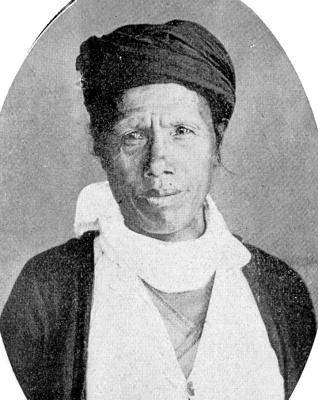
May 11 to May 17 Traversing the southern slopes of the Yushan Range in 1931, Japanese naturalist Tadao Kano knew he was approaching the last swath of Taiwan still beyond colonial control. The “vast, unknown territory,” protected by the “fierce” Bunun headman Dahu Ali, was “filled with an utterly endless jungle that choked the mountains and valleys,” Kano wrote. He noted how the group had “refused to submit to the measures of our authorities and entrenched themselves deep in these mountains … living a free existence spent chasing deer in the morning and seeking serow in the evening,” even describing them as

As a different column was being written, the big news dropped that Chinese Nationalist Party (KMT) caucus whip Fu Kun-chi (傅?萁) announced that negotiations within his caucus, with legislative speaker Han Kuo-yu (韓國瑜) of the KMT, party Chair Cheng Li-wun (鄭麗文), Taichung Mayor Lu Shiow-yen (盧秀燕) and Taiwan People’s Party (TPP) Chair Huang Kuo-chang (黃國昌) had produced a compromise special military budget proposal. On Thursday morning, prior to meeting with Cheng over a lunch of beef noodles, Lu reiterated her support for a budget of NT$800 or NT$900 billion — but refused to comment after the meeting. Right after Fu’s

Yesterday, the Democratic Progressive Party (DPP) nominated legislator Puma Shen (沈伯洋) as their Taipei mayoral candidate, the Chinese Nationalist Party (KMT) put their stamp of approval on Wei Ping-cheng (魏平政) as their candidate for Changhua County commissioner and former legislator Tsai Pi-ru (蔡壁如) of the Taiwan People’s Party (TPP) has begun the process to also run in Changhua, though she has not yet been formally nominated. All three news items are bizarre. The DPP has struggled with settling on a Taipei nominee. The only candidate who declared interest was Enoch Wu (吳怡農), but the party seemed determined to nominate anyone


 RSS
RSS