


Work out while waiting for your flight? That’s an option now at Baltimore-Washington International Airport (BW), where the only gym at a US airport past security opened this week with plans to open 20 more at airports by 2020.
It’s the latest example of how fitness and health trends have started showing up at airports. Yoga rooms and walking tracks have opened at airports around North America over the past few years, and healthier food options are also easier to find in airports now. You can even get a kombucha to wash down a salad made with locally sourced produce.
The Roam Fitness gym at BWI includes an attendant who monitors guests’ flights and will alert them if there’s a delay. There’s even free luggage storage, options for renting workout clothes and shoes, and showers. Fees range from US$40 a day to US$175 a month.
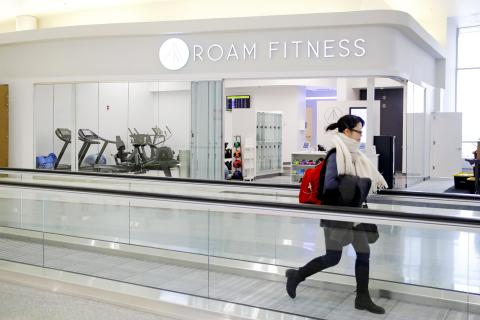
Photo: AP
The concept was initially envisioned for international travelers and others with long layovers, but research revealed that many other travelers wanted to squeeze in a workout before or after landing.
“A lot of people coming from the West Coast taking red-eye flights are going straight to their business meeting but they land at 6:30 in the morning. They can’t check into their hotel yet...so it just gives them the opportunity to clean up before they head to that meeting,” said Roam Fitness CEO Cynthia Sandall.
Roughly 4,000 travelers a month use GoodLife Fitness’ gym at Toronto airport, a 33 percent increase from when it opened in 2014, the company said.
But the concept may not work everywhere. The airport at Las Vegas had a gym that closed. Christopher Berger, who chairs the American College of Sports Medicine task force on healthy air travel, says the gyms’ success may depend on the destination. He thinks they may be best suited for hubs with long layovers.
“You take someplace like (Chicago) O’Hare, Minneapolis, Portland, Seattle...I think you’ve got a real chance of selling it,” he said.
San Francisco airport’s yoga room has been so successful that a second one opened in 2014. Airport officials say it’s used daily. After a few downward dogs, yogis can also order a green juice or curry bowl at The Plant Cafe where everything is made with local and organic ingredients. There’s also Napa Farms Market, Joe & the Juice and new vending machines offering organic, gluten-free and sugar-free snacks.
FITNESS OFFERINGS AND HEALTHY EATERIES
Other amenities in the pipeline as major airports look to become destinations in their own right include movie theaters, more fine dining and better shopping, says Lorraine Sileo, a senior vice president with the travel market research firm Phocuswright.
But fitness and wellness offerings may be especially appealing to travelers getting on or off cramped planes.
At Dallas-Fort Worth International Airport, there’s a yoga studio with free mats, a walking path and two 17-meter staircases for an extra cardio challenge. Minneapolis-St. Paul International Airport has a 2.2 km walking path. Philadelphia’s airport had a temporary program where passengers could cycle on stationary bikes while waiting for their flights. Baltimore Washington International also offers bike rentals and a 20 km trail just outside the airport.
While airports still sell plenty of greasy fast food, many airport eateries also now feature local, organic ingredients and vegan and gluten-free options. Icebox Cafe at Miami International Airport, which uses locally sourced food, reported above-average sales of US$3.1 million last fiscal year. Other examples of vendors bringing healthier fare to airports include Nature’s Table in Atlanta and Orlando, Elephants Delicatessen at Portland International Airport in Oregon, and French Meadow Bakery, in four airports including Minneapolis and Salt Lake City.
Ann Gentry, founder of the popular vegan eatery Real Food Daily, has an airport location in addition to two others in the Los Angeles area.
“I knew it was going to be a hit because in our (two other restaurants) people were coming in getting bags of food for the plane, so we were very accustomed to packing up food for the plane,” she said.
But not everyone who patronizes Real Food Daily at the airport location realizes it’s vegan. Some order a spicy lentil burger and bring it back complaining they didn’t know it wouldn’t have meat. On the flip side, some travelers say they enjoyed her airport grub so much they sought out the restaurant while in town.
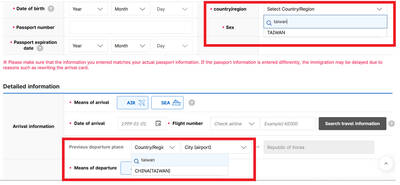
Jason Han says that the e-arrival card spat between South Korea and Taiwan shows that Seoul is signaling adherence to its “one-China” policy, while Taiwan’s response reflects a reciprocal approach. “Attempts to alter the diplomatic status quo often lead to tit-for-tat responses,” the analyst on international affairs tells the Taipei Times, adding that Taiwan may become more cautious in its dealings with South Korea going forward. Taipei has called on Seoul to correct its electronic entry system, which currently lists Taiwan as “China (Taiwan),” warning that reciprocal measures may follow if the wording is not changed before March 31. As of yesterday,

The Portuguese never established a presence on Taiwan, but they must have traded with the indigenous people because later traders reported that the locals referred to parts of deer using Portuguese words. What goods might the Portuguese have offered their indigenous trade partners? Among them must have been slaves, for the Portuguese dealt slaves across Asia. Though we often speak of “Portuguese” ships, imagining them as picturesque vessels manned by pointy-bearded Iberians, in Asia Portuguese shipping between local destinations was crewed by Asian seamen, with a handful of white or Eurasian officers. “Even the great carracks of 1,000-2,000 tons which plied
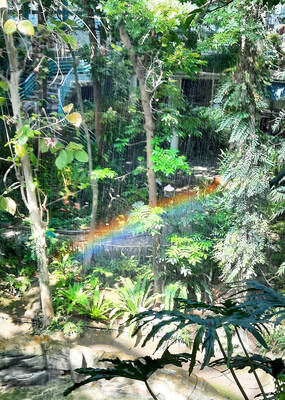
It’s only half the size of its more famous counterpart in Taipei, but the Botanical Garden of the National Museum of Nature Science (NMNS, 國立自然科學博物館植物園) is surely one of urban Taiwan’s most inviting green spaces. Covering 4.5 hectares immediately northeast of the government-run museum in Taichung’s North District (北區), the garden features more than 700 plant species, many of which are labeled in Chinese but not in English. Since its establishment in 1999, the site’s managers have done their best to replicate a number of native ecosystems, dividing the site into eight areas. The name of the Coral Atoll Zone might
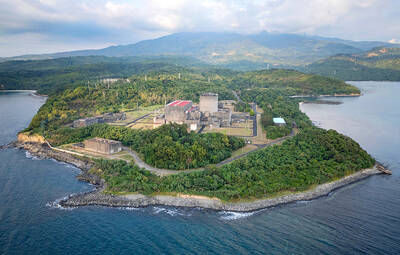
Nuclear power is getting a second look in Southeast Asia as countries prepare to meet surging energy demand as they vie for artificial intelligence-focused data centers. Several Southeast Asian nations are reviving mothballed nuclear plans and setting ambitious targets and nearly half of the region could, if they pursue those goals, have nuclear energy in the 2030s. Even countries without current plans have signaled their interest. Southeast Asia has never produced a single watt of nuclear energy, despite long-held atomic ambitions. But that may soon change as pressure mounts to reduce emissions that contribute to climate change, while meeting growing power needs. The


 RSS
RSS