


Two concurrent exhibitions are being held at the Barry Room in Taipei Artist Village. Elevated; Elevating (主動與被動地) by Yoroe Lin (林猷柔) explores the concept of luxury through a series of installations with chandeliers. She places them in various settings, from posh to ramshackle and even outdoors, and by doing so, forces her viewers to think about the symbols that we associate with social status. Figure, Flash, Camera (像,閃光,攝像機) by Musquiqui Chihying (致穎) also explores power dynamics, but between photographer and subject. Once the shutter opens, the photographed subject only has a split second to respond. According to the artist, how he or she chooses to do so can either be an act of submission or reclaiming control.
■ Barry Room, Taipei Artist Village (台北國際藝術村百里廳), 7 Beiping E Rd, Taipei City (台北市北平東路7號), tel: (02) 3393-7377. Open Tuesdays to Sundays from 11am to 9pm
■ Both exhibitions are until Feb. 11
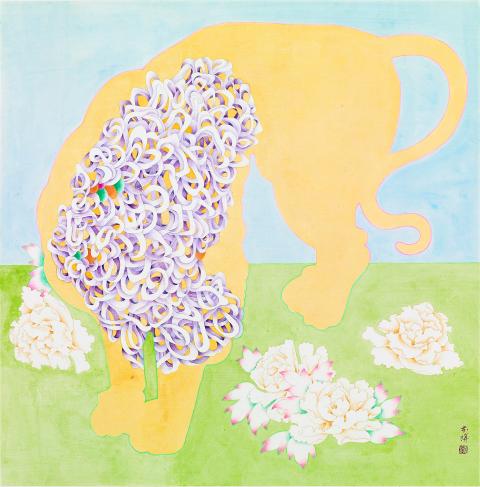
Photo courtesy of IT Park Gallery
Zhao Yang’s (趙洋) artistic style is as varied as chalk and cheese. The Chinese artist’s latest solo exhibition, In Between (萬物之間), held at the Kuandu Museum of Fine Arts includes works where he paints over other people’s paintings, paintings of nature scenes, as well as a few portraits. The common theme in Zhao’s paintings is a sense of “in-between-ness” — a concept he uses to describe the limbo state of being caught amongst the multiple layers that make up the intricacies of life. His paintings possess a dream-like quality that is a little sinister but also oddly calming.
■ Kuandu Museum of Fine Arts (關渡美術館), 1 Xueyuan Rd, Taipei City (台北市學園路1號), tel: (02) 2896-1000 X 2432. Open Tuesdays to Sundays from 10am to 5pm
■ Until Feb. 12
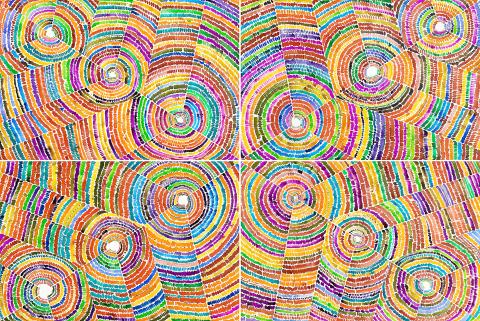
Photo courtesy of IT Park Gallery
On display at IT Park Gallery is 2016 IT Park Limited Editions (2016 伊通公園限量版), a selection of works by different artists that were on view at various times throughout last year. Included in the lineup is Shen Chao-liang’s (沈昭良) photographs of weird and wacky stage trucks with blinding neon lights — the preferred performance space of some traveling cabaret troupes. Shen pulls viewers into this elaborate and bizarre world while managing to capture the colorful lives of these entertainers without ever photographing human subjects. The exhibition also features works by ball point pen artist Tzeng Yong-ning (曾雍甯) who creates colorful and hypnotic geometric sketches, while Chinese artist Yuan Jai’s (袁旃) childlike paintings of animals and nature scenes with elements from Chinese brush painting.
■ IT Park Gallery (伊通公園), 2F-3F, 41 Yitong St, Taipei City (台北市伊通街41號2-3樓), tel: (02) 2507-7243. Open Tuesdays to Saturdays from 1pm to 10pm
■ Until Feb. 18
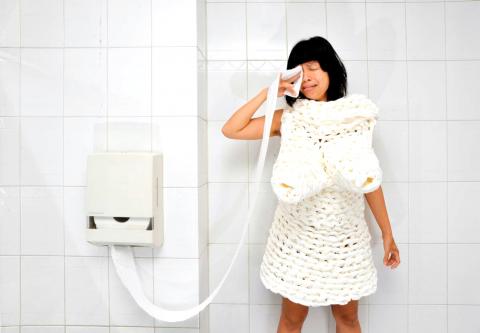
Photo courtesy of International Pavilion of Indigenous Arts and Cultures
Huang Zan-lun’s (黃贊倫) video installations and life-size machines may seem apocalyptic but his message is one of hope. The Future That Never Comes (不曾到來的未來), which opens at MOCA tomorrow, uses robot and human imagery meshed together to tell the story of an idealistic future devoid of war and disease. The smiles on his robot-human creatures convey the absurdity of human history, notably how our actions are driven primarily by greed, conflict and violence and how we invent weapons to kill each other. Huang juxtaposes robots with weapons from different eras in his installations, posing the question of whether or not weapons will become obsolete if we evolve into a time of peace. In addition, he explores a few sub-themes, such as the idea of artificial intelligence and if robots will be used for good or evil in the future.
■ Museum of Contemporary Art, Taipei (台北當代藝術館, MOCA, Taipei), 39 Changan W Rd, Taipei City (台北市長安西路39號), tel: (02) 2552-3720. Open Tuesdays to Sundays from 10am to 6pm
■ Opens tomorrow. Until March 5
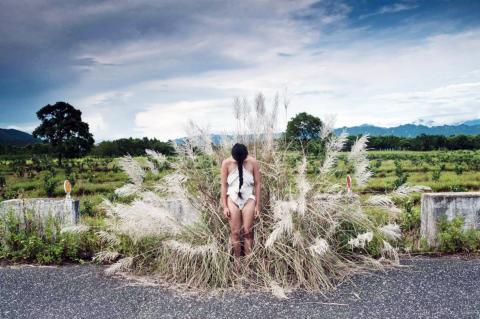
Photo courtesy of International Pavilion of Indigenous Arts and Cultures
Truku Aboriginal artist Labay Eyong explores the concepts of body and identity in a series of humorous — and bordering on farcical — installations in her latest exhibition, Ella (身身), at the International Pavilion of Indigenous Arts and Cultures in Taipei. Growing up, Labay was told by her parents and teachers to “reflect” whenever she did something wrong. This sense of hyper-awareness and self-criticism is obvious in her work where viewers sense the friction between the desire to fit in and an innate need to stand out.
■ International Pavilion of Indigenous Arts and Cultures (原民風味館) 151, Zhongshan N Rd Sec 3, Taipei City (台北市中山北路三段151號), tel: (02) 2599-2655. Open Tuesdays to Sundays from 11am to 7pm
■ Until March 19
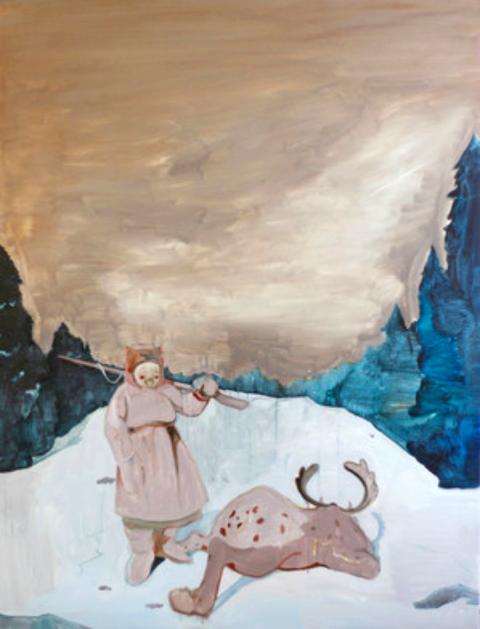
Photo courtesy of Kuandu Museum of Fine Arts
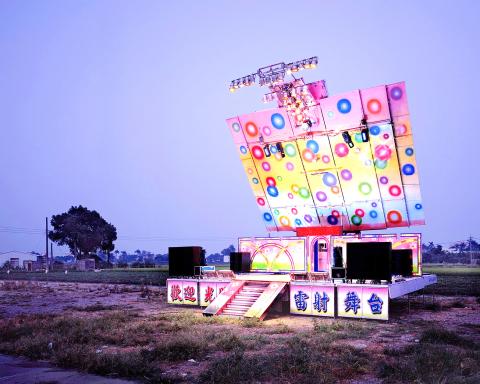
Photo courtesy of IT Park Gallery
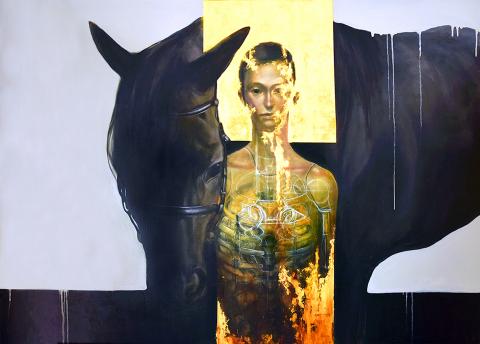
Photo courtesy of MOCA
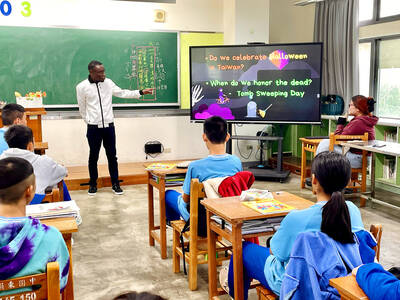
For many people, Bilingual Nation 2030 begins and ends in the classroom. Since the policy was launched in 2018, the debate has centered on students, teachers and the pressure placed on schools. Yet the policy was never solely about English education. The government’s official plan also calls for bilingualization in Taiwan’s government services, laws and regulations, and living environment. The goal is to make Taiwan more inclusive and accessible to international enterprises and talent and better prepared for global economic and trade conditions. After eight years, that grand vision is due for a pulse check. RULES THAT CAN BE READ For Harper Chen (陳虹宇), an adviser
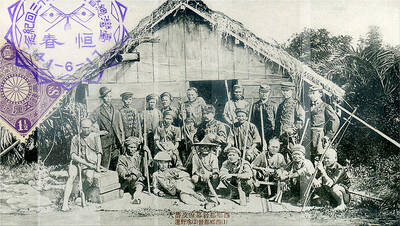
Traditionally, indigenous people in Taiwan’s mountains practice swidden cultivation, or “slash and burn” agriculture, a practice common in human history. According to a 2016 research article in the International Journal of Environmental Sustainability, among the Atayal people, this began with a search for suitable forested slopeland. The trees are burnt for fertilizer and the land cleared of stones. The stones and wood are then piled up to make fences, while both dead and standing trees are retained on the plot. The fences are used to grow climbing crops like squash and beans. The plot itself supports farming for three years.
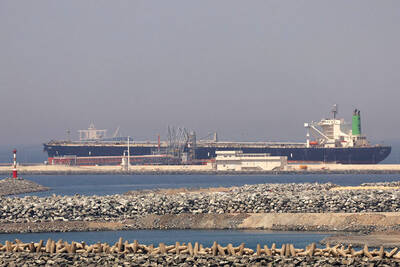
The breakwater stretches out to sea from the sprawling Kaohsiung port in southern Taiwan. Normally, it’s crowded with massive tankers ferrying liquefied natural gas from Qatar to be stored in the bulbous white tanks that dot the shoreline. These are not normal times, though, and not a single shipment from Qatar has docked at the Yongan terminal since early March after the Strait of Hormuz was shuttered. The suspension has provided a realistic preview of a potential Chinese blockade, a move that would throttle an economy anchored by the world’s most advanced and power-hungry semiconductor industry. It is a stark reminder of
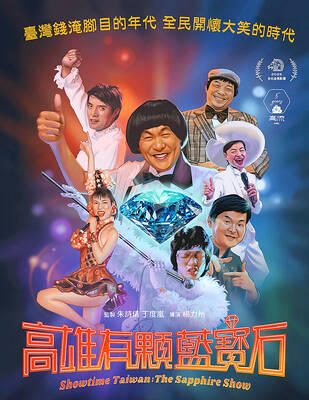
May 4 to May 10 It was once said that if you hadn’t performed at the Sapphire Grand Cabaret (藍寶石大歌廳), you couldn’t truly be considered a star. Taking the stage at the legendary Kaohsiung club was more than just a concert. Performers were expected to entertain in every sense, wearing outlandish or revealing costumes and staying quick on their feet as sharp-tongued, over-the-top hosts asked questions and delivered jokes that would be seen as vulgar, even offensive, by today’s standards. Opening in May 1967 during a period of strict political and social control, Sapphire offered a rare outlet for audiences in


 RSS
RSS