


Taiwan in Time: Dec. 26 to Jan. 1
It didn’t seem like much of a name change when Tamsui’s Mackay Hospital moved to Taipei and reopened as the Mackay Memorial Hospital on Dec. 26, 1912. However, the rechristening is much more significant than one might realize, as the original was actually named after a different Mackay.
The current namesake is Canadian missionary George Leslie Mackay, who opened the Mackay Hospital in 1880 as northern Taiwan’s first Western medical institution. He writes in his memoir, From Far Formosa that the clinic was named after Captain Mackay from Detroit, whose widow donated the US$3,000 to erect the building.
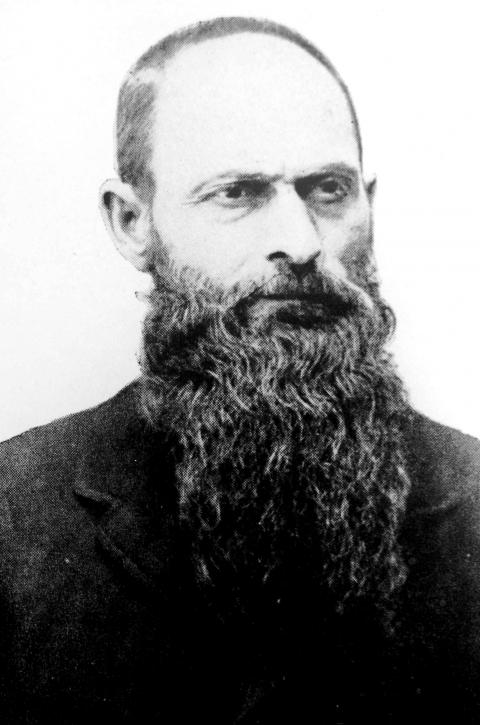
Photo: Huang Chi-hao, Taipei Times
The identical last name is likely just a coincidence, and no more information could be found about Captain Mackay. But what is worth exploring is the medical conditions in Taiwan during that time and why providing care was so important to Mackay’s missionary activities.
Chen Chih-jung (陳志榮) writes in the study Religion and Medical Treatment — Mackay’s Medical Missionary as a Case Study (宗教與醫療 -- 以馬偕醫療傳教為例) that while there were effective and competent traditional Chinese doctors in Taiwanese society during that time, the problem was that these services were limited. Figures from the Japanese government show that in 1897, out of a population of 2.5 million people, there were only 1,070 registered doctors.
In A Study of Medical Services in Taiwan Before the Japanese Era (日治時期前臺灣醫療發展之探討), Chang Chia-sheng (張加昇) and Su Yi-chang (蘇奕彰) write that the Qing government mostly left the management of medical services to local Taiwanese, leading to a lack of quality control. A doctor did not need a license to open a clinic, and it was hard to tell who was legitimate.
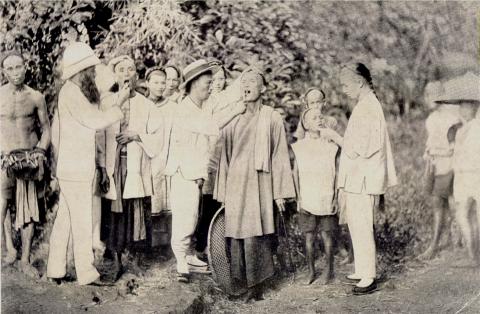
Photo: Weng Yu-huang, Taipei Times
Furthermore, Chang and Su write that many people were superstitious and preferred to pray to the gods or employ other religious means. Some even believed that overexertion of human effort to cure a disease was against the wishes of the gods and could lead to misfortune, leading to culture where people weren’t very proactive in seeking medical attention.
Missionaries have long provided medical services as a means of goodwill toward the natives, and Mackay writes that out of all his training, his medical studies proved the most practical.
“I found people suffering from various ailments and diseases, and the power to relieve their pain and heal their diseases won for the mission grateful friends and supporters,” he writes.
These attempts were not always successful. Chen writes that before Mackay, missionary James Maxwell arrived in Tainan in 1865 to offer free medical care. But just three weeks into his venture, rumors spread that Maxwell used sorcery to create medicine from dead bodies, and an angry mob destroyed his clinic.
Mackay writes that the most widespread disease when he arrived was malaria, which is quickly brought up in his introduction of Taiwan after its basic geography and climate.
“[Malaria] is the blackest cloud that hangs longest over our beautiful island,” he writes. “Because of it disease and death work terrible havoc among the inhabitants … Seldom do three months elapse without one or more members of every household being laid low.”
Locals believed that the disease was “caused by the patient unluckily treading on mock-money put in the street or on the roadside by a priest or sorcerer; or by a conflict between the hot and cold principles in nature; or by two devils, one belonging to the negative principle in nature, fanning the patient, thus causing the chills, and the other belonging to the positive principle, blowing a furnace and producing heat and fever.”
Along with treating malaria, Mackay also placed importance on dental work, as people were having problems due to malaria, cigar smoking or betel-nut chewing. He writes that he devised a gentler way of tooth extraction, personally extracting 21,000 teeth between 1873 and 1896.
His popularity increased quickly, from 1,346 new patients during the hospital’s first year in 1880 to 3,696 in 1890. The hospital closed after Mackay’s death in 1901, but reopened in 1907 before its move to Taipei.
And the effectiveness of his work? Mackay writes in his memoir, “Large numbers were cured during these 23 years, many more were relieved, and the services rendered made them much more kindly disposed toward the mission. Many became converts themselves, and their example told with their relatives and friends. The reflex influence of all this medical work cannot be estimated. The direct results in the conversion of patients cannot be told.”
Taiwan in Time, a column about Taiwan’s history that is published every Sunday, spotlights important or interesting events around the nation that have anniversaries this week.
Taiwan’s English education system is being pulled apart by three opposing forces. Bilingual Nation 2030 pulls students toward English and global communication. Artificial Intelligence (AI) readiness pulls them toward digital judgment, verification and AI-mediated work. But Taiwan’s old exam culture pulls them back toward memorization, grammar drills, timed reading and correct answers. If the education system keeps using old exams to define success, it risks producing graduates who are neither genuinely bilingual nor genuinely AI-ready, but trained for tasks machines can already perform. The first force is Bilingual Nation 2030. Launched in 2018, the policy aimed to “help Taiwan’s workforce connect
“Taiwan’s Opposition Leader Comes to US With a Message Straight Out of Beijing” read a May 31 headline in the Wall Street Journal. Top US administration officials and members of Congress almost certainly read the WSJ, and if there was a bullet point takeaway that people in Washington should absorb ahead of Chinese Nationalist Party (KMT) Chair Cheng Li-wun’s (鄭麗文) arrival in DC on June 9, that headline is it. The last few columns have discussed this very topic, and the timing is not coincidental. While those top officials likely do not read the Taipei Times, judging by the number
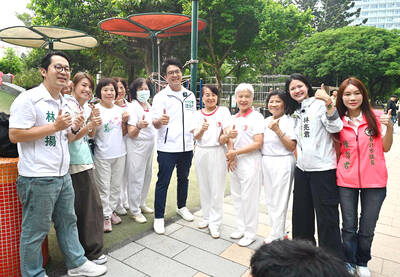
With weighty, anxiety-inducing geopolitical topics dominating the headlines, checking in on the wild and weird state of local politics can take some of the edge off. This November’s elections will determine who will be in charge of fixing potholes in your neighborhood, not the potholes in Taiwan’s complicated geopolitical space. Recently, after an online interview with a Taipei-based journalist, I commented that Taipei journalists never go further than the MRT can take them. He laughed and agreed. Naturally, the Taipei mayoral race is eating up much of the press attention. TAIPEI CITY Democratic Progressive Party (DPP) candidate Puma Shen (沈伯洋) has
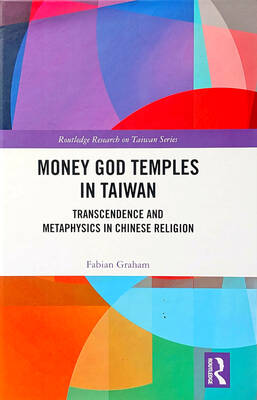
As someone who normally steers clear of books with “transcendence” or “metaphysics” in their subtitles, this reviewer — a casual observer of local belief systems since the 1990s — found Fabian Graham’s Money God Temples in Taiwan a challenging read. Those who’ve only dipped their toes into temple culture will likely need to parse several sections with special care if they’re to keep up with the author, a British ethnographic researcher whose previous books have investigated religious practices among ethnic Chinese in Southeast Asia. This scholarly volume examines a facet of Taiwan’s religious landscape that didn’t exist a century ago, and


 RSS
RSS