


The plain beige-grey exterior of the School of Oriental and African Studies (SOAS) in central London masks a colorful and exciting history: Located within the bowels of this building lies the world’s most important, and sizeable, collection of books and holdings on Asia, Africa and the Middle East. Just a stone’s throw from the commercial heart of the city, 1.2 million volumes line miles of shelves which annually attract thousands of academics from around the globe to the institution, which is celebrating its centenary this year.
Buried within this labyrinth of book-bound knowledge lies a rich seam of Taiwanese Aboriginal history that, thanks to a project spearheaded by Taiwan’s Shung Ye Museum of Formosan Aborigines (順益台灣原住民博物館), is finally getting the publicity many argue it deserves.
Tapping into a vast archive of paperwork generated by Presbyterian missionaries active in Taiwan nearly 150 years ago, Niki Alsford, a lecturer in Asia Pacific Studies at the University of Central Lancashire and research associate at the Centre of Taiwan Studies at SOAS, has recently published a 550-page book which helps bring to life a key period in the country’s history.
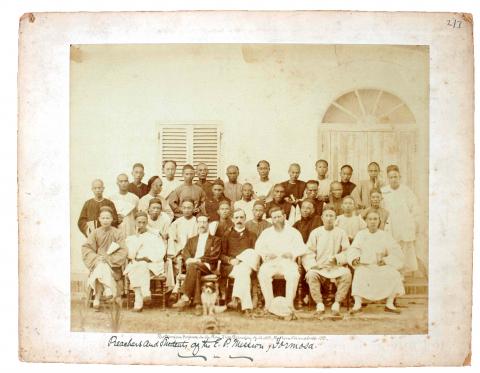
Photo courtesy of Niki Alsford
Alsford’s publication, Chronicling Formosa: Setting the Foundations for the Presbyterian Mission, 1865-1876, lays bare the earliest period of the church in Taiwan and also helps to provide insight into the nation’s many Aboriginal communities, particularly the often forgotten Pingpu peoples.
“I decided to explore the documentation of Taiwan’s indigenous peoples at SOAS’ Archives and Special Collections. These collections are rich with material on Taiwan, but are not necessarily well known outside of specific circles. It was my aim to help shed light on this,” Alsford says.
Alsford says that he was able to access materials relating to west coast plains Pingpu peoples — many of who were exposed to more direct contact with Chinese settlers throughout its expansionist period of the 1800s — and who were often pejoratively described as “raw” and “cooked,” according to how traditional their lifestyles were.
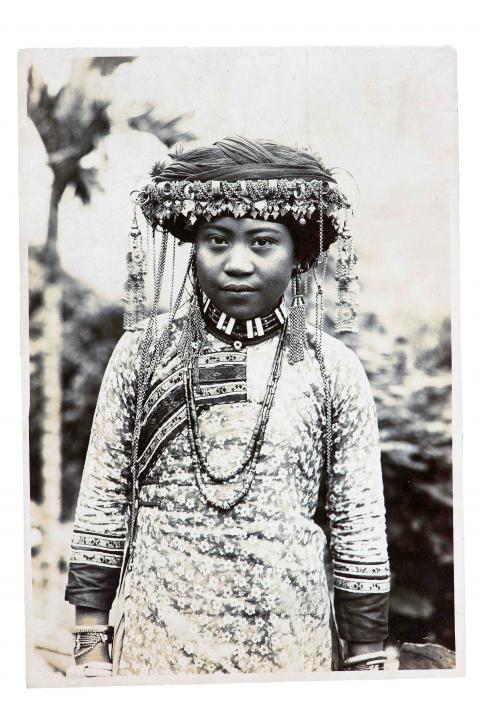
Photo courtesy of Niki Alsford
Having established themselves in Xiamen on China’s east coast, Presbyterian missionaries became active in western Taiwan around the mid-1800s and built up an impressive body of work related to their work with Aborigines.
“The material pertaining to the Pingpu peoples interested me. This is very important since archives on plains aboriginal people are not that common,” says Alsford.
Given the evangelical nature of the church project in Taiwan the issue of subjectivity within the collection is one that Alsford is also keen to address.
“With any archival material there will always be notions of bias,” he says. “When material is written within a framework of specific forms of colonialism there is no escaping forms of an ‘orientalist’ conversation,” he says.
Alsford says the interpretation of the archives is key and they remain important.
“They retain an important position in historical writing … and since missionaries were individuals within an organized structure they sent back a mass of information. This information provides an important social perspective … as [missionaries] were often the first source of sustained foreign contact with local people,” Alsford says.
The collection itself spans nearly a century, from 1865 until 1940, when Japanese imperialistic aggression forced the last of the western missionaries from Taiwan. Rising anti-British sentiment among Japanese authorities included the forced repatriation of European citizens from the country and, amid this aggressive pre-war atmosphere, there was “no real discussion about the impact [this had] on indigenous people” many of whom, says Alsford, had built up sophisticated relationships with church missionaries including a reliance on the medical infrastructure that had been developed by religious groups.
The collection itself had a war-time brush with fate when a Nazi V2 rocket scored a direct hit on the church’s London offices in 1945, killing several staff and destroying many key documents.
SOAS escaped a similar fate having been bombed during the Blitz in the earliest stages of World War II. Luckily most of the collection avoided destruction and in the 1970s the materials, which had been expertly indexed by researcher Rosemary Seton, were transferred to SOAS’ impressive library.
“[Seton] did a wonderful job,” says Alsford, “and it was my aim to get a better understanding of its scope... Shung Ye Museum wanted a publication and I thought it would make sense to look at the history of the Presbyterian Church in the whole of Taiwan.”
A similar project, also led by Alsford, is now being undertaken with Taiwan’s Council of Indigenous Peoples which draws on the SOAS collection and is set for upcoming publication to coincide with its 100th anniversary.
Alsford’s current book meanwhile may be translated into Chinese for the Taiwanese market and there have been talks on a possible exhibition.
Alsford explains that work is currently being done to digitize large chunks of the archive, which, he says, remain a valuable resource for researchers.
“But,” he adds, “it’s how researchers view the material that is the most important thing.”
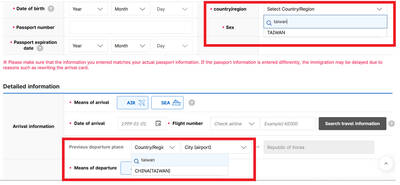
Jason Han says that the e-arrival card spat between South Korea and Taiwan shows that Seoul is signaling adherence to its “one-China” policy, while Taiwan’s response reflects a reciprocal approach. “Attempts to alter the diplomatic status quo often lead to tit-for-tat responses,” the analyst on international affairs tells the Taipei Times, adding that Taiwan may become more cautious in its dealings with South Korea going forward. Taipei has called on Seoul to correct its electronic entry system, which currently lists Taiwan as “China (Taiwan),” warning that reciprocal measures may follow if the wording is not changed before March 31. As of yesterday,
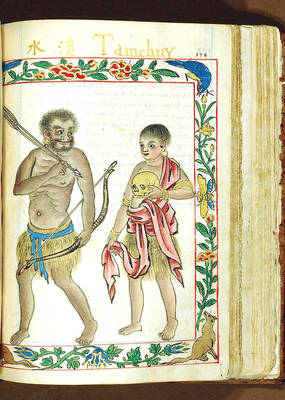
The Portuguese never established a presence on Taiwan, but they must have traded with the indigenous people because later traders reported that the locals referred to parts of deer using Portuguese words. What goods might the Portuguese have offered their indigenous trade partners? Among them must have been slaves, for the Portuguese dealt slaves across Asia. Though we often speak of “Portuguese” ships, imagining them as picturesque vessels manned by pointy-bearded Iberians, in Asia Portuguese shipping between local destinations was crewed by Asian seamen, with a handful of white or Eurasian officers. “Even the great carracks of 1,000-2,000 tons which plied
Nuclear power is getting a second look in Southeast Asia as countries prepare to meet surging energy demand as they vie for artificial intelligence-focused data centers. Several Southeast Asian nations are reviving mothballed nuclear plans and setting ambitious targets and nearly half of the region could, if they pursue those goals, have nuclear energy in the 2030s. Even countries without current plans have signaled their interest. Southeast Asia has never produced a single watt of nuclear energy, despite long-held atomic ambitions. But that may soon change as pressure mounts to reduce emissions that contribute to climate change, while meeting growing power needs. The

On Monday morning, in quick succession, the Chinese Communist Party (CCP) and the Chinese Nationalist Party (KMT) released statements announcing “that the Central Committee of the Communist Party of China and General Secretary Xi Jinping (習近平) have invited KMT Chairwoman Cheng Li-wun (鄭麗文) to lead a delegation on a visit to the mainland” as the KMT’s press release worded it. The KMT’s press release added “Chairwoman Cheng expressed her gratitude for the invitation and has gladly accepted it.” Beijing’s official Xinhua news release described Song Tao (宋濤), head of the Taiwan Work Office of the CCP Central Committee, as


 RSS
RSS