


If you want to see a different side of Yangmingshan (陽明山), Taipei Hikers will be climbing up Datun Stream (大屯溪), which is located in a more secluded corner of Yangmingshan National Park next Saturday. The group will meet at 8am at Tamsui MRT, and participants must register for a spot beforehand on the Taipei Hikers Meetup site.
The hike, which will be led by longtime Taipei expat and guidebook writer Richard Saunders, will consist of four to five hours of constant climbing, which requires a good level of fitness and some prior river tracing experience.
For those unfamiliar with the activity, river tracing is walking up a stream in the mountains towards the source, normally a waterfall.
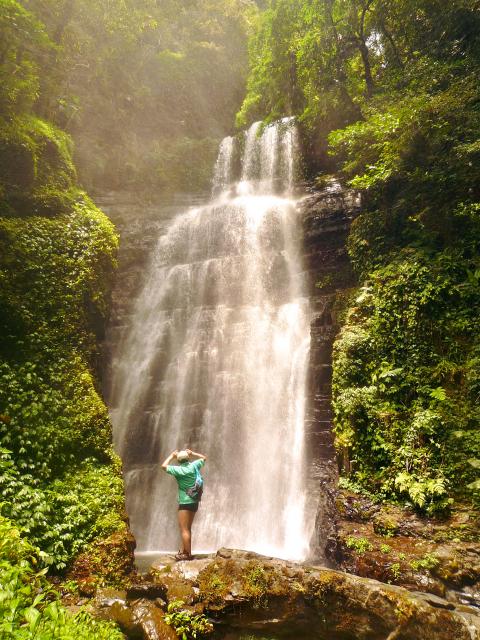
Photos courtesy of Richard Saunders
“The one we’ll be doing [next weekend] is quite easy, with no major obstacles, although we will be climbing lots of small cascades and rapids, and swimming across small but sometimes deep pools,” Saunders tells the Taipei Times.
As such, proper footwear with felt soles is also required, and can be purchased from most outdoor sporting shops. Other equipment — waterproof bag, life vest and helmets — are optional.
Saunders founded Taipei Hikers in 2002 while writing his second book, Taipei Day Trips 2. The idea was to get a group together to go on a couple of hikes to make sure that the directions in his book were clear enough to follow.
“We had such fun exploring the 30 walks in the book as a group, that after the book was published, I continued organizing walks,” says Saunders.
The group has since grown to over 3,500 members, with about 10 members regularly leading hikes. In the summer months, the group does mostly river traces, because it gets pretty hot — and the waters can be surprisingly chilly.
Saunders is glad to see that hiking has grown to become a more popular activity over the last decade.
“People have had more free time since the two-day weekend was introduced,” he says.
The proliferation of hiking blogs that include details about “hidden” spots and GPS logs of routes have made it easier to explore the nation’s river systems.
Saunders says he loves the area near the upper Keelung River valley and the hills above the northeast coast, as well as the mountains in Chiayi County (嘉義). For river tracing, he adds that Golden Grotto (黃金峽谷) in Hualien (花蓮) “reigns supreme.”
Four years ago, Taipei Hikers started doing international trips. The first one was a climb in a couple of sacred Buddhist and Taoist mountains in China. Since then, they’ve also trekked through the jungles of Malaysian Borneo and climbed Mount Rinjani, an active volcano on the Indonesian island of Lombok. They’re also planning a trip next year to the European Alps.
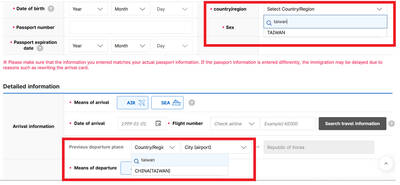
Jason Han says that the e-arrival card spat between South Korea and Taiwan shows that Seoul is signaling adherence to its “one-China” policy, while Taiwan’s response reflects a reciprocal approach. “Attempts to alter the diplomatic status quo often lead to tit-for-tat responses,” the analyst on international affairs tells the Taipei Times, adding that Taiwan may become more cautious in its dealings with South Korea going forward. Taipei has called on Seoul to correct its electronic entry system, which currently lists Taiwan as “China (Taiwan),” warning that reciprocal measures may follow if the wording is not changed before March 31. As of yesterday,

The Portuguese never established a presence on Taiwan, but they must have traded with the indigenous people because later traders reported that the locals referred to parts of deer using Portuguese words. What goods might the Portuguese have offered their indigenous trade partners? Among them must have been slaves, for the Portuguese dealt slaves across Asia. Though we often speak of “Portuguese” ships, imagining them as picturesque vessels manned by pointy-bearded Iberians, in Asia Portuguese shipping between local destinations was crewed by Asian seamen, with a handful of white or Eurasian officers. “Even the great carracks of 1,000-2,000 tons which plied
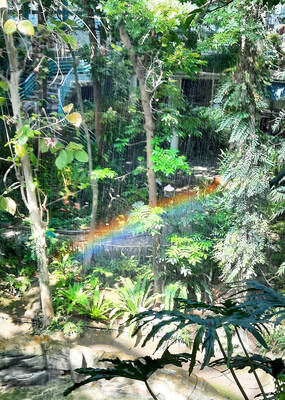
It’s only half the size of its more famous counterpart in Taipei, but the Botanical Garden of the National Museum of Nature Science (NMNS, 國立自然科學博物館植物園) is surely one of urban Taiwan’s most inviting green spaces. Covering 4.5 hectares immediately northeast of the government-run museum in Taichung’s North District (北區), the garden features more than 700 plant species, many of which are labeled in Chinese but not in English. Since its establishment in 1999, the site’s managers have done their best to replicate a number of native ecosystems, dividing the site into eight areas. The name of the Coral Atoll Zone might
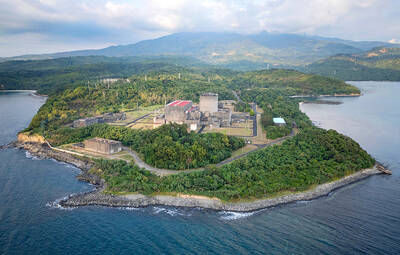
Nuclear power is getting a second look in Southeast Asia as countries prepare to meet surging energy demand as they vie for artificial intelligence-focused data centers. Several Southeast Asian nations are reviving mothballed nuclear plans and setting ambitious targets and nearly half of the region could, if they pursue those goals, have nuclear energy in the 2030s. Even countries without current plans have signaled their interest. Southeast Asia has never produced a single watt of nuclear energy, despite long-held atomic ambitions. But that may soon change as pressure mounts to reduce emissions that contribute to climate change, while meeting growing power needs. The


 RSS
RSS