


Taiwan in Time: May 9 to May. 15
In 1874, former Xiamen consul Charles Le Gendre published a pamphlet titled, Is Aboriginal Formosa a Part of the Qing Empire? An Unbiased Statement of the Question.
The topic of interest was timely as it encapsulated much of the international debate before and after the Japanese military expedition to the Hengchun Peninsula (恆春半島 ) in response to the killing of 54 shipwrecked Ryukyuan sailors by Paiwan Aborigines.
Photo courtesy of Wikimedia Commons
Le Gendre had negotiated with Aborigines several years prior when they killed several shipwrecked Americans. He later traveled to Japan and became a political consultant who encouraged Japan to colonize the Aboriginal areas of Taiwan, as he considered them to belong to no country.
The military expedition and the resulting conflict, known as the Mudan Incident (牡丹社事件), ended with the Qing paying the Japanese to retreat. After the incident, the imperial court, which had long seen Taiwan as a backwater province unworthy of development, started to pay more attention to what was then still part of Fujian Province.
BEYOND REACH
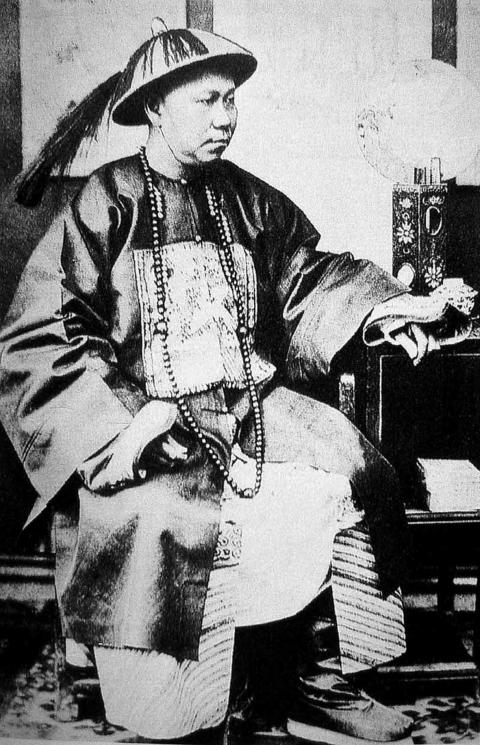
Photo courtesy of Wikimedia Commons
Historian Wu Mi-cha (吳密察) writes in the preface to The Expedition to Formosa (征臺記事) that the Qing considered Taiwan, in its own words, “beyond the reach of our whip.”
The imperial court restricted cross-strait immigration and forbade settlers from moving into the eastern and southern regions populated by Aborigines as a form of population control, partially in fear of Taiwan becoming a sanctuary for renegades — not unlike the time when anti-Qing leader Cheng Cheng-kung (鄭成功), better known as Koxinga, used it as his base in 1661. Few troops were stationed to prevent a mutiny, Wu writes.
The Qing had always expected unrest to come from within — so it was a surprise when they heard that Japan had attacked, even though the troops landed on the Hengchun Peninsula, one of the Aboriginal areas.
Historian Lin Cheng-jung (林呈蓉) writes in her book, The Truth Behind the Mudan Incident (牡丹社事件的真相) that one required a separate passport — which curiously had to be obtained through the British consulate in Kaohsiung or Tainan — to enter such areas. The passport clearly stated that the region was outside of government jurisdiction.
Although Japanese troops landed on Taiwan on May 2, 1874, the Qing did not formally respond until May 11, when it released a statement requesting the Japanese to withdraw its troops, claiming that Japan had violated the Sino-Japanese Friendship and Trade Treaty, signed only three years previously.
On May 23, a ship carrying a Qing official arrived, demanding that the Japanese withdraw. Lin writes that the official did not even disembark, delivering the message and heading back to China — a telling sign the the empire was in decline, as it could not even send an army to deal with the fewer than 3,000 Japanese soldiers suffering from various tropical diseases.
OUT OF THE BACKWATERS
It was not until the Japanese and the Aborigines had already fought their battles and were in peace talks that Shen Baozhen (沈葆楨), China’s minister of naval affairs, arrived on June 21.
Lin writes that Shen not only did not protest Japan’s behavior, but stated his regret in “not being able to aid in the punishment of the Aborigine perpetrators.” In the prefectural capital of Tainan, Qing officials posted public notices stating that the government had obtained word from Japan that no more locals would be harmed, creating the false impression that they were in charge.
Imperial policy on Taiwan changed due to this event, realizing that passive governance would only lead to similar incidents and further questioning of its authority. China finally started developing the territory it had claimed since 1683.
Shen spent about a year in Taiwan after the incident as imperial commissioner. He commissioned Western-style fortifications in Tainan, including the Eternal Golden Castle fortress (億載金城), hired Western experts to help train soldiers, experiment with mechanical coal mining and install electricity, and he sent naval students to study in Europe.
First of all, per Shen’s suggestion, the government lifted the immigration restrictions and the ban on entering Aboriginal areas, and in fact even encouraged it. To “open up” and pacify (often by force) the Aboriginal mountain areas, three major roads were built in the north, central and south. Shen also changed the administrative structure of Taiwan.
To prevent more shipwrecks, the Qing — partly under international pressure — commissioned the construction of the Oluanpi Lighthouse (鵝鑾鼻燈塔) at the southernmost point of Taiwan a year later. Shen also divided Taiwan into smaller administrative regions, and Taipei Prefecture was born during this time.
Despite the Qing’s efforts, Taiwan was invaded again a decade later when the Sino-French war spilled across the strait.
Taiwan in Time, a column about Taiwan’s history that is published every Sunday, spotlights important or interesting events around the nation that have anniversaries this week.
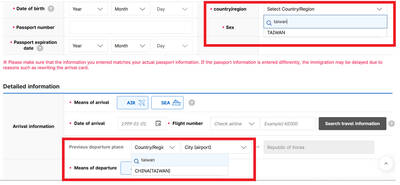
Jason Han says that the e-arrival card spat between South Korea and Taiwan shows that Seoul is signaling adherence to its “one-China” policy, while Taiwan’s response reflects a reciprocal approach. “Attempts to alter the diplomatic status quo often lead to tit-for-tat responses,” the analyst on international affairs tells the Taipei Times, adding that Taiwan may become more cautious in its dealings with South Korea going forward. Taipei has called on Seoul to correct its electronic entry system, which currently lists Taiwan as “China (Taiwan),” warning that reciprocal measures may follow if the wording is not changed before March 31. As of yesterday,
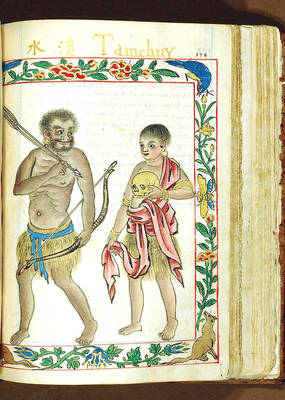
The Portuguese never established a presence on Taiwan, but they must have traded with the indigenous people because later traders reported that the locals referred to parts of deer using Portuguese words. What goods might the Portuguese have offered their indigenous trade partners? Among them must have been slaves, for the Portuguese dealt slaves across Asia. Though we often speak of “Portuguese” ships, imagining them as picturesque vessels manned by pointy-bearded Iberians, in Asia Portuguese shipping between local destinations was crewed by Asian seamen, with a handful of white or Eurasian officers. “Even the great carracks of 1,000-2,000 tons which plied
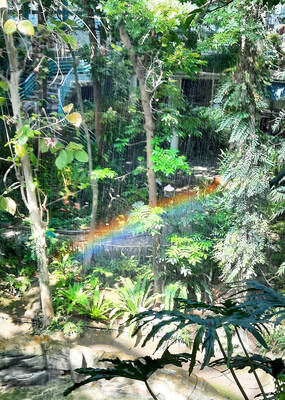
It’s only half the size of its more famous counterpart in Taipei, but the Botanical Garden of the National Museum of Nature Science (NMNS, 國立自然科學博物館植物園) is surely one of urban Taiwan’s most inviting green spaces. Covering 4.5 hectares immediately northeast of the government-run museum in Taichung’s North District (北區), the garden features more than 700 plant species, many of which are labeled in Chinese but not in English. Since its establishment in 1999, the site’s managers have done their best to replicate a number of native ecosystems, dividing the site into eight areas. The name of the Coral Atoll Zone might
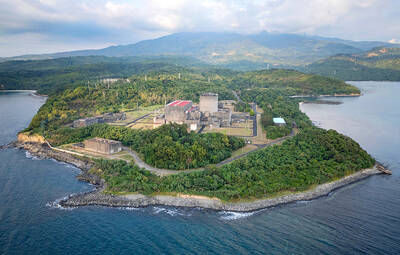
Nuclear power is getting a second look in Southeast Asia as countries prepare to meet surging energy demand as they vie for artificial intelligence-focused data centers. Several Southeast Asian nations are reviving mothballed nuclear plans and setting ambitious targets and nearly half of the region could, if they pursue those goals, have nuclear energy in the 2030s. Even countries without current plans have signaled their interest. Southeast Asia has never produced a single watt of nuclear energy, despite long-held atomic ambitions. But that may soon change as pressure mounts to reduce emissions that contribute to climate change, while meeting growing power needs. The


 RSS
RSS