


Spinach has long been promoted for its healthful benefits. So much so that its flavor, so delightfully bittersweet, is often forgotten about. My youth was dominated by spinach-popping Popeye the Sailor Man and boxes of frozen spinach, a green mush that seemed to have more in common with gardening mulch than with food. Neither made the vegetable appealing. The eagerness with which adults wanted to feed spinach to kids has probably bred a whole generation who find even the thought of the stuff off putting. It is in fact one of nature’s great culinary gifts.
Having endured the hectoring of health professionals and parents about the importance of eating all your spinach to make you strong and healthy, it is darkly ironic that spinach has now been shown to have dark secrets, or at least one dark secret. Last year it was ranked seventh in the Environmental Working Groups dirty dozen list of fruit and veg with the highest levels of pesticide residue. (It is the second highest vegetable, the top taken up with fruit. Apples rank at the very top, but at least those can be peeled.)
Writer Deborah Madison in her Vegetable Literacy goes so far as to say that spinach “is not good for you unless you insist on buying organic or you grow your own sans chemicals.” Fortunately, organic spinach is available from some of the better supermarket chains, and growing it is relatively easy. Most spinach that I’ve seen in Taiwan is sold at a relatively early stage of development, and these tender leaves only want the gentlest and quickest of cooking to bring out their lovely texture and color. And then of course, untainted by pesticide, the vast array of nutritional value is showered forth.
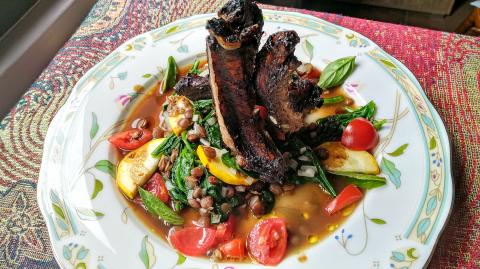
Photo by Ian Bartholomew
Spinach is regarded by many as one of the most nutritionally rich vegetables on the planet and as a member of the chenopod family, which includes amaranth, beets, chard and quinoa, it has many health benefits not readily available from other food families. It is particularly associated with growing strong bones, and is one of the best sources of bone-strengthening elements such as calcium and magnesium, as well as vitamins in the K group. It is also rich in iron, which plays a major role in the function of red blood cells that help transport oxygen around the body, in energy production and DNA synthesis. Given the very long list of vitamins and minerals it contains, and their many salutary effects on the body, it is probably sufficient to say that eating lots of organic spinach will help you live longer and stronger.
Popeye ate his spinach from a can, which is unfortunate since such storage would probably greatly reduce the availability of nutrients. The World’s Healthiest Foods Web site recommends boiling spinach to free up the oxalic acid and allow it to leach out into the water, which is then discarded. Oxalic acid is the element that sometimes makes your tongue feel a bit furry after eating spinach and one reason, other than the monotony about hearing about how good it is for you, that puts so many children off spinach.
The tender leaves that I have found most often sold in Taiwan are so delicate that boiling is unnecessary and tends to reduce the leaves rather quickly to mush. Personally I favor a light saute in oil with a bit of garlic, a process that needs only a couple of minutes. If you are feeling decadent, spinach has the capacity of absorbing vast quantities of butter, and cooking in butter, with the addition of cream, and even eggs, allows the transformation of this leafy green into a dish of satiny smoothness and splendid artery clogging richness.
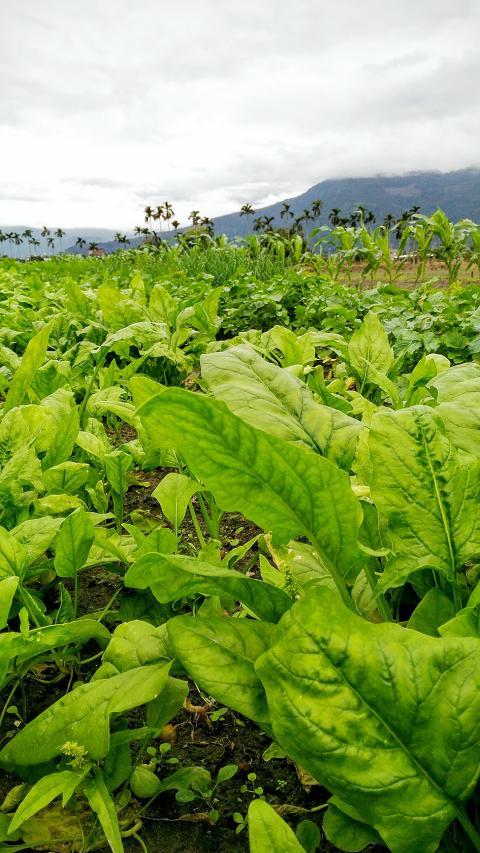
Photo by Ian Bartholomew
Recipe for spicy cocoa ribs with warm green lentil salad
(Serves 6)
This dish has a lovely earthy flavor, the cocoa and spices giving the ribs a lovely warming crust, which complements the earthiness of the green lentils. A good aged balsamic is great for this dish; it doesn’t have to be anything exorbitant, with something from 6 to 10 years more than adequate. For vegetarians, the lentils and other veg can be enjoyed as a filling light meal.
Ingredients
For the ribs
1 rack spare ribs
1/4 cup unsweetened cocoa powder
1/8 cup brown sugar
1/8 cup Dijon mustard
2 tbsp chili flakes
2 tsp ginger powder
2 tsp ground cinnamon
1 tsp ground allspice
1 tsp ground green cardamom
Zest of one lemon
For the salad
1 cup whole green lentils
2 small bunches of spinach
12 cherry tomatoes, quartered, seeds removed
1/2 a small onion, roughly chopped
1 zucchini
4 cloves garlic
1/2 cup vegetable stock
4 tbsp extra virgin olive oil
1 tbsp aged balsamic
Salt and pepper
Directions
For the ribs
1. Wash the ribs and remove the membrane from the inside surface. This facilitates the absorption of flavors while marinating.
2. Mix the cocoa and spices into a paste and rub liberally over the ribs. Wrap in foil and marinate overnight or for up to three days in the refrigerator.
3. Before cooking, take out of the refrigerator and allow to return to room temperature, about 1 to 2 hours.
4. Preheat oven to 190c.
5. Place the ribs in a baking tray and cook on the middle shelf for about 40 minutes, curved side up.
6. Remove from oven and turn up heat to 230c.
7. Place the ribs on a wire wrack inside a baking tray, curve side down and roast for 10 minutes. Flip them over and roast for another 10 minutes.
For the salad
1. Wash the lentils and cook in unsalted water for about 45 minutes or until soft but still holding their shape. Lightly season with salt during the last few minutes of cooking.
2. Drain and set aside.
3. Wash the spinach and take the leaves only. The stems can be used for other applications. (They make a perfectly good stirfry and should not be wasted.)
4. Warm 2 tbsp extra virgin olive oil into a saute pan. Add garlic and cook until fragrant. Add the lentils and stir to coat with oil.
5. Add stock and bring to a boil. Throw in the spinach leaves and toss until the leaves wilt. Remove from heat.
6. Throw in the chopped onion, tomato and zucchini. Stir into the warm spinach mixture. Season with salt and pepper.
7. Divide the mixture onto six plates. Drizzle with more olive oil and balsamic.
Bring it together
1. The rack of ribs can be kept warm in the oven until just before serving.
2. To serve, cut the ribs into individual bones for ease of gnawing.
Ian Bartholomew runs Ian’s Table, a small guesthouse in Hualien. He has lived in Taiwan for many years writing about the food scene and has decided that until you look at farming, you know nothing about the food you eat. He can be contacted at Hualien202@gmail.com.
Ajay Verma, a consultant gastroenterologist at Kettering general hospital in Northamptonshire, says our gut is a “complex machine.” “It is constantly providing us with the nutrition we need, initially to grow and develop, and then for us to survive, thrive and repair from injury and illness.” How can we keep it functioning well? Put simply: “Make sure what you put into it is balanced, and that you clear out its waste products adequately,” Verma says. “In a general gastroenterology clinic, the most common conditions we see are irritable bowel syndrome (IBS), gastroesophageal reflux disease, inflammatory bowel disease and constipation,” says Nisha
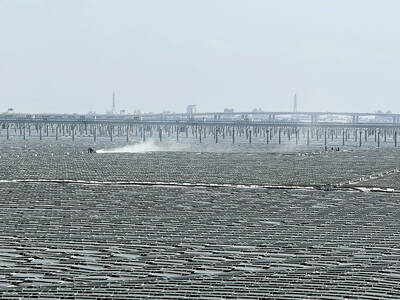
The arithmetic is straightforward and uncomfortable. By the end of 2025, Taiwan had committed itself to a 50-30-20 electricity mix — half natural gas, 30 per cent coal, 20 per cent renewables. The Ministry of Economic Affairs’s (MOEA) own monthly energy reports tell a different story. Natural gas reached 47.8 per cent of generation last year. Coal stood at 35.4 per cent, comfortably above its target ceiling. Renewables came in at 13.1 per cent, well short of the 20 per cent Taipei had pledged a decade earlier. Installed renewable capacity reached roughly half of the 12 gigawatts (GW) the government

Taiwan’s drone exports are taking off, fuelled by the war in Ukraine, as Taiwanese companies seek a stake in the fast-growing global market for unmanned aerial vehicles (UAV). Low-cost drones used for reconnaissance and strikes are in high demand as governments around the world boost defense spending in the face of intensifying conflicts. A relative new player in the increasingly competitive industry, Taiwan’s pitch is to be an “Asian hub” for the production of UAVs and components free of Chinese materials, or “non-red.” That means its UAVs can be up to three times more expensive than their Chinese competitors, like the world’s biggest

There are shadowy cabals plotting to sell out Taiwan to be annexed by China, by invasion if necessary. Fortunately, they are buffoons. In 2019, former Bamboo Union gangster and founder of the China Unification Promotion Party (CUPP), Chang An-le (張安樂, colorfully known as “White Wolf”), led a protest at the Legislative Yuan against comments made by then-premier Su Tseng-chang (蘇貞昌) that in the event of an attack by China, he would never surrender, but would protect the nation by fighting to the end, even if he only had a broom. Chang had party members bring a wooden casket that they


 RSS
RSS