


Taiwan in Time: Jan. 25 to Jan. 31
All had been calm on the Taiwan Strait for about three years since the Taiwan Patrol Force, formed by destroyers from the US Navy’s Seventh Fleet, entered the strait in 1950 to prevent both sides from attacking each other.
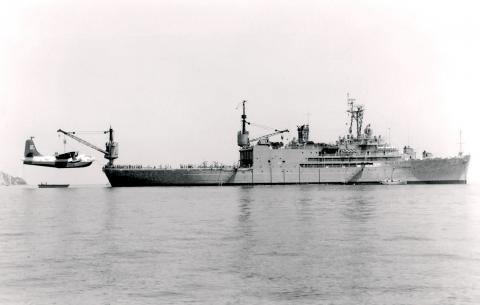
Photo courtesy of Wikimedia Commons
It wasn’t easy patrolling the strait due to rough seas and unstable, harsh weather which often brought strong winds, monsoons and typhoons. The geography of the strait would often exacerbate the storms hitting the destroyers sailing up and down the narrow body of water.
“Since the primary goal was to deter invasion from either side, the patrols often had the appearance of steaming up and down aimlessly,” Bruce Elleman writes in the book High Seas Buffer. “However, success was measured by what did not happen — no news was good news.”
This passage symbolized the US’ position toward the cross-strait conflict between the Chinese Nationalist Party (KMT) and the Chinese Communist Party (CCP), which had just parted ways in 1949 after the Chinese Civil War.
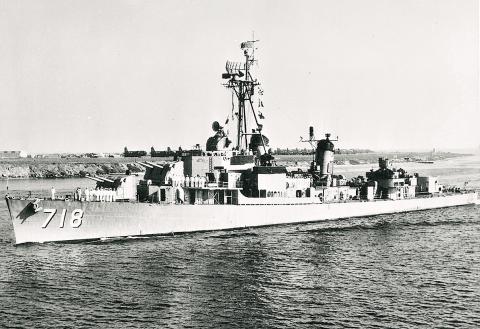
Photo courtesy of Wikimedia Commons
But the no-news period didn’t last long. Hostilities resumed on several islands off China’s coast in 1953 after the lifting of the blockade, leading to the KMT losing two islands, the signing of the Sino-American Mutual Defense Treaty in December and passing of the Formosa Resolution on Jan. 29, 1955, setting the tone of events in decades to come.
Prior to the Korean War in 1950, US President Harry S. Truman had maintained that his country would stay out of any KMT-CCP disputes. But he changed his mind later and decided on the “neutralization of the Taiwan Strait,” not only because of the US’ anti-communist policy but also because of Taiwan’s strategic location in the supply line for US troops in Korea.
“In these circumstances the occupation of Formosa by Communist forces would be a direct threat to the security of the Pacific area and to United States forces performing their lawful and necessary functions in that area. Accordingly, I have ordered the 7th Fleet to prevent any attack on Formosa,” he declared.
Elleman writes that it also carried the purpose of preventing the KMT from any armed activity against China.
As a result, an anticipated invasion of Taiwan never happened, even though the patrol was mostly symbolic and carried little military value.
“Two (destroyer escorts) with two three-inch guns apiece did not constitute much of a military presence, but as a symbol of commitment the patrol definitely had value,” James Barber, a former patrol force member, says.
This naval blockade was lifted in February 1953 near the conclusion of the Korean War, when new president Dwight Eisenhower responded to calls from right-wing politicians to “unleash [KMT leader] Chiang Kai-shek (蔣介石)” on the Chinese communists. Cold war historian Haruka Matsumoto writes in a study that Chiang was “rejuvenated” by the decision and began making concrete plans to retake China.
The KMT launched a failed invasion of one of China’s offshore islands it previously held and later moved large numbers of soldiers to the offshore islands of Kinmen and Matsu while the People’s Republic of China amassed troops of its own. This led to the First Taiwan Strait Crisis, when then-Chinese premier Zhou Enlai (周恩來) called for the liberation of Taiwan in August 1954 and the People’s Liberation Army began bombing Kinmen a month later despite US warnings.
In December, the KMT and the US agreed to the Mutual Defense Treaty, in which only Taiwan and Penghu were mentioned, not the offshore islands. The US’ goal for the treaty, Matsumoto writes, was to prevent any attack from both sides of the Taiwan Strait so it wouldn’t have to directly fight China or possibly the Soviet Union.
Fighting intensified as the communists took Yijiangshan Island (一江山) on Jan. 18, 1955, and launched an attack on Dachen Island (大陳) the next day. The US, having promised to defend Taiwan and Penghu, reportedly saw these offshore islands as of little strategic value and not worth triggering a war with China. It eventually convinced a reluctant Chiang to evacuate the islands, and passed the Formosa Resolution on Jan. 29, which authorized Eisenhower to use force for the “specific purpose of securing and protecting Formosa and the Pescadores against armed attack” as well as “related positions and territories of that area now under friendly hands.”
Like the patrol, Matsumoto writes that this act was meant to intimidate the communists into inaction by officially signifying the US’s willingness to use force.
The patrol and the USS Midway helped with the evacuation of Dachen, which was completed on Feb. 12.
The US further tried to convince Chiang to abandon the remaining islands of Kinmen and Matsu in exchange for extra reinforcements in Taiwan, but Chiang refused. However, with the Soviet Union appearing unwilling to help the CCP in their cause, and Eisenhower making thinly-veiled nuclear threats, the communists stated on April that year that they were willing to negotiate the status of Taiwan, stopping all hostilities on May 1.
Peace would only last for three years, as violence flared up again three years later in the second Taiwan Strait crisis.
Taiwan in Time, a column about Taiwan’s history that is published every Sunday, spotlights important or interesting events around the nation that have anniversaries this week.
Ajay Verma, a consultant gastroenterologist at Kettering general hospital in Northamptonshire, says our gut is a “complex machine.” “It is constantly providing us with the nutrition we need, initially to grow and develop, and then for us to survive, thrive and repair from injury and illness.” How can we keep it functioning well? Put simply: “Make sure what you put into it is balanced, and that you clear out its waste products adequately,” Verma says. “In a general gastroenterology clinic, the most common conditions we see are irritable bowel syndrome (IBS), gastroesophageal reflux disease, inflammatory bowel disease and constipation,” says Nisha
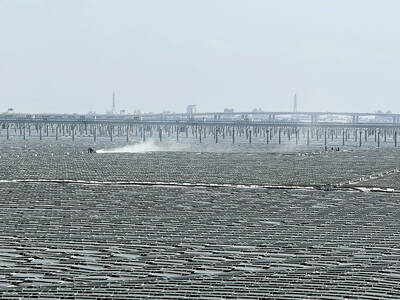
The arithmetic is straightforward and uncomfortable. By the end of 2025, Taiwan had committed itself to a 50-30-20 electricity mix — half natural gas, 30 per cent coal, 20 per cent renewables. The Ministry of Economic Affairs’s (MOEA) own monthly energy reports tell a different story. Natural gas reached 47.8 per cent of generation last year. Coal stood at 35.4 per cent, comfortably above its target ceiling. Renewables came in at 13.1 per cent, well short of the 20 per cent Taipei had pledged a decade earlier. Installed renewable capacity reached roughly half of the 12 gigawatts (GW) the government
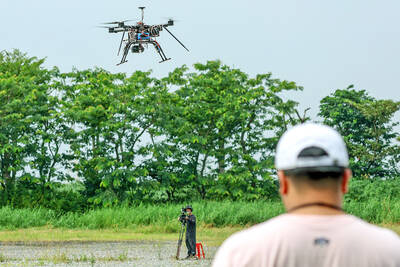
Taiwan’s drone exports are taking off, fuelled by the war in Ukraine, as Taiwanese companies seek a stake in the fast-growing global market for unmanned aerial vehicles (UAV). Low-cost drones used for reconnaissance and strikes are in high demand as governments around the world boost defense spending in the face of intensifying conflicts. A relative new player in the increasingly competitive industry, Taiwan’s pitch is to be an “Asian hub” for the production of UAVs and components free of Chinese materials, or “non-red.” That means its UAVs can be up to three times more expensive than their Chinese competitors, like the world’s biggest
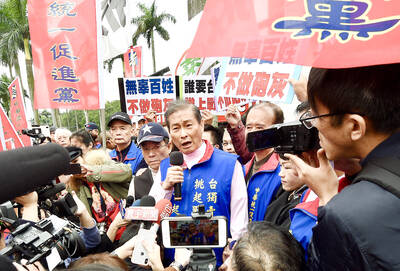
There are shadowy cabals plotting to sell out Taiwan to be annexed by China, by invasion if necessary. Fortunately, they are buffoons. In 2019, former Bamboo Union gangster and founder of the China Unification Promotion Party (CUPP), Chang An-le (張安樂, colorfully known as “White Wolf”), led a protest at the Legislative Yuan against comments made by then-premier Su Tseng-chang (蘇貞昌) that in the event of an attack by China, he would never surrender, but would protect the nation by fighting to the end, even if he only had a broom. Chang had party members bring a wooden casket that they


 RSS
RSS