


From Thailand to Indonesia, Chung She-fong (鍾適芳) has traveled extensively — both for work and pleasure — through Southeast Asia. No matter how different the culture, Chung noticed a common scene of far-stretching rice fields, uniting the diverse cultures of the region through the way people cook, eat and share their rice.
This notion became the main idea behind this year’s Migration Music Festival — Rice River (流浪之歌音樂節—米河流). The world music event, which became biennial in 2013, places a focus on Southeast Asian artists and musicians this year while also including other parts of the world.
Chung is the director of independent record label Trees Music and Art (大大樹音樂圖像), which organizes the festival. She says people in Taiwan often aren’t familiar with the neighboring region.

Photo courtesy of Trees Music and Art
“We are geographically close but culturally distant from each other. It is a great pity since I have gained so many creative nutrients from it,” she adds.
On Saturday and Sunday, music from India, Thailand, Iran and other far-away places will fill the open fields at Cloud Gate Theater’s (雲門劇場) venue in Tamsui, a new move for the music festival which had been previously held in Taipei’s Zhongshan Hall (台北市中山堂).
INDONESIAN RICE GODDESS

Photo courtesy of Trees Music and Art
Among the performers, Indonesian troupe Payung Hitam, or Black Umbrella Theater, hailing from Bandung, West Java, serves as an eloquent example of how Southeast Asian artists draw creative energy from their land and culture. Since its inception in 1982, Black Umbrella has been internationally known for its social and political criticism. They often utilize elements from traditional rituals, myths and folklore. Their performances are devoid of text and dialogue, expressing ideas and emotions through sounds, voices, dance and bodily movements and using instruments handmade from natural materials such as stones, bamboos and straws.
To Black Umbrella, the human body is an integral part of the land and tradition.
“We must know our own bodies and other people’s bodies. This way, we might be able to keep the traditional spirit and protect the environment,” troupe director Rachman Sabur told the Taipei Times.

Photo courtesy of Trees Music and Art
Black Umbrella is preparing a brand-new piece for its Taiwan debut, inspired by the Rice Goddess of Indonesia. The performers visited Yilan to learn about the environment and culture while collecting natural materials to make their instruments. They were confused, however, about why the bamboo and straw they wanted had to be ordered and purchased.
“Working with them makes us realize that we are much farther away from the nature than we thought we were,” Chung says.
WORKING CLASS THAI FOLK

Photo courtesy of Trees Music and Art
Festival organizers have transformed Cloud Gate’s green fields into a bazaar, featuring a food market selling a variety of rice delicacies ranging from rice cakes (飯糰) to rice wine. The Bow to Land Farmers Market (彎腰市集) will be present with plenty of environmental friendly and socially responsible products.
Several workshops will take place to introduce rarely seen musical instruments such as daf, a type of Persian frame drum, and nyckelharpa, a traditional keyed fiddle from Sweden.
One of the most peculiar spots at the bazaar will be the bar inspired by Rain Tree, an establishment in Bangkok frequented by manual laborers and seasonal workers from the northeastern region of Isan. Thai folk singer Aing Tinnakorn Uthaisaeng will perform abroad the first time, crooning the tunes of morlam, or traditional Isan folk.
Chung says workers from Isan, who form the bulk of the working class in Bangkok, often visit places like Rain Tree out of nostalgia, while other groups may avoid them.
“The lyrics often reflect the cruel social reality and the hardship of everyday life faced by the working class,” she adds.
CROSSING BORDERS
Meanwhile, City Borders, a growing musical project inspired by the documentary From Border to Border, features five musicians playing together for some cross-cultural, genre-defying fun. The group consists of Taiwanese pipa (a Chinese stringed instrument) artist Chung Yu-feng (鍾玉鳳), blues guitarist David Chen (陳思銘), German composer and accordionist Wolfgang Obrecht, Iranian percussionist Reza Samani and Indian violinist Harpreet Bansal.
Obrecht says the driving force behind the project is the gypsy or nomadic way of life.
“The gypsies are great musicians. They play with small instruments, and the music is all about journeys and stories of the traveling people,” Obrecht says.“They play everything by heart. I think you can only play great music if you don’t read scores at the same time.”
Samani, Bansal and Obrecht will also perform solo outside of the group.
Festivities continue after this weekend with a crossover performance featuring Swedish folk duo Pettersson & Fredriksson, Chung (the pipa player) and Chen (the blues guitarist) on Oct. 2 at Zhongshan Hall. On Oct. 4, Obrecht will join the four for a show at Chiayi Performing Arts Center (嘉義縣表演藝術中心).
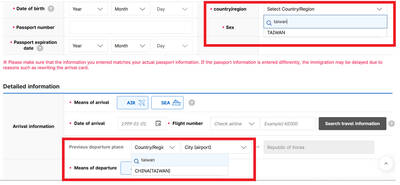
Jason Han says that the e-arrival card spat between South Korea and Taiwan shows that Seoul is signaling adherence to its “one-China” policy, while Taiwan’s response reflects a reciprocal approach. “Attempts to alter the diplomatic status quo often lead to tit-for-tat responses,” the analyst on international affairs tells the Taipei Times, adding that Taiwan may become more cautious in its dealings with South Korea going forward. Taipei has called on Seoul to correct its electronic entry system, which currently lists Taiwan as “China (Taiwan),” warning that reciprocal measures may follow if the wording is not changed before March 31. As of yesterday,

The Portuguese never established a presence on Taiwan, but they must have traded with the indigenous people because later traders reported that the locals referred to parts of deer using Portuguese words. What goods might the Portuguese have offered their indigenous trade partners? Among them must have been slaves, for the Portuguese dealt slaves across Asia. Though we often speak of “Portuguese” ships, imagining them as picturesque vessels manned by pointy-bearded Iberians, in Asia Portuguese shipping between local destinations was crewed by Asian seamen, with a handful of white or Eurasian officers. “Even the great carracks of 1,000-2,000 tons which plied
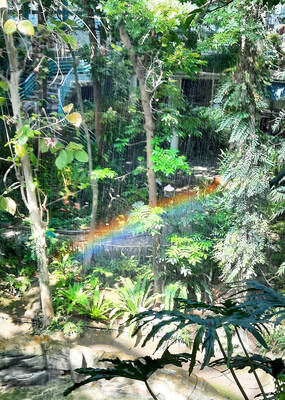
It’s only half the size of its more famous counterpart in Taipei, but the Botanical Garden of the National Museum of Nature Science (NMNS, 國立自然科學博物館植物園) is surely one of urban Taiwan’s most inviting green spaces. Covering 4.5 hectares immediately northeast of the government-run museum in Taichung’s North District (北區), the garden features more than 700 plant species, many of which are labeled in Chinese but not in English. Since its establishment in 1999, the site’s managers have done their best to replicate a number of native ecosystems, dividing the site into eight areas. The name of the Coral Atoll Zone might
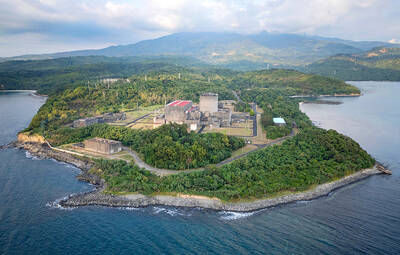
Nuclear power is getting a second look in Southeast Asia as countries prepare to meet surging energy demand as they vie for artificial intelligence-focused data centers. Several Southeast Asian nations are reviving mothballed nuclear plans and setting ambitious targets and nearly half of the region could, if they pursue those goals, have nuclear energy in the 2030s. Even countries without current plans have signaled their interest. Southeast Asia has never produced a single watt of nuclear energy, despite long-held atomic ambitions. But that may soon change as pressure mounts to reduce emissions that contribute to climate change, while meeting growing power needs. The


 RSS
RSS