


Each time a customer pulled open the glass door at the nail shop in Queens, where Nancy Otavalo worked, a cheerful chorus would ring out from where she sat with her fellow manicurists: “Pick a color!”
Otavalo, 39, an Ecuadorean immigrant, was usually stationed at the first table. She trimmed and buffed and chatted about her quick-witted toddler, or her strapping 9-year-old boy. But she never spoke of the one lost last year in a miscarriage.
At the second table was Monica Rocano, 30, who sometimes brought a daughter to visit. But clients had never met her 3-year-old son, Matthew. People thought Matthew was shy, but in fact he has barely learned how to speak and can walk only with great difficulty.
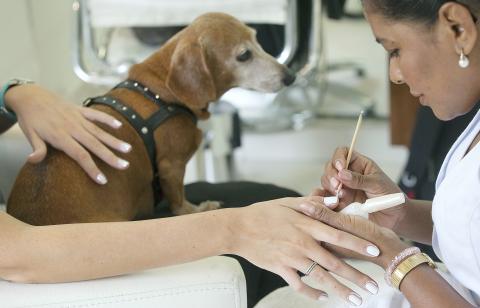
Photo: AP
A chair down from Rocano was a quieter manicurist. In her idle moments, she surfed the Internet on her phone, seeking something that might explain the miscarriage she had last year. Or the four others that came before.
Similar stories of illness and tragedy abound at nail salons, of children born slow or “special,” of miscarriages and cancers, of coughs that will not go away and painful skin afflictions. The stories have become so common that older manicurists warn women of child-bearing age away from the business, with its potent brew of polishes, solvents, hardeners and glues that nail workers handle daily.
A growing body of medical research shows a link between the chemicals that make nail and beauty products useful and serious health problems.
The prevalence of respiratory and skin ailments among nail salon workers is widely acknowledged. More uncertain, however, is their risk for direr medical issues. Some of the chemicals in nail products are known to cause cancer; others have been linked to abnormal fetal development, miscarriages and other harm to reproductive health.
But firm conclusions are elusive, partly because the research is so limited. Very few studies have focused on nail salon workers. Little is known about the true extent to which they are exposed to hazardous chemicals, what the accumulated effect is over time and whether a connection can actually be drawn to their health.
OUTDATED LAW
The federal law that regulates cosmetics safety, which is more than 75 years old, does not require companies to share safety information with the Food and Drug Administration. The law bans ingredients harmful to users, but it includes no provisions for the agency to evaluate the effects of the chemicals before they are put on shelves. Industry lobbyists have fought tougher monitoring requirements.
Industry officials say their products contain minuscule amounts of the chemicals identified as potentially hazardous and pose no threat.
“What I hear are insinuations based on ‘linked to,’” said Doug Schoon, co-chairman of the Professional Beauty Association’s Nail Manufacturers Council on Safety. “When we talk about nail polish, there’s no evidence of harm.”
Health advocates and officials disagree, pointing to the accumulated evidence.
“We know that a lot of the chemicals are very dangerous,” said David Michaels, the assistant labor secretary who heads the Occupational Safety and Health Administration, which oversees workplace safety. “We don’t need to see the effect in nail salon workers to know that they are dangerous to the workers.”
‘WAS IT WORTH IT?’
In the nail salon she owned in Brooklyn, Eugenia Colon spent years molding sometimes 30 sets of nails a day in a haze of acrylic powder, ignoring a persistent cough that grew more pronounced over time. She was found to have sarcoidosis, an inflammatory disease, in her lungs.
The doctor who diagnosed her condition asked Colon what she did for a living. When she told him, he was frank: As she beautified other women, she inhaled clouds of acrylic and other dust, tiny particles that gouged the soft tissue of her lungs.
“We made money off it, but was it worth it?” said Colon, 52, now an aesthetician in a Manhattan spa. “It came with a price.”
In a way, Rocano, one of the manicurists in the Queens salon, felt herself lucky. Her colleagues seated on either side of her had each lost a pregnancy last year, hoped-for babies whom they separately described exactly the same way: “Like losing a dream.”
She, however, has her toddler, Matthew.
A dark-haired bundle with amber skin when he was born, Matthew was an infant laden with his mother’s hopes. Holding him in her arms, she was reminded of the daughter she had left behind in Ecuador and has not seen in more than six years. This time, she felt, she could do right by her child.
Yet as he grew, something seemed off. His legs were weak. By age 3 he still could not say his name. In visits to her pediatrician, she learned that Matthew was delayed on almost every measure, both physically and cognitively.
CALL FOR STRICTER REGULATION
In scientific circles, the three chemicals in nail products that are associated with the most serious health issues are dibutyl phthalate, toluene and formaldehyde. They are known as the “toxic trio” among worker advocates.
Cosmetics industry officials say linking the chemicals to manicurists’ health complaints amounts to faulty science.
Dibutyl phthalate, toluene and formaldehyde “have been found to be safe under current conditions of use in the United States,” said Lisa Powers, a spokeswoman for the Personal Care Products Council, the main trade association and lobbying group for the cosmetics industry.
The regulation of chemicals in nail products is dictated by the Federal Food, Drug and Cosmetic Act of 1938. The responsibility for evaluating the safety of the chemicals as they are used in cosmetics is left with the companies themselves.
There have been efforts in recent years to overhaul the 1938 law and more strictly regulate cosmetic chemicals, but none made headway in the face of industry resistance. Since 2013, the products council, just one of several industry trade groups, has poured nearly US$2 million on its own into lobbying Congress.
The Occupational Safety and Health Administration (OSHA) is the federal agency that sets chemical exposure limits in workplaces. The studies that have examined the chemical exposure levels for manicurists have found them to be well below these standards. Health advocates say the safety administration’s standards are badly out of date and flawed.
Even Michaels, head of the safety administration, said his agency’s standards needed revision. He said workers “can be exposed to levels that are legal according to OSHA but are still dangerous.”
GETTING BY
On her days off from the salon in Queens, Otavalo ran for a time an ad hoc day care center at her home a few blocks away with her sister, another manicurist. The sisters would pick up salon workers’ children after school for a fee, entertaining them in the basement apartment the sisters shared with their families.
Matthew, her colleague’s son who can barely speak, got special treatment, spending time curled on the gleaming black leather couch — bought with tips — that is the centerpiece of her home.
After Otavalo miscarried last year, she lay for hours on the same black leather couch, in silence, the lights darkened, unable to summon the willpower to get up.
A week after a procedure to remove the fetus, she rose, put on the lavish makeup her sister says makes her feel confident and went back to work at her manicure table.
Clients who stopped by for their weekly manicures knew nothing about what happened; everything appeared the same.
Except every so often, after Otavalo had painted the last stroke of top coat on a customer’s hand, she scraped back her chair and walked to the front of the shop. She pulled open the salon’s glass door to stand in the breeze for a while.
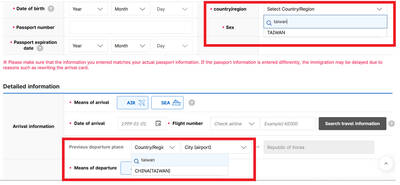
Jason Han says that the e-arrival card spat between South Korea and Taiwan shows that Seoul is signaling adherence to its “one-China” policy, while Taiwan’s response reflects a reciprocal approach. “Attempts to alter the diplomatic status quo often lead to tit-for-tat responses,” the analyst on international affairs tells the Taipei Times, adding that Taiwan may become more cautious in its dealings with South Korea going forward. Taipei has called on Seoul to correct its electronic entry system, which currently lists Taiwan as “China (Taiwan),” warning that reciprocal measures may follow if the wording is not changed before March 31. As of yesterday,
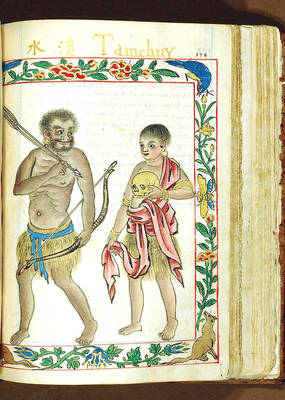
The Portuguese never established a presence on Taiwan, but they must have traded with the indigenous people because later traders reported that the locals referred to parts of deer using Portuguese words. What goods might the Portuguese have offered their indigenous trade partners? Among them must have been slaves, for the Portuguese dealt slaves across Asia. Though we often speak of “Portuguese” ships, imagining them as picturesque vessels manned by pointy-bearded Iberians, in Asia Portuguese shipping between local destinations was crewed by Asian seamen, with a handful of white or Eurasian officers. “Even the great carracks of 1,000-2,000 tons which plied

It’s only half the size of its more famous counterpart in Taipei, but the Botanical Garden of the National Museum of Nature Science (NMNS, 國立自然科學博物館植物園) is surely one of urban Taiwan’s most inviting green spaces. Covering 4.5 hectares immediately northeast of the government-run museum in Taichung’s North District (北區), the garden features more than 700 plant species, many of which are labeled in Chinese but not in English. Since its establishment in 1999, the site’s managers have done their best to replicate a number of native ecosystems, dividing the site into eight areas. The name of the Coral Atoll Zone might
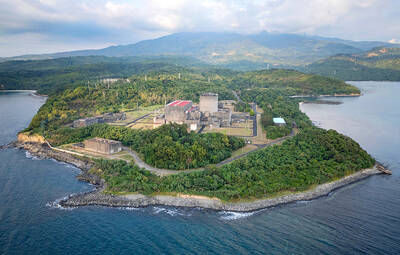
Nuclear power is getting a second look in Southeast Asia as countries prepare to meet surging energy demand as they vie for artificial intelligence-focused data centers. Several Southeast Asian nations are reviving mothballed nuclear plans and setting ambitious targets and nearly half of the region could, if they pursue those goals, have nuclear energy in the 2030s. Even countries without current plans have signaled their interest. Southeast Asia has never produced a single watt of nuclear energy, despite long-held atomic ambitions. But that may soon change as pressure mounts to reduce emissions that contribute to climate change, while meeting growing power needs. The


 RSS
RSS