


The 2013 film Beyond Beauty: Taiwan From Above (看見台灣) changed Angela Yeh’s (葉怡辰) life. The somber documentary about Taiwan’s ecology and over-development was a wake up call and a homecoming siren for Yeh. It inspired her to leave her job in Washington to work for a green foundation in Taiwan.
Yeh told the Taipei Times how she noticed in the ending credits that one of the sponsors was Delta Electronics Foundation in Taipei.
“It was at that moment that I decided to move back to Taiwan, and to hopefully contribute in some way to this island that I call home,” she said.
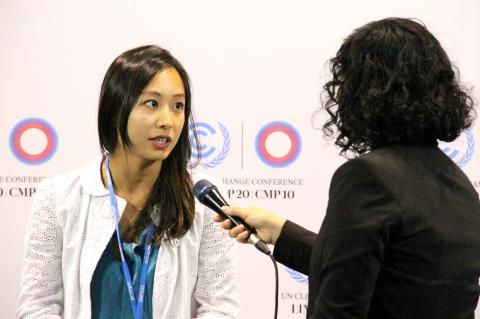
Photo courtesy of Angela Yeh
Yeh, a Taipei native, studied animal science at National Taiwan University, after which she went on to pursue graduate degrees at Yale and Oxford. Upon watching the film, she quit her stint at the US Secretary of Commerce and returned to Taipei to take a job with the Delta Electronics Foundation, the charitable arm of Taiwan’s largest power supply manufacturer which focuses on climate and energy, green buildings and environmental education.
Yeh currently serves as the climate and energy officer at the foundation. Having worked there for almost a year, Yeh keeps herself busy with writing op-eds for newspapers, as well as for the foundation’s low-carbon lifestyle blog.
One of her growing concerns is water shortages in Taiwan. Several cities have issued water rationing measures recently, and Internet searches show that these places are not alone in the fight against water shortages, she said.
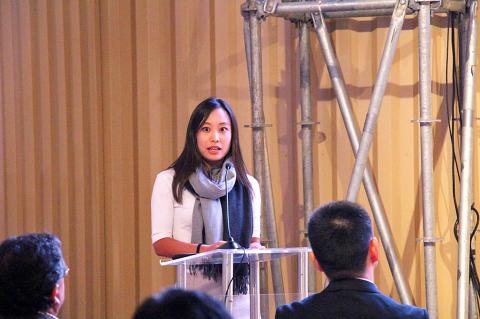
Photo courtesy of Angela Yeh
Yeh is optimistic in her fight against global warming.
“I am hopeful, especially given all the momentum around climate change in the world,” she said.
Yeh added that she plans to attend the UN Climate Change Conference in Paris later this year. Delta Electronics Foundation will also be hosting a number of events to raise environmental awareness.
According to Yeh, many scientists and academics around the world have come to the conclusion that climate change is not a technological or an economic problem, but a behavioral one. In an effort to raise public awareness, the foundation hosted an exhibition on water scarcity issues in Taipei, with the hope that it would ultimately affect behavioral change.
“It is a matter of raising awareness, and making the issues personal,” Yeh said. “As human beings, we tend to care more when we are personally affected.”
She added, “I believe that the young generation in Taiwan is thirsty for knowledge and thirsty for opportunities to make a difference. Making a difference for the environment might be a good place to start.”
Tips for going green:
According to Yeh, there are several steps people can do to conserve water:
■ Bath water is one of the items in Taiwan that consumes the most water-per-capita, so use less water in the bath and take shorter showers
■ Refrain from flushing home toilets more than you have to
■ Don’t leave the water running while shampooing your hair or brushing your teeth
■ Try to collect rain water to water your household plants
■ Use crops that need less water
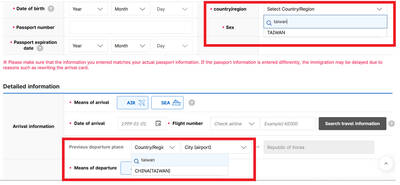
Jason Han says that the e-arrival card spat between South Korea and Taiwan shows that Seoul is signaling adherence to its “one-China” policy, while Taiwan’s response reflects a reciprocal approach. “Attempts to alter the diplomatic status quo often lead to tit-for-tat responses,” the analyst on international affairs tells the Taipei Times, adding that Taiwan may become more cautious in its dealings with South Korea going forward. Taipei has called on Seoul to correct its electronic entry system, which currently lists Taiwan as “China (Taiwan),” warning that reciprocal measures may follow if the wording is not changed before March 31. As of yesterday,

The Portuguese never established a presence on Taiwan, but they must have traded with the indigenous people because later traders reported that the locals referred to parts of deer using Portuguese words. What goods might the Portuguese have offered their indigenous trade partners? Among them must have been slaves, for the Portuguese dealt slaves across Asia. Though we often speak of “Portuguese” ships, imagining them as picturesque vessels manned by pointy-bearded Iberians, in Asia Portuguese shipping between local destinations was crewed by Asian seamen, with a handful of white or Eurasian officers. “Even the great carracks of 1,000-2,000 tons which plied
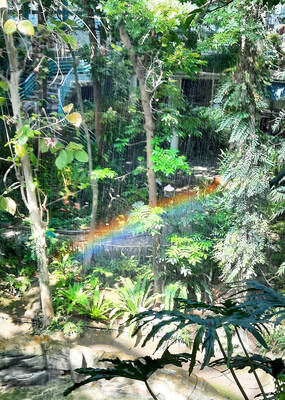
It’s only half the size of its more famous counterpart in Taipei, but the Botanical Garden of the National Museum of Nature Science (NMNS, 國立自然科學博物館植物園) is surely one of urban Taiwan’s most inviting green spaces. Covering 4.5 hectares immediately northeast of the government-run museum in Taichung’s North District (北區), the garden features more than 700 plant species, many of which are labeled in Chinese but not in English. Since its establishment in 1999, the site’s managers have done their best to replicate a number of native ecosystems, dividing the site into eight areas. The name of the Coral Atoll Zone might
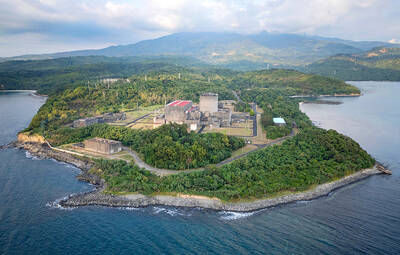
Nuclear power is getting a second look in Southeast Asia as countries prepare to meet surging energy demand as they vie for artificial intelligence-focused data centers. Several Southeast Asian nations are reviving mothballed nuclear plans and setting ambitious targets and nearly half of the region could, if they pursue those goals, have nuclear energy in the 2030s. Even countries without current plans have signaled their interest. Southeast Asia has never produced a single watt of nuclear energy, despite long-held atomic ambitions. But that may soon change as pressure mounts to reduce emissions that contribute to climate change, while meeting growing power needs. The


 RSS
RSS