


Late last month, China began flooding US Web sites with a barrage of Internet traffic in an apparent effort to take out services that allow China’s Internet users to view Web sites otherwise blocked in the country.
Initial security reports suggested that China had crippled the services by exploiting its own Internet filter — known as the Great Firewall — to redirect overwhelming amounts of traffic to its targets. Now, researchers at the University of California, Berkeley, and the University of Toronto say China did not use the Great Firewall after all, but rather a powerful new weapon that they are calling the Great Cannon.
The Great Cannon, the researchers said in a report published Friday, allows China to intercept foreign Web traffic as it flows to Chinese Web sites, inject malicious code and repurpose the traffic as Beijing sees fit.

Photo: Reuters/Jason Lee
The system was used, they said, to intercept Web and advertising traffic intended for Baidu — China’s biggest search engine company — and fire it at GitHub, a popular site for programmers, and GreatFire.org, a nonprofit that runs mirror images of sites that are blocked inside China. The attacks against the services continued on Thursday, the researchers said, even though both sites appeared to be operating normally.
But the researchers suggested that the system could have more powerful capabilities. With a few tweaks, the Great Cannon could be used to spy on anyone who happens to fetch content hosted on a Chinese computer, even by visiting a non-Chinese Web site that contains Chinese advertising content.
“The operational deployment of the Great Cannon represents a significant escalation in state-level information control,” the researchers said in their report. It is, they said, “the normalization of widespread and public use of an attack tool to enforce censorship.”
The researchers, who have previously done extensive research into government surveillance tools, found that while the infrastructure and code for the attacks bear similarities to the Great Firewall, the attacks came from a separate device. The device has the ability not only to snoop on Internet traffic but also to alter the traffic and direct it — on a giant scale — to any Web site, in what is called a “man in the middle attack.”
China’s new Internet weapon, the report says, is similar to one developed and used by the National Security Agency and its British counterpart, GCHQ, a system outlined in classified documents leaked by Edward Snowden, the former US intelligence contractor. The US system, according to the documents, which were published by The Intercept, can deploy a system of programs that can intercept Web traffic on a mass scale and redirect it to a site of their choosing. The NSA and its partners appear to use the programs for targeted surveillance, whereas China appears to use the Great Cannon for an aggressive form of censorship.
The similarities of the programs may put US officials on awkward footing, the researchers argue in their report. “This precedent will make it difficult for Western governments to credibly complain about others utilizing similar techniques,” they write.
Still, the Chinese program illustrates how far officials in Beijing are willing to go to censor Internet content they deem hostile. “This is just one part of President Xi Jinping’s (習近平) push to gain tighter control over the Internet and remove any challenges to the party,” said James Lewis, a cybersecurity expert at the Center for Strategic Studies in Washington.
Beijing continues to increase its censorship efforts under its State Internet Information Office, an office created under Xi to gain tighter control over the Internet within the country and to clamp down on online activism. In a series of recent statements, Lu Wei (魯煒), China’s Internet czar, has called on the international community to respect China’s Internet policies.
Beijing has recently said that it plans to help Chinese Internet companies extend their influence and customer base abroad. At a meeting of the National People’s Congress in China last month, Premier Li Keqiang (李克強) announced a new “Internet Plus” action plan to “encourage the healthy development of e-commerce, industrial networks and Internet banking and to guide Internet-based companies to increase their presence in the international market.”
Yet the latest censorship offensive could become a major problem for Chinese companies looking to expand overseas. “They know one of their biggest obstacles is the perception that they are tools of the Chinese government,” Lewis said. “This is going to hurt Baidu’s chances of becoming a global competitor.”
— Additional reporting by Paul Mozur

If one asks Taiwanese why house prices are so high or why the nation is so built up or why certain policies cannot be carried out, one common answer is that “Taiwan is too small.” This is actually true, though not in the way people think. The National Property Administration (NPA), responsible for tracking and managing the government’s real estate assets, maintains statistics on how much land the government owns. As of the end of last year, land for official use constituted 293,655 hectares, for public use 1,732,513 hectares, for non-public use 216,972 hectares and for state enterprises 34 hectares, yielding

The small platform at Duoliang Train Station in Taitung County’s Taimali Township (太麻里) served villagers from 1992 to 2006, but was eventually shut down due to lack of use. Just 10 years later, the abandoned train station had become widely known as the most beautiful station in Taiwan, and visitors were so frequent that the village had to start restricting traffic. Nowadays, Duoliang Village (多良) is known as a bit of a tourist trap, with a mandatory, albeit modest, admission fee of NT$10 giving access to a crowded lane of vendors with a mediocre view of the ocean and the trains

For many people, Bilingual Nation 2030 begins and ends in the classroom. Since the policy was launched in 2018, the debate has centered on students, teachers and the pressure placed on schools. Yet the policy was never solely about English education. The government’s official plan also calls for bilingualization in Taiwan’s government services, laws and regulations, and living environment. The goal is to make Taiwan more inclusive and accessible to international enterprises and talent and better prepared for global economic and trade conditions. After eight years, that grand vision is due for a pulse check. RULES THAT CAN BE READ For Harper Chen (陳虹宇), an adviser
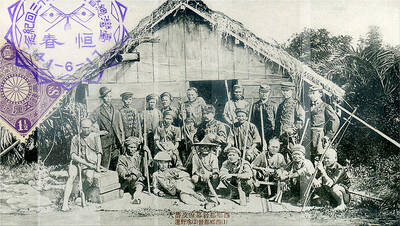
Traditionally, indigenous people in Taiwan’s mountains practice swidden cultivation, or “slash and burn” agriculture, a practice common in human history. According to a 2016 research article in the International Journal of Environmental Sustainability, among the Atayal people, this began with a search for suitable forested slopeland. The trees are burnt for fertilizer and the land cleared of stones. The stones and wood are then piled up to make fences, while both dead and standing trees are retained on the plot. The fences are used to grow climbing crops like squash and beans. The plot itself supports farming for three years.


 RSS
RSS