


For Asia’s aviation industry, the growing pains have just begun.
A year of disasters, the disappearance of Flight 370 and financial turbulence highlight the challenges confronting the world’s biggest air travel market, where governments, regulators and airlines are struggling to keep up after a decade of astonishing growth.
A UN agency’s warning about airline safety in Thailand, one of the world’s top tourist destinations, is just the latest sign of ferment in the industry.
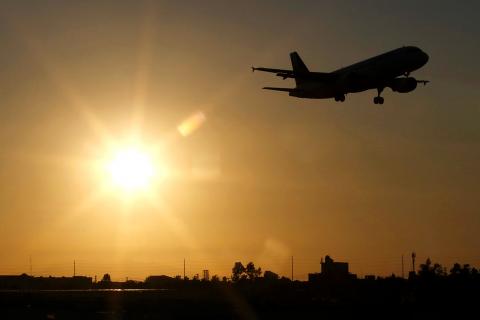
Photo: EPA
The boom has been driven by the region’s explosive economic growth and market liberalizations that have allowed dozens of new discount carriers to flourish, turning the airline business on its head.
The strains are also showing in recurring pilot shortages and shortcomings in air traffic control systems and airport infrastructure that countries are scrambling to upgrade, especially in big Southeast Asian nations such as Indonesia.
‘UNCHARTED WATERS’
“We’re in uncharted waters,” said Desmond Ross, principal at DRA International aviation consultants and former head of the Pacific Aviation Safety Office, which oversees airline safety for South Pacific islands. “I don’t think the world has seen this sort of growth before.”
A third of airplane accidents in the Asia-Pacific region from 2008 to 2012 “involved deficiencies in regulatory oversight,” the International Civil Aviation Organization said in a report this year. Another 27 percent involved “deficiencies in safety management.”
Meanwhile, the agency’s recent audit of Thailand has produced disquieting revelations about what lies below the surface of a country that has marketed itself to the world as a safe and welcoming destination.
ISSUES OF SAFETY
The agency informed governments in March of “significant safety concerns,” prompting several Asian nations to step up inspections of Thai airlines or block them from launching new flights and modifying schedules.
The leader of Thailand’s military government, which ousted its civilian predecessor in a coup last year, blamed years of neglect for allowing problems to accumulate to a critical mass. He said the civil aviation department has only 12 inspectors, a figure unchanged for years despite huge growth in tourism.
The dictator has vowed to use his authoritarian powers to overhaul aviation, but it’s unclear whether sweeping changes can be implemented fast enough to avoid a damaging downgrade of Thailand’s safety rating.
Ross said Thailand’s problems are not unique and stem from the “superfast expansion that’s been taking place over the last 10 years.” Aside from hurting tourism, the ICAO warning could also prompt insurance companies to raise their rates for airlines operating in Thailand.
AIR TRAVEL EXPLODES
Passenger numbers in Asia-Pacific have risen by a third over the past five years to 1.1 billion, and the region now accounts for 33 percent of global air passenger traffic, according to the International Air Transport Association. That proportion is forecast to grow to 42 percent within the next two decades as an extra 1.8 billion passengers take to the skies.
Another big source of concern is Indonesia, where in December an AirAsia jet carrying 162 people plummeted into the sea as it ran into stormy weather on its way from Surabaya to Singapore.
The disaster, which was the first ever fatal plane crash for the popular budget operator, was one of five suffered by Asian carriers in a 12-month span. The flight itself was unauthorized by Indonesian authorities, showing up laxness in its aviation oversight.
Flying is often the easiest travel option in Indonesia, a sprawling archipelago of 17,000 islands that’s home to 250 million people.
FALLING BEHIND
IATA is worried that regulations and infrastructure aren’t being updated fast enough to keep pace with Indonesia’s expansion. The Southeast Asian country’s air travel market is forecast to triple over the next 20 years to 270 million passengers, making it the world’s sixth biggest.
“I am very concerned about safety in Indonesia,” IATA director general and former Cathay Pacific Airways CEO Tony Tyler said in a speech to Indonesian aviation officials in Jakarta last month. He noted the country has had at least one crash in which a plane has been written off every year since 2010.
“There is a safety problem here,” he said. “It’s not going to solve itself.”
Tyler pointed out that the country needs to upgrade its air traffic management system to cope with the rising number of aircraft in the skies and future increases. Airlines have more than 800 new aircraft on order.
Despite the high profile of airline disasters last year, stemming in part from the double Malaysia Airlines tragedies, the airline industry asserts it was a relatively safe year for flying.
The total of 12 fatal accidents was below the five-year average of 19 and so called “hull losses,” the write-off of airplanes from accidents fatal or nonfatal, was its lowest ever. From another perspective, however, it was a particularly tragic year. Including Flight 17 shot down over Ukraine which isn’t included in the industry’s accident tally, 939 people were killed in planes last year compared with 210 the previous year.
But what experts say is most relevant is whether safety will be compromised as air travel expands relentlessly in a region where countries range from advanced to among the world’s poorest with huge differences in capacity to manage the safety of their air space.
“I think we’re at a turning point where we either maintain this relatively good level of safety” in Asia “or it declines,” said Ross.
LOW-COST AIRLINES
Discount carriers account for about 60 percent of Asia’s passenger capacity, up from nearly nothing a decade ago, according to CAPA-Center For Aviation. Asian airlines have about 1,600 aircraft on order, more than are in operation, according to the group, including more than 500 ordered by Indonesia’s Lion Air, which is barred from flying into European Union airspace.
The surge in jet numbers is also choking major air corridors and taxing air traffic controllers. The recent disasters have led to renewed calls for reforms to unify fragmented safety regulations in Southeast Asia.
The official report on the disappearance of Malaysia Airlines Flight 370 released in March illustrated the need to bring standards in line, said Shukor Yusof, founder of Malaysia-based aviation research firm Endau Analytics.
The transcript of the chatter reveals confusion between air traffic controllers in two countries as they struggle over several hours to deal with the plane’s unexpected disappearance. At one point five hours after the last transmission from the Boeing 777, Malaysian and Vietnamese air traffic controllers misunderstand each other as they try to establish if search and rescue operations have been launched.
The transcript shows how the miscommunications “contributed to the chaos,” said Shukor. There’s now “more urgency” to have a single Southeast Asian safety framework given that so many more airplanes are crossing between national air control zones.
“The airspace is getting congested,” he said.

For many people, Bilingual Nation 2030 begins and ends in the classroom. Since the policy was launched in 2018, the debate has centered on students, teachers and the pressure placed on schools. Yet the policy was never solely about English education. The government’s official plan also calls for bilingualization in Taiwan’s government services, laws and regulations, and living environment. The goal is to make Taiwan more inclusive and accessible to international enterprises and talent and better prepared for global economic and trade conditions. After eight years, that grand vision is due for a pulse check. RULES THAT CAN BE READ For Harper Chen (陳虹宇), an adviser
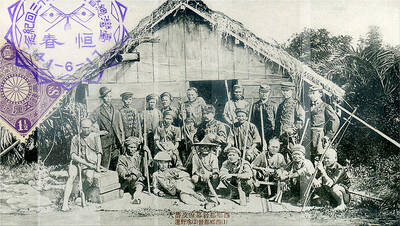
Traditionally, indigenous people in Taiwan’s mountains practice swidden cultivation, or “slash and burn” agriculture, a practice common in human history. According to a 2016 research article in the International Journal of Environmental Sustainability, among the Atayal people, this began with a search for suitable forested slopeland. The trees are burnt for fertilizer and the land cleared of stones. The stones and wood are then piled up to make fences, while both dead and standing trees are retained on the plot. The fences are used to grow climbing crops like squash and beans. The plot itself supports farming for three years.
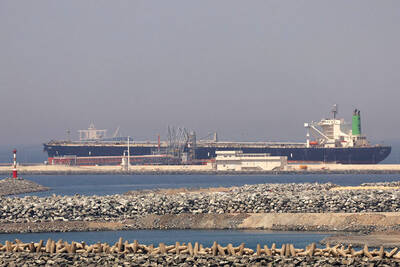
The breakwater stretches out to sea from the sprawling Kaohsiung port in southern Taiwan. Normally, it’s crowded with massive tankers ferrying liquefied natural gas from Qatar to be stored in the bulbous white tanks that dot the shoreline. These are not normal times, though, and not a single shipment from Qatar has docked at the Yongan terminal since early March after the Strait of Hormuz was shuttered. The suspension has provided a realistic preview of a potential Chinese blockade, a move that would throttle an economy anchored by the world’s most advanced and power-hungry semiconductor industry. It is a stark reminder of

May 4 to May 10 It was once said that if you hadn’t performed at the Sapphire Grand Cabaret (藍寶石大歌廳), you couldn’t truly be considered a star. Taking the stage at the legendary Kaohsiung club was more than just a concert. Performers were expected to entertain in every sense, wearing outlandish or revealing costumes and staying quick on their feet as sharp-tongued, over-the-top hosts asked questions and delivered jokes that would be seen as vulgar, even offensive, by today’s standards. Opening in May 1967 during a period of strict political and social control, Sapphire offered a rare outlet for audiences in


 RSS
RSS