


Leslie Yalof Garfield, 54, a professor at Pace Law School, faced an empty nest as her last child headed off to college. Ilona Shinkar, 42, is a former French teacher living in Larchmont, New York, with three children at home.
Shinkar wanted to find a new career. Garfield wanted to pursue a new challenge. So both decided to become life coaches.
Cue eye rolls. The term life coach has evolved over the last few decades from a curiosity to a punch line. Nine years ago on The Daily Show, Demetri Martin called a life coach “a really expensive friend with limited credentials.” And the jokes haven’t stopped since.
Photo: Reuters
GROWTH INDUSTRY
But they also haven’t stopped people from becoming coaches. (The word “life” is fading somewhat, as many prefer to identify themselves by specialty — executive coach, health coach or leadership coach, for example.)
The nonprofit International Coach Federation, which is considered the main accrediting and credentialing body for both training programs and coaches, estimated in its 2012 Global Coaching Study that there were 47,500 coaches worldwide, about a third of those in America.
But the numbers have no doubt increased, said Magdalena Mook, executive director of the federation. In the two years since the study, her organization’s membership has grown to 25,000 from about 20,500, in 126 countries. (A member of the foundation need not be credentialed; about 15,000 coaches worldwide are credentialed, she said.)
“Every year we’re looking for signs of leveling, but it keeps growing in different parts of the world,” Mook said. “Asia is booming now.”
So what if you want to join this expanding group? You can just print up some business cards and call yourself a coach, but if you want training and credentials, how do you find your way through the more than 446 programs (132 in the US) accredited by the federation, let alone the hundreds of others that may be accredited by other organizations or not at all?
PROPER TRAINING
To be accredited by the International Coach Federation, a training program must meet a number of criteria. Among them, it must offer a minimum of 125 hours of contact between students and faculty, six hours of observed coaching sessions, 10 hours of mentor coaching and a performance evaluation.
“There are hundreds of different coach training schools and certification programs, which ultimately diminishes each certification’s credibility,” said Molly George, an assistant professor of criminal justice and sociology at California Lutheran University who has written about the professionalization of coaching.
After all, such programs can range from weekend courses for a few hundred dollars to yearlong US$20,000-plus programs offered at prestigious universities.
The first step is to figure out your parameters. What do you want to spend? What, if any, specialized interest do you have in the coaching field? How much time do you have? Do you care if the course is accredited or not? Do you want a marketing component to guide you in setting up a coaching business?
Shinkar knew she wanted “more hands-on experience, and a more holistic/mind and body approach,” as well as sessions that took place face to face, not online.
In the end, she chose Leadership That Works, which offers a “Coaching for Transformation” certificate and is accredited by the International Coach Foundation. The course cost US$7,495 and took about nine months. That included six monthly classes that lasted all day Saturday and Sunday, with about 25 to 30 people in her group; weekly 90-minute phone coaching by a mentor with her classmates; 10 mentor hours; and four hours of practice coaching, as well as homework and exams. She also had to submit recordings of part of some of her coaching sessions for evaluation.
In addition, she was required to hire a professional coach for an additional six hours of coaching, which costs about US$100 an hour and up.
It wasn’t easy, but she loved the course and graduated at the end of 2013. She now proudly calls herself a certified professional coach on her business Web site — although no client has actually asked her about her credentials.
For prospective coaches seeking certification, the process can be complex. Shinkar is certified by her program but not yet by the International Coach Federation. To receive the foundation’s credential, which she is now working toward, she must comply with its criteria, which include logging more coaching hours and passing an assessment. The fees range from US$100 to US$775, depending on discounts for foundation members and the level of coach (associate to master) being sought.
FINDING THE RIGHT COURSE
Garfield also found herself struggling to find the right course. “I didn’t want to pay US$20,000 for a program at a university, especially as I didn’t know exactly what I was planning to do with the coaching,” she said.
She also worried about feeling out of place among younger people who were “just trying to figure out their next move.” So through an online search, she narrowed her list to three possibilities, settling on the NeuroLeadership Institute in Manhattan, where the students “were all around my age, and midcareer.” In fact, many were already coaches and wanted more training, or were human resources employees sent by their companies, something that is increasingly common.
She also wanted a course that offered an overview, not specialization. Her program, which cost US$5,000, included a three-day session, followed by 16 weekly calls lasting 90 minutes each, coaching sessions and homework. She estimates she did at least 60 hours of research.
In the end, though, whether she decides to become a coach or not, “it helped me with my teaching and in life,” Garfield said. “I used to be so impatient and interrupt a lot. I’m more patient now, and listen more.”
There are also college-based programs, like the Organizational Behavior and Executive Coaching program at the University of Texas, Dallas, which costs US$10,000 for a year. Unlike many other programs offered by universities, it is completely online, although it takes place in real time with virtual classes where students and teachers interact.
“I knew if coaching was going to move from a vocation to a profession, it needed to move onto the college setting in some form, not just for quality, but for legitimacy,” said Robert Hicks, a professor of organizational behavior and founding director of the coaching program.
Hicks, not surprisingly, advocates more specialized coach training. “If you can coach executives and professionals, you can do life coaching,” he said. “But if you can do life coaching, you can’t necessarily do executive coaching.”
REGULATION
One question is whether coaching will follow other professions such as medicine, in which doctors “ultimately transitioned from quacks to respected authorities through regulated credentialing systems, state licensing, and by creating exclusive monopolies around their labor,” George said.
Many involved in the field are not sure about the idea of government oversight.
“Government agencies can be helpful or can hinder, by putting the profession in a box,” said Sabrina M. Roblin, chief learning officer of Coaches Training Institute, which calls itself the oldest and largest in-person coach training program in the country.
She personally prefers a watchdog group like the International Coach Foundation, which is largely funded by fees from members and training programs. “As long as people are doing their homework,” Roblin said. “They will get a good-quality program.”
And if not, perhaps a new business will spring up — coaches to guide people in finding a coaching program.
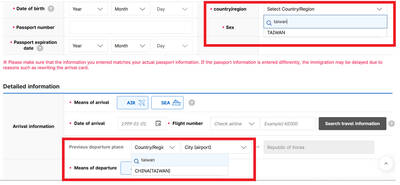
Jason Han says that the e-arrival card spat between South Korea and Taiwan shows that Seoul is signaling adherence to its “one-China” policy, while Taiwan’s response reflects a reciprocal approach. “Attempts to alter the diplomatic status quo often lead to tit-for-tat responses,” the analyst on international affairs tells the Taipei Times, adding that Taiwan may become more cautious in its dealings with South Korea going forward. Taipei has called on Seoul to correct its electronic entry system, which currently lists Taiwan as “China (Taiwan),” warning that reciprocal measures may follow if the wording is not changed before March 31. As of yesterday,
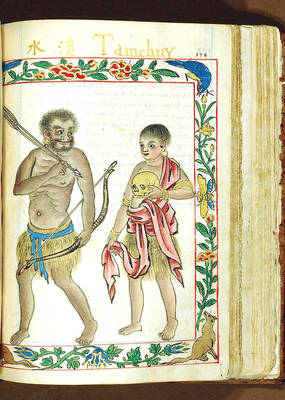
The Portuguese never established a presence on Taiwan, but they must have traded with the indigenous people because later traders reported that the locals referred to parts of deer using Portuguese words. What goods might the Portuguese have offered their indigenous trade partners? Among them must have been slaves, for the Portuguese dealt slaves across Asia. Though we often speak of “Portuguese” ships, imagining them as picturesque vessels manned by pointy-bearded Iberians, in Asia Portuguese shipping between local destinations was crewed by Asian seamen, with a handful of white or Eurasian officers. “Even the great carracks of 1,000-2,000 tons which plied

It’s only half the size of its more famous counterpart in Taipei, but the Botanical Garden of the National Museum of Nature Science (NMNS, 國立自然科學博物館植物園) is surely one of urban Taiwan’s most inviting green spaces. Covering 4.5 hectares immediately northeast of the government-run museum in Taichung’s North District (北區), the garden features more than 700 plant species, many of which are labeled in Chinese but not in English. Since its establishment in 1999, the site’s managers have done their best to replicate a number of native ecosystems, dividing the site into eight areas. The name of the Coral Atoll Zone might

Nuclear power is getting a second look in Southeast Asia as countries prepare to meet surging energy demand as they vie for artificial intelligence-focused data centers. Several Southeast Asian nations are reviving mothballed nuclear plans and setting ambitious targets and nearly half of the region could, if they pursue those goals, have nuclear energy in the 2030s. Even countries without current plans have signaled their interest. Southeast Asia has never produced a single watt of nuclear energy, despite long-held atomic ambitions. But that may soon change as pressure mounts to reduce emissions that contribute to climate change, while meeting growing power needs. The


 RSS
RSS