


“To understand is to tremble,” wrote Harold Brodkey of the fallacy of calm comprehension of recollected emotion. His assertion was that when channeling the past, only the shaken soul can be counted upon as honest. The tranquil lens is not a trustworthy mechanism by which we look behind. That may be true, but there are many ways to, as Brodkey also said, be “on one’s knees in front of the event.” Madness need not be chaotic. It can be measured, thoughtful, symbiotic and even lucid in its own counter-intuitive way.
This is the context in which I’ve always viewed doom music and its much slower, drawn-out substrata, funeral doom. For the uninitiated, funeral doom took the down-tempo Sabbath-esque riffs of bands like Saint Vitus, The Obsessed, and other patrons of the Church of Scott “Wino” Weinrich and brought the slowness down to a near glacial pace, so much so that spaced out punctuations of the drummer are so far apart they can almost be forgotten entirely, their return a jarring jolt to the system.
Japan has contributed its fair share of sludge to the world over the past 20 or so years, with bands like Church of Misery, Eternal Elysium, doom/death metal outfit Coffins and more recent additions to the scene such as Begrabnis. For the past decade though, one of the bands at the forefront of the Japanese doom scene has been Kanagawa act Funeral Moth. Founding member Makoto Fujishima (guitar/vocals), started out in the Japanese death metal scene in the early ‘90s, but slower, more reflective bands like My Dying Bride, Mournful Congregation, Worship and Anathema awakened in him a love of doom that led to the birth of Funeral Moth in 2005. From the outset, bands of their ilk have always been marginalized, a sub-scene within a scene where active bands are few and far between.

Photo Courtesy of natsimagenoise.
“I think there isn’t a funeral doom scene here,” says Fujishima. “As far as I know, Begrabnis is the only funeral doom band who is actively playing live here. As for extreme doom, Corrupted is the most popular band. And I think there are much more bands who are playing rock-based doom... But unfortunately there are only a few bands who are playing extreme doom.”
Therein lies the challenge of bands playing an under-appreciated style of music worshiped by but a passionate few. While the metal scene at large in Japan is one of, if not the largest in Asia, most fans fail to dig beyond the surface of the mainstream. So it’s difficult for a scene to grow when it’s always the same bands and the same fans.
“In Japan, the gap between mainstream and underground is too large,” says Fujishima. “Big festivals like Loud Park are always packed, but those who go to such big festivals don’t care about the underground scene. Approximately 30,000 people go to Loud Park, but there are only 30 to 100 people for underground gigs and those who come to small shows are always almost the same.”

Photo Courtesy of natsimagenoise.
Nevertheless, Fujishima continues to persevere with his band and his label, Weird Truth Productions (WTP), which he has run since the late ‘90s. Much like his band, Fujishima founded the label with nothing more than altruistic ideals in mind, simply trying to find an audience for the music he loves.
“I’m just releasing the stuff of the bands I’m into,” he says. “I’ll keep it as long as I can and it’s enough for me that some people enjoy WTP releases the same as myself. For the present, I’m busy with my own band and some other things. So I’ve slowed down a little bit now and release a few things per year.”
In addition to putting out Funeral Moth’s albums, including their debut full-length, Dense Fog, a monolithic, brooding, atmospheric four-song album lasting nearly 75 minutes, WTP has also put out albums by bands such as South Australia’s Cauldron Black Ram, Brazil’s Sanctifier and Throneum, from Poland. The label boasts a global roster, and though the releases might come sparingly, it speaks more to Fujishima’s philosophy of quality over quantity than anything else. He’s a man of varied interests, but somehow it all comes back to the dark, mystifying atmosphere of the music he creates, even when he’s enjoying his favorite hobbies.
“I climb mountains a lot,” Fujishima says of how he spends his spare time, “and the photo we used for [the cover of] Dense Fog was taken on a mountain I climbed. When I walk in mountains alone, I’m always moved by the beauty and harshness of nature. I guess such experiences are the foundation of my inspirations.”
■ Funeral Moth headlines at Encephalopuncture of Hallucination Festival Vol. 2 (幻覺性腦穿刺極端音樂祭第二屆) tomorrow night at Revolver, 1-2 Roosevelt Rd Sec 1, Taipei City (台北市羅斯福路一段1-2號). Tickets are NT$400 at the door. Doors open at 7:30pm and the first band is on at 8pm.
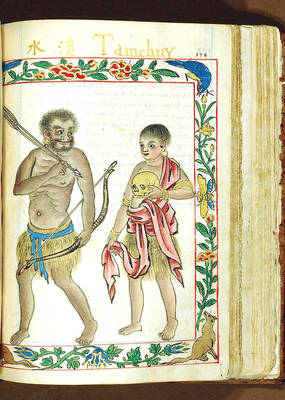
The Portuguese never established a presence on Taiwan, but they must have traded with the indigenous people because later traders reported that the locals referred to parts of deer using Portuguese words. What goods might the Portuguese have offered their indigenous trade partners? Among them must have been slaves, for the Portuguese dealt slaves across Asia. Though we often speak of “Portuguese” ships, imagining them as picturesque vessels manned by pointy-bearded Iberians, in Asia Portuguese shipping between local destinations was crewed by Asian seamen, with a handful of white or Eurasian officers. “Even the great carracks of 1,000-2,000 tons which plied

It’s only half the size of its more famous counterpart in Taipei, but the Botanical Garden of the National Museum of Nature Science (NMNS, 國立自然科學博物館植物園) is surely one of urban Taiwan’s most inviting green spaces. Covering 4.5 hectares immediately northeast of the government-run museum in Taichung’s North District (北區), the garden features more than 700 plant species, many of which are labeled in Chinese but not in English. Since its establishment in 1999, the site’s managers have done their best to replicate a number of native ecosystems, dividing the site into eight areas. The name of the Coral Atoll Zone might

On Monday morning, in quick succession, the Chinese Communist Party (CCP) and the Chinese Nationalist Party (KMT) released statements announcing “that the Central Committee of the Communist Party of China and General Secretary Xi Jinping (習近平) have invited KMT Chairwoman Cheng Li-wun (鄭麗文) to lead a delegation on a visit to the mainland” as the KMT’s press release worded it. The KMT’s press release added “Chairwoman Cheng expressed her gratitude for the invitation and has gladly accepted it.” Beijing’s official Xinhua news release described Song Tao (宋濤), head of the Taiwan Work Office of the CCP Central Committee, as
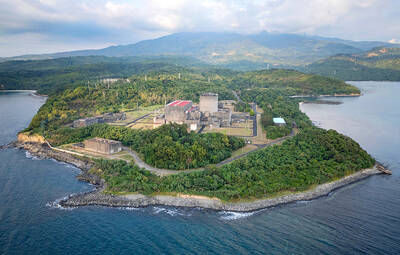
Nuclear power is getting a second look in Southeast Asia as countries prepare to meet surging energy demand as they vie for artificial intelligence-focused data centers. Several Southeast Asian nations are reviving mothballed nuclear plans and setting ambitious targets and nearly half of the region could, if they pursue those goals, have nuclear energy in the 2030s. Even countries without current plans have signaled their interest. Southeast Asia has never produced a single watt of nuclear energy, despite long-held atomic ambitions. But that may soon change as pressure mounts to reduce emissions that contribute to climate change, while meeting growing power needs. The


 RSS
RSS