


Theaters and performing arts companies have to schedule their activities far in advance. It is getting to the point where Taipei dance, music and theater lovers have to do the same to ensure they can see the shows they want to go to. A case in point is the opening night for the National Theater Concert Hall’s seventh annual Taiwan International Festival of Arts (TIFA). Although 11 weeks away, several of the theater productions have sold out.
If you were thinking about buying tickets for the Ryuzanji Company from Japan and their Rat Kid Jirokichi (義賊☆鼠小僧), 1927’s Golum (機器人科倫) or Japanese director Yukio Ninagawa’s acclaimed version of William Shakespeare’s Hamlet (哈姆雷特), you are out of luck.
Seats are also going fast for Tanztheater Wuppertal Pina Bausch’s Palermo Palermo, with two of the four shows sold out, while the cheapest tickets for Arts of Traditional Chinese Opera (尋源問道) from China and Musikkonzept Wien and Theatre National de Luxembourg’s The Black Cat of Edgar Allen Poe are gone and the top-priced seats for the National Symphony Orchestra’s (國家交響樂團) Dear Dots & Four Seasons (小黃點與四季) are gone for two of the three shows.
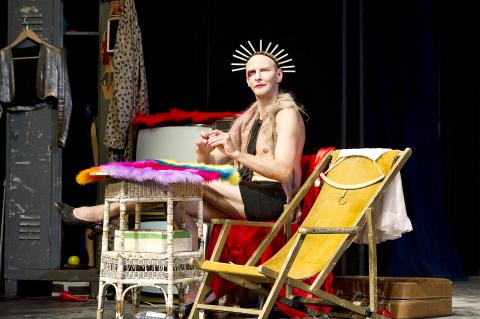
Photo courtesy of Tanztheater Wuppertal Pina Bausch
Innovative program
The National Theater Concert Hall programmers have pulled together an innovative festival for next year, with 17 programs representing 12 nations and a total of 54 performances. However, it is not quite clear why they chose the theme Turbo Sensation or even what it is supposed to mean. That quibble aside, it is clear that the guiding rule was to choose some of the most innovative artists and shows around.
The five dance, six theater and six music productions include works by world-renowned artists such as contemporary Chinese composer Tan Dun (譚盾), the late German choreographer Pina Bausch, Belgian choreographer and filmmaker Anne Teresa de Keersmaeker, Peking Opera diva Pei Yan-ling (裴艷玲) and Ninagawa, all of whom are making return appearances to Taipei. It will be the first time a Ninagawa production has been staged in Taiwan in 22 years, while Bausch’s troupe will be making their sixth visit to Taipei.
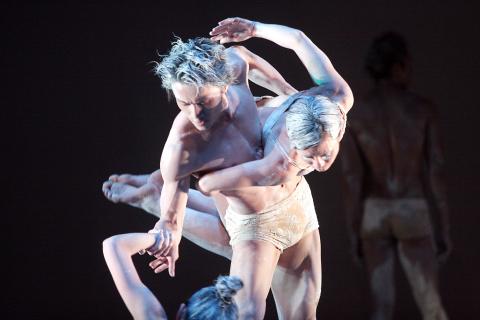
Photo courtesy of Century Contemporary Dance Company
De Keersmaeker’s company, Rosas, has not been back since making their Taiwan debut at the National Theater in June 2006 with the impressive Rain.
Troupes making their local premieres include Hotel Pro Forma from Denmark, with their avant-garde opera War Sum Up: Music. Manga. Machine (迷幻戰境), which will be performed in the National Theater, and the London-based company 1927, which will be in the Experimental Theater.
Taiwan’s own artists have not been left out in the cold, including the wonderfully adventurous Shakespeare’s Wild Sisters (莎士比亞的妹妹們的劇團), a troupe that rarely gets a chance to show its stuff on the capital’s main stage.
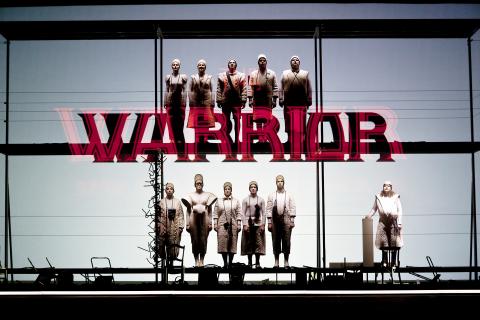
Photo courtesy of Gunars Janaitis
Cross-cultural collaborations
There are also several cross-cultural collaborations, including joint productions by Sun-Shier Dance Theatre (三十舞蹈劇場) and South Korea’s Hong Eun-ji and Kim Min-jung of the Silver Cellar Door troupe, who created Take Off (逃亡2015); Century Contemporary Dance Company (世紀當代舞團) and Leipzig Ballet artistic director/choreographer Mario Schroder’s mixed bill program of Les Noces, Corrente II and Wild Butterflies; Taiwanese theater director Wang Mo-lin (王墨林) and Body Phase Studio (身體氣象館) with Wall of Fog (長夜漫漫路迢迢); Chinese composer Tang Jian-ping’s (唐建平) Mongolian-inspired Genghis Khan (成吉思汗), which features members of the National Chinese Orchestra Taiwan (臺灣國樂團), Taipei Philharmonic Chorus (台北愛樂合唱團) and Hong Kong Chinese Orchestra (香港中樂團); and Amis singer Suming, who joined forces with the Japanese band Kachimba, which fuses traditional Okinawan music and Cuban-flavored Latin percussion, for a show titled E’tolan x Okinawa Island Scenery (海島風光).
The festival opens on Feb. 26 with The Red Piece, a joint Dutch/Belgian production by Dutch choreographer Ann Van Den Broek and her WArd/waRD ensemble. The piece, described as “an encyclopedia about love written on the skin,” fuses modern dance and flamenco, along with bondage-style roping that constrains the dancers’ bodies and connects them to one another. TIFA 2015 closes on April 12 with Shakespeare’s Wild Sisters’ version of one of the Bard’s historical tragedies, R3 — The Life and Death of Richard III (理查三世).
Both The Red Piece and R3 come with the advisory that they are not suitable for children younger than 12 because of nudity (and bloody scenes in the case of the latter).
Ticket prices for the festival range from NT$600 or NT$800 for shows in the Experimental Theater or Recital Hall up to NT$3,000 or NT$3,600 for the imported productions in the National Theater.
For more details on the festival’s program, the NTCH has produced a very good Web site — tifa.npac-ntch.org/2015/tw — with Chinese and English pages that give not only brief summaries of each show and the companies or creative talent involved, but details on running times, audience advisories, pre or post-show talks and links to the artsticket.com.tw ticketing site.
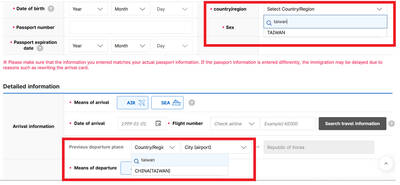
Jason Han says that the e-arrival card spat between South Korea and Taiwan shows that Seoul is signaling adherence to its “one-China” policy, while Taiwan’s response reflects a reciprocal approach. “Attempts to alter the diplomatic status quo often lead to tit-for-tat responses,” the analyst on international affairs tells the Taipei Times, adding that Taiwan may become more cautious in its dealings with South Korea going forward. Taipei has called on Seoul to correct its electronic entry system, which currently lists Taiwan as “China (Taiwan),” warning that reciprocal measures may follow if the wording is not changed before March 31. As of yesterday,
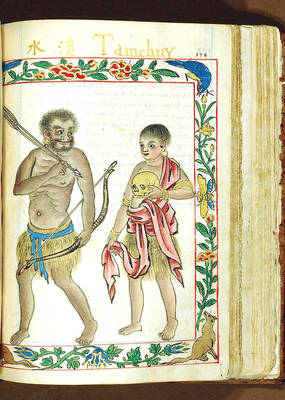
The Portuguese never established a presence on Taiwan, but they must have traded with the indigenous people because later traders reported that the locals referred to parts of deer using Portuguese words. What goods might the Portuguese have offered their indigenous trade partners? Among them must have been slaves, for the Portuguese dealt slaves across Asia. Though we often speak of “Portuguese” ships, imagining them as picturesque vessels manned by pointy-bearded Iberians, in Asia Portuguese shipping between local destinations was crewed by Asian seamen, with a handful of white or Eurasian officers. “Even the great carracks of 1,000-2,000 tons which plied
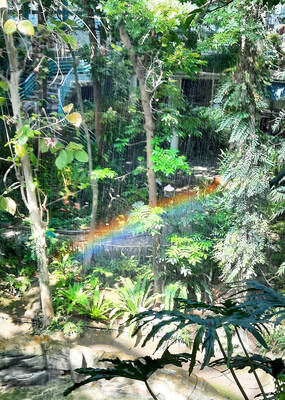
It’s only half the size of its more famous counterpart in Taipei, but the Botanical Garden of the National Museum of Nature Science (NMNS, 國立自然科學博物館植物園) is surely one of urban Taiwan’s most inviting green spaces. Covering 4.5 hectares immediately northeast of the government-run museum in Taichung’s North District (北區), the garden features more than 700 plant species, many of which are labeled in Chinese but not in English. Since its establishment in 1999, the site’s managers have done their best to replicate a number of native ecosystems, dividing the site into eight areas. The name of the Coral Atoll Zone might
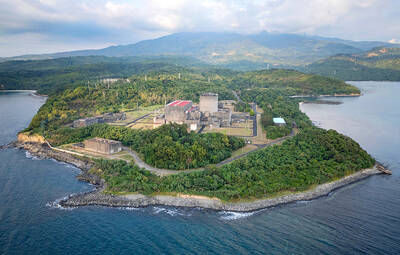
Nuclear power is getting a second look in Southeast Asia as countries prepare to meet surging energy demand as they vie for artificial intelligence-focused data centers. Several Southeast Asian nations are reviving mothballed nuclear plans and setting ambitious targets and nearly half of the region could, if they pursue those goals, have nuclear energy in the 2030s. Even countries without current plans have signaled their interest. Southeast Asia has never produced a single watt of nuclear energy, despite long-held atomic ambitions. But that may soon change as pressure mounts to reduce emissions that contribute to climate change, while meeting growing power needs. The


 RSS
RSS